Top Tag

Pompeo’s Ominous Venezuela Message

The last remaining personnel at the U.S. embassy in Caracas are being withdrawn from the country:

The embassy should have been evacuated weeks ago, but the administration insisted on keeping some people there so that it didn’t look as if they were complying with Maduro’s order that American diplomats be expelled from the country. The administration has been willing to put U.S. diplomats in Venezuela at risk for more than a month while they try to overthrow the government. They had originally thought that regime change would be quick and easy, but as the standoff is starting to be measured in months rather than weeks we can see that it isn’t gong to be either of those things. Now Pompeo ominously describes the diplomats’ presence there as a “constraint” on U.S. policy. Taken together with the threatening rhetoric from Rubio, Bolton, and Pence, that naturally sets off warning bells that the U.S. is preparing to escalate its role in the crisis.

It is possible that Pompeo’s message is more of his usual “swaggering” bluster that is supposed to intimidate but just makes the Secretary of State look ridiculous. But it is also possible that this a prelude to some reckless administration action and possibly even the start of an attack on the Venezuelan government. Whatever they end up doing, the administration track record inspires no confidence in their judgment or competence. They are very likely going to do the wrong thing and they will also make a mess of it when they do. No matter what excuse the administration uses for further meddling in Venezuela’s internal affairs, we cannot trust that this is the real reason for what they are doing.

We have already seen how eagerly administration officials spread false information about events in Venezuela:

Vice President Mike Pence wrote that “the tyrant in Caracas danced” as his henchmen “burned food & medicine.” The State Department released a video saying Mr. Maduro had ordered the trucks burned. And Venezuela’s opposition held up the images of the burning aid, reproduced on dozens of news sites and television screens throughout Latin America, as evidence of Mr. Maduro’s cruelty.

But there is a problem: The opposition itself, not Mr. Maduro’s men, appears to have set the cargo alight accidentally.

When confronted with the evidence, U.S. officials’ response has been to shrug and hold Maduro responsible anyway. Any claims that the administration makes about Venezuela have to be regarded with intense suspicion. The same officials that have repeatedly lied about Yemen, Iran, and other issues to justify outrageous and indefensible policies will have no problem lying to advance their regime change policy in Venezuela.

Two of Trump's banks just got subpoenaed for records

The New York Attorney General has sent subpoenas to a pair of banks seeking records about multiple Trump Organization projects, marking the latest real-world impact of Michael Cohen’s blockbuster Congressional testimony, The New York Times reported late Monday.

One of the banks involved has long been Trump’s most important lender for years, a firm that maintained ties with Trump long after other major Wall Street firms labeled him a credit risk: Germany’s Deutsche Bank.

A person briefed on the subpoenas told the Times that Cohen’s testimony to Congress in late February was the spur. The president’s former fixer said the Trump Organization had misrepresented the size of Trump’s fortune in statements to financial firms, inflating the value of his assets in order to reduce his insurance premiums or obtain loans. Those actions could add up to crimes, depending on the details, legal experts have told VICE News.

The New York AG investigation is civil in nature, rather than criminal, the Times said, adding that the full scope of the probe is not yet clear.

The New York AG’s office was taken over in January by Letitia James, who said shortly before taking office that she plans to “use every area of the law to investigate President Trump and his business transactions and that of his family as well.”

Any criminal charges filed by New York State prosecutors could be especially dangerous for Trumpworld, because state charges can’t be undone by presidential pardons, unlike federal charges.

The subpoenas to Deutsche and a smaller New Jersey-based bank, Investors Bank, seek details of several Trump projects, the Times said:

—The Trump International Hotel in Washington

—The Trump National Doral outside Miami

—The Trump International Hotel and Tower in Chicago

—Trump’s failed 2014 attempt to purchase the Buffalo Bills football team

—Trump Park Avenue in New York

A spokesperson for Deutsche Bank declined to comment on the details of the Times story, but wrote in a terse emailed statement to VICE News: “We remain committed to cooperating with authorized investigations.”

The New York State Attorney General’s office and Investors Bank didn’t return requests for comment on Tuesday morning.

Why France Is Losing the War on Anti-Semitism

In the first weeks of 2019, French authorities discovered 96 tombs desecrated in a Jewish cemetery in eastern France, the word “juden” scrawled across a bagel shop in Paris, and swastikas marring a street portrait of former government official and Auschwitz survivor, Simone Veil. On February 16 in Paris, a group of protestors in the Yellow Vest (“gilets jaunes”) movement cornered local Jewish intellectual, Alain Finkielkraut. “Dirty Zionist, you’re going to die!” they yelled, along with “Go home to Israel!” and “France is ours!”

Last year, France saw a 74 percent jump in anti-Semitic incidents. A survey from the European Union, released in December, found that a staggering 95 percent of French Jews saw anti-Semitism as either a fairly significant or a very big problem (more than any other country in the E.U.).

Within days of the Finkielkraut harassment, President Emmanuel Macron proposed a controversial new strategy to fight anti-Semitism, including broadening its legal definition, dissolving several far-right groups, and putting his support behind a law that would punish online hate speech with fines of up to several million euros.

France has the largest Jewish population in Europe and the third largest in the world. Anti-Semitism in the country springs not only from fringe online groups but also from a long history of Jewish persecution and a contemporary anti-establishment surge. Today, Jewish historians and advocacy groups say, the far-left, the far-right, and radical Muslims—groups with few shared interests, historically—are finding common ground in anti-Semitism and the gilets jaunes. And as they do so, the language of anti-Semitism is shifting, making it particularly hard to track and filter as new laws would demand.

“It’s old wine in new bottles,” said Deborah Lipstadt, a professor of Jewish history who famously won a legal battle against Holocaust denial in the 1990s. “It’s the same anti-Semitism but it morphs into different forms, different expressions, different manifestations.”

Old-school French anti-Semitism has been historically associated with conservative, often Catholic, factions, moving farther right over time. This is the anti-Semitism of the Dreyfus affair starting in 1894—in which a Jewish army captain was wrongfully convicted of espionage and spent five years on a prison island—the anti-Semitism of the Vichy regime, and the anti-Semitism of twentieth-century far-right leaders like Jean-Marie Le Pen.

Recently, new strains have appeared in France, notably from the far-left and from France’s large Muslim community, where anti-Israel sentiment has morphed into anti-Semitism. Lipstadt, along with others on the ground in France, is quick to point out that most Muslims are not anti-Semites, and that the growing presence of anti-Semitic fundamentalists does not negate the issue of anti-Muslim prejudice in France or legitimate objections to Israel’s policies. The shift is rather about a small but loud faction of people who conflate Israel’s policies with Jews everywhere.

The far-right and the far-left in particular, with some buy-in from extremist Muslims, have found common ground in the Yellow Vests: a protest on a gas tax that quickly morphed into an all-out anti-establishment movement. As the protestors’ numbers have dwindled, those who remain have grown more extreme, although reports of anti-Semitism in the chaotic and heterogenous movement date back to the beginning of their movement in November 2018. This anti-Semitism has taken the form of anti-Jewish slogans, conspiracy-fueled rants, and the taunting of a Jewish woman on the Paris subway in December 2018. The group was also slow to make a statement on the Finkielkraut incident. When a response did come, prominent social media figures for the Yellow Vests insisted that the media outcry was a ploy to distract from their crusade.


The bill Emmanuel Macron has proposed, written by a deputy from his party, aims to make specifically online hate speech a priority. It would force social media platforms like YouTube and Twitter to remove hate speech in a set time period (likely 24 hours) or risk a fine of up to 37.5 million euros. Macron also previously advocated for a statute that would make it easier for the government to remove anonymity protections online, in order to prosecute individuals who engage in hate speech.

The plan has found support among the Jewish community, including the Jewish umbrella organization known as the CRIF and the Jewish Student Union (UEFJ). “Social networks are one of the main vectors of anti-Semitic hate, and of hate in general—because it’s also racist hatred, hatred of Muslims, hatred of LGBT people,” Francis Kalifat, president of the CRIF, told me. “Freedom of expression is something that we all cherish, but it must have limits.”

But given Facebook and Twitter’s history of laxness when it comes to hate speech online, some experts have questioned whether such a plan would be effective. Others criticized the proposed law as draconian and an impingement of free speech. “The intentions are noble, but the venture is perilous and could create a new victim: the Internet,” wrote one computer scientist in an op-ed for the French newspaper Le Figaro.

And while the law has been pitched to the public as a response to the most recent incidents, the uptick in anti-Semitic hate speech and violence predates the Yellow Vests, pointing to a more complicated and subversive source of hate speech—one hard to fight with laws such as this one. Much of the trouble in fighting online anti-Semitism stems from the shift in rhetoric to what some scholars call “soft anti-Semitism” or “new anti-Semitism.”

53-year-old French comedian Dieudonné M’bala M’bala, who has been convicted multiple times for inciting hatred against Jews, has become a prime example of this type of behavior. Dieudonné, as he is known, started out in the early 2000s as a far-left political activist, but is now increasingly associated with the fringes of the far-right. He substitutes the word “Zionist” for “Jew,” saying things like “Zionism killed Christ.” He also invented the “quenelle” salute, a gesture where people grasp their shoulder with one hand and point the other straight to the ground. Many have categorized it as a combination of a French gesture meaning “up yours” and the Nazi salute—with people performing it outside of Auschwitz and French synagogues (it is also popular among the gilets jaunes). Jean-Marie Le Pen, the National Front party founder who has been convicted for Holocaust denial multiple times, is a close friend and serves as the godfather to Dieudonné’s daughter.

Instead of the outright slurs of traditional anti-Semitism, this new form takes a more insidious angle, and one particularly hard to combat by filtering out certain words on an online platform. It sees Jews as part of a global elite conspiracy, an establishment controlling everything from the government, to media, to banking institutions. The conspiracy theory aspect has particular currency with the yellow vests. “They’re all Jews,” a Paris protester’s vest painted with a freemason pyramid read. A yellow vest encampment outside of Lyon featured an immense sign with the words “Macron = Banks = Media = Zion.”


France is not alone in its struggle to combat anti-Semitism and the proliferation of other conspiracy theories. In just the past two years, the U.S. has seen protestors in Charlottesville shouting “Jews will not replace us!” and a mass shooting that killed 11 people in a Pennsylvania synagogue. Two studies in 2018 found a rise in anti-Semitic content on Twitter and Instagram. And while the House of Representatives voted last week to denounce anti-Semitism in the wake of a controversy wherein Representative Ilhan Omar criticized American policy vis-à-vis Israel, such efforts fail to address the actual sources of anti-Semitic content in American society—from the dark corners of the internet, to a populist surge, to a president who has peddled conspiracy theories about Jewish billionaire George Soros.

While conspiracy theories are notoriously hard to fight, recent research does offer hope. Psychologists point to a combination of miseducation and narcissism as risk factors for conspiracy theory belief. Research has also shown that small and consistent interventions over such beliefs—whether about politics or science—can correct irrational thinking over time. Confronting anti-Semitic claims with evidence, showing their absurdity, is crucial, Lipstadt told me—even if it’s also prudent to keep some distance and avoid validating those acting in bad faith.

Any effective solution requires recognizing anti-Semitism as the problem that it is: not merely a handful of online trolls and not only a threat to Jewish people. “No healthy democratic society can tolerate having anti-Semitism in its midst,” Lipstadt said. “If they believe these irrational things about Jews, they’ll believe irrational things about their government. They’ll believe irrational things about the economy. They’ll believe irrational things about their neighbors. Conspiracy theories within a society are very dangerous.”

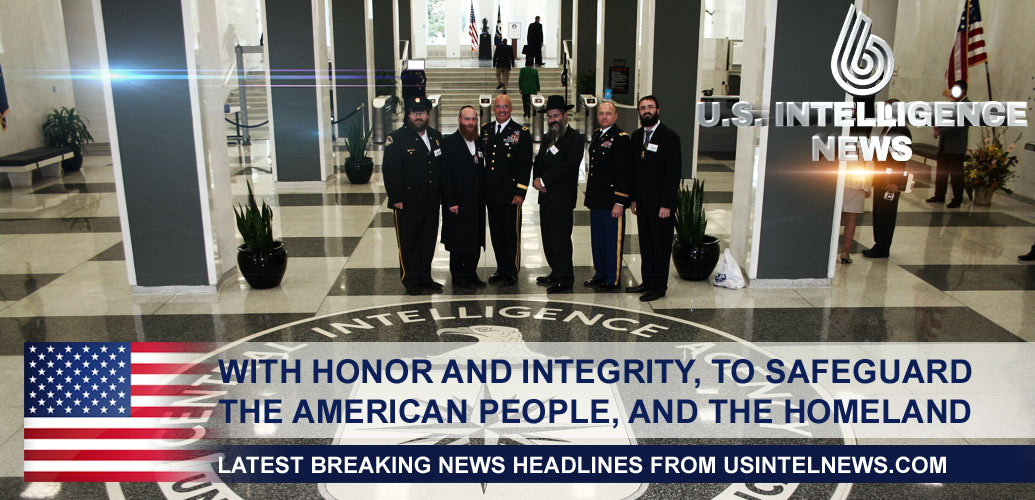
Pompeo is pulling all U.S. diplomats out of Venezuela

Secretary of State Mike Pompeo said Monday that all remaining staff at the U.S. embassy in Venezuela would be withdrawn, as the country’s political and economic crisis deepens.

The move comes as Venezuela’s capital, Caracas, suffered a fifth day without electricity — a power outage President Nicolas Maduro has blamed on “sabotage” by opposition leader Juan Guaido, who he’s accused of acting at the behest of the U.S.

Outages have also hit other regions in the country, impacting communications. Water shortages have also been reported amid widening protests. The cause of the blackout remains unclear.

“This decision reflects the deteriorating situation in #Venezuela as well as the conclusion that the presence of U.S. diplomatic staff at the embassy has become a constraint on U.S. policy,” Pompeo said via Twitter late Monday. He added that U.S. personnel would be out of the country by the weekend.

Washington is part of an international push to remove Maduro and install Guaido as interim president pending fresh elections. Much of the international community backs the move, however Maduro retains the support of China, Cuba and Russia.

Venezuela broke off diplomatic relations with the U.S. in late January after Trump declared his backing for Guiado. Trump subsequently said “all options” were open to remove Maduro — including military intervention.

READ: Venezuela suffered a blackout and the regime thinks Marco Rubio is to blame.

The State Department removed all non-essential staff from the embassy in Caracas in January.

Earlier Monday, Pompeo attacked Maduro’s claim that the U.S. was to blame for the blackout.

“Nicolas Maduro promised Venezuelans a better life and a socialist paradise,” he said. “He delivered on the socialism part, which has proved, time and time again, is a recipe for economic ruin. The paradise part? Not so much.”

Guaido launched a similar attack on Maduro over the weekend, saying the blackout was a result of corruption and mismanagement.

“We are in the middle of a catastrophe that is not the result of a hurricane, that is not the result of a tsunami,” he told CNN. “It’s the product of the inefficiency, the incapability, the corruption of a regime that doesn’t care about the lives of Venezuelans.”

Maduro hit back in a televised address Monday, blaming Trump for unleashing a “demonic” plot to oust him from power with an “electromagnetic attack.”

Cover image: Secretary of State Mike Pompeo holds a news conference to talk about the dire economic and political situation in Venezuela at the Harry S. Truman State Department headquarters March 11, 2019 in Washington, DC. (Chip Somodevilla/Getty Images)

The Trudeau Scandal Happens All the Time in America

The most acute political scandal in North America—the one with
the greatest chance of toppling a head of state anytime soon—is occurring not
in the United States, but Canada.
Prime Minister Justin Trudeau is barely hanging on to power after being accused
last month of pressuring his attorney general to abandon the criminal prosecution
of an influential company that hails from Quebec, his political
stronghold.

Political media in the U.S. can’t comprehend how this can be
so damaging. “There’s no money, no sex and nothing
illegal happened,” wrote
Rob Gillies of the Associated Press. “This is what passes for a scandal in
Canada.” 

It should also pass for a scandal in
America, but selective prosecution—which spares the powerful while punishing
those without connections—has become all too common in this country, and
notably so under President Obama. As Democratic candidates seek to save America
from President Trump’s kleptocracy, they ought to acknowledge that this era of unaccountability
long predates him, and be as indignant about it as our Canadian neighbors.

SNC-Lavalin is a Montreal-based engineering
firm that employs roughly 9,000 Canadians on numerous construction projects
inside the country. It also does substantial business abroad, where it’s been
accused for years of corruption
and fraud
. This specific case alleges that the company paid 48
million Canadian dollars (around 36 million USD) to Libyan government officials
to secure construction contracts from 2001-2011, then defrauded the Libyans for
about 130 million Canadian dollars. 

The Royal Canadian Mounted Police submitted
these charges
in 2015, before Trudeau entered office. A successful
criminal prosecution would bar SNC-Lavalin from bidding on any federal
government contracts for 10 years. But the Globe and Mail broke
the news
in early February
that Trudeau’s office had asked Attorney General Jody Wilson-Raybould to
abandon the criminal charges. Wilson-Raybould, who also sat in Trudeau’s
cabinet as justice minister, later confirmed
a “barrage” of pressure from senior officials, including Trudeau himself, who
asked her to “help out” with the case and “find a solution.” She rebuffed their
campaign, was demoted, then resigned.

Trudeau’s team sought a deferred
prosecution agreement (DPA), which would impose a financial penalty and some
greater oversight of SNC-Lavalin, but no criminal sanctions, enabling it to
continue to bid on government contracts. Prosecutors in Canada didn’t have the
option of deferring criminal prosecution until a change
in the law
last year, one that SNC-Lavalin lobbied for.

While deferred prosecution agreements are
new to Canada, they’ve been used
in corporate settlements in the U.S.
for more than two decades,
particularly during and after the last financial crisis, when hundreds of
DPAs were executed
. In other words, the major difference between the
scandal engulfing Canada’s government and what happens routinely here is that
nobody in our Justice Department needs to be pressured to issue a deferred
prosecution agreement.

The Justice Department’s most notorious
DPA of the past decade was in 2012 with
HSBC
, the bank that facilitated money laundering for drug cartels
and terrorist groups. Drug lords even designed specially shaped boxes
filled with money that slid easily through HSBC Mexico’s teller windows. Neither
HSBC nor its executives were criminally prosecuted, and the bank was merely
fined $1.9 billion—around
five weeks’ profit
.

Justice Department officials had cautioned
that criminal charges would destroy HSBC and put thousands of innocent bank
tellers out of work. Eric Holder, Obama’s attorney general at the time, expressed
concern
that banks like HSBC have become so sprawling that “it does
become difficult for us to prosecute.” The phrase “Too Big to
Jail
” was coined out of the HSBC mess.  But Holder had been warning of “collateral
consequences” for prosecuting corporations since a memo
he wrote
while deputy attorney general in 1999.

Trudeau echoed this reasoning in remarks
last week
about the SNC-Lavalin scandal. Referring to a meeting with
Wilson-Raybould, he said, “I stressed the importance
of protecting Canadian jobs and re-iterated that this issue was one of
significant national importance.”
 

This justification
for neglecting serious crimes is sometimes known as the Arthur Andersen defense,
named after the accounting firm that destroyed documents as Enron’s auditor.
The 28,000-employee company went out of business amid a successful prosecution,
which the Supreme Court overturned years later on a
technicality
over jury instructions
.
(The firm had already split up by then.)
 

Law enforcers and
business lobbyists alike have agreed that the Arthur Andersen case was a
mistake that sent
thousands of low-level accountants to
the unemployment line. Few mentioned that Andersen employees simply got jobs with other accounting
firms
. Similarly, if SNC-Lavalin couldn’t
bid on government contracts, somebody else would, and the same number of
Canadians would fill those jobs.

Trudeau also made clear his real
rationale for pressuring his attorney general: as a member of Parliament, he represents
Quebec
, home to SNC-Lavalin. Politicians are inclined to defend the
interests of their constituents, but as prime minister, Trudeau’s actions
affect the whole country. He sought to pervert the justice system so a
favorite-son company could evade punishment and continue to profit from the Canadian
government.

From his firing of FBI Director James
Comey to reportedly trying to prevent the
AT&T–Time Warner merger because he doesn’t like CNN (a Time Warner
subsidiary), Trump has perverted the law in ways that tower over the relatively
gentle nudges of Trudeau’s government. But the pre-Trump status quo, of
perfunctory deferred prosecutions and no jail terms for financial fraudsters,
was itself a scandal. That’s why jettisoning Trump won’t, on its own, restore
the rule of law in America. The Democrats competing for president also must lay
out a plan for treating every American equally under the law, no matter how
rich or connected. Because the party’s last president failed this test.

The Dogs of War Sniff Out Mission in Central Africa

As if the United States wasn’t already pursuing enough murky and dubious military missions in such places as Afghanistan, Syria, and Yemen, a push appears to be underway to expand Washington’s involvement in Sub-Saharan Africa.

U.S. troops are more deeply engaged in “anti-terror” in Niger, Somalia, and other countries than most Americans realize. When four American Special Forces personnel died in Niger in 2017, even members of Congress were surprised.

A lobbying effort now seems to be taking place for U.S. intervention to alleviate suffering in the Central African Republic (CAR), because of that country’s ongoing civil war. NBC News took the lead with a story on the March 6 Today show and followed it up with a more detailed segment on the Nightly News that same evening. Cynthia McFadden was the lead journalist for the report that included searing footage of suffering in one UN-run refugee camp.

The media treatment would be familiar to anyone who recalls the preludes to U.S. military interventions in such places as Somalia, Bosnia, Kosovo, Libya, and Syria. There is extensive video of starving, disease-afflicted children and their anguished parents. International aid workers emphasize that the suffering was certain to get worse unless the “international community” (led, of course, by the United States) took immediate action. A U.S. diplomat on the scene or in Washington proceeds to echo that argument. The armed conflict causing the suffering is mentioned, but the treatment is brief and superficial, or it becomes a simplistic melodrama in which a designated villain is causing all the trouble: Think Slobodan Milosevic, Muammar Qaddafi, and Bashar al-Assad.

The NBC report followed that template to perfection—including the focus on child victims. In an on-camera interview, Caryl Stern, the CEO of UNICEF USA, stated flatly: “This is the most dangerous place in the world for children.” As with earlier media accounts that sought to generate public support for U.S. intervention in the Balkans, Libya, and other chaotic arenas, the report also highlighted the sense of urgency and the assertion that the United States has both a moral obligation and a strategic interest in taking action. One passage asserted that the situation already in the CAR was dire and becoming more so:

The Central African Republic has descended into chaos in recent years. A sectarian civil war pitting Muslim rebels against Christian militias has ravaged large swaths of the country, displaced more than 1 million people and claimed the lives of tens of thousands.

Adding to its woes, this landlocked nation of 4.6 million people is now teetering on the brink of famine. An estimated 1.5 million children are at risk of starvation, aid groups say. And the lack of government institutions coupled with the tangled mass of warring factions have prompted fears that extremist organizations aligned with the Islamic State group could gain a foothold.

The last point aimed at making the case that the situation in the CAR was not just a humanitarian crisis but also a matter of U.S. national security. David Brownstein, the U.S. chargé d’affairs in the Central African Republic, did not hesitate to invoke the specter of ISIS. He stated that “the United States is particularly concerned about the potential of the Islamic State of Iraq and Syria, or ISIS, capitalizing on the instability to establish a presence in the region.” Brownstein emphasized that “ISIS takes advantage of vacuums. Literal vacuums, security vacuums, governance vacuums, perceived moral vacuums.”

If the ISIS menace was not enough to alarm viewers, NBC cited two other bogeymen: the Russians and the Chinese. “Other nations have developed an interest in the resource-rich African country, including Russia and China. The soil underneath the razed villages and scorched fields holds a wealth of gold, diamonds, uranium and oil. Close observers of the region say Russia in particular has gained a stunning level of clout inside the former French colony in just the past 13 months—supplying arms and soldiers, and seeing one of its own nationals installed as a special security adviser to President Faustin-Archange Touadéra.” Other media outlets have warned about Russian arms sales as well.

Habitual hawks likewise are stressing that the Kremlin is exploiting the situation in the CAR for geopolitical advantage. Heritage Foundation senior fellow and former deputy secretary of defense Peter Brookes argues that Moscow is forging worrisome security ties with numerous African countries, including possibly seeking bases in both Sudan and Eritrea. The CAR is definitely on that list as well, Brookes contends. “Russia has sold arms to, and trained, the security services of African states for many years, perhaps most notably of late in the Central African Republic.”

Americans need to resist the siren call for U.S. intervention in the CAR or any other country where vital American interests are not at stake. Financial aid to help alleviate human suffering is appropriate, and the U.S. government already is the largest donor for that cause in the CAR, sending $120 million in 2018. If reports like the NBC story generate a surge in private donations, that outcome is even better. No one denies that there is great humanitarian suffering in the CAR, but America cannot take action in every arena where such a tragedy occurs.

Moreover, previous U.S.-led humanitarian interventions have not turned out well. Especially where there are complex, multi-sided civil wars, Washington’s meddling typically makes matters worse. The Obama administration’s campaign to overthrow Libya’s Muammar Qaddafi to prevent a supposed impending genocide instead brought unprecedented chaos to that country. The suffering in Syria today was exacerbated by the agenda that the United States and its allies pursued to unseat Bashar al-Assad. Even in cases where Washington’s motive seemed genuinely humanitarian and not just a façade for geopolitical advantage, as in Somalia during George H.W. Bush’s administration, the outcome was bruising. American troops arrived to distribute aid and restore some semblance of order. They ended up battling one of the Somali armed factions, culminating in the Black Hawk down fiasco.

In light of that dismal track record, the United States should stay aloof from the tragic situation in the Central African Republic. U.S. foreign policy over the past several decades has confirmed the point that the road to hell is often paved with good intentions. Hyped, simplistic, and one-sided media accounts have helped push America into unwise interventions, and a similar campaign may be underway regarding the CAR. We must not let that siren call succeed again.

Ted Galen Carpenter, a senior fellow in security studies at the Cato Institute and a contributing editor to The American Conservative, is the author of 12 books and more than 750 articles on international affairs. His latest book is Gullible Superpower: U.S. Support for Bogus Foreign Democratic Movements (2019).

Home Ethos About Contact
Terms Policy GDPR RichTVX
© Saeculum XXI U.S. Intelligence News