WYNN fires security head for spying…

WYNN fires security head for spying… (Third column, 11th story, link) Advertise here

Preempt Threats and Safeguard America's National Security with USIntelNews.com

 Ethicoin (ETHIC+) Surges Amid Tether’s U.S. Investigation: A New Era of Ethical Cryptocurrency
  Russian Leadership Faces Mounting Domestic Challenges Amid Anniversary of Putin’s Death
  Why Aleksandar Vučić Must Be Arrested: Criminal Activities Threaten Regional Stability
  Operation Destabilise: NCA Cripples Russian Crime Networks Laundering Billions
WYNN fires security head for spying… (Third column, 11th story, link) Advertise here
What will Congress get to see of the Mueller report, which Attorney General William Barr promised “within a week?” Last month, Barr released a summary letter clearing Trump of collusion, and since then, congressional Democrats have clamored to see the book-length report for themselves. But the version that Barr delivers to Congress will likely be littered with redactions of any sensitive material, which could obscure certain conclusions. As Democrats hounded Barr on Tuesday, he left the tiniest bit of wiggle room for another version for members of Congress, with fewer redactions.
President Trump might shake up the Federal Reserve Board with an unorthodox pick. The position has typically been a landing spot for highly credentialed economic wonks, but Trump signaled to aides that he’s serious about nominating Herman Cain, the former CEO of Godfather’s Pizza and offbeat 2012 presidential candidate. That Trump is considering Cain is yet another signal that he isn’t pleased with the central bank’s series of economy-dampening interest-rate hikes, and wants to make the directives of the Fed more aligned with his own. Aides had suggested Trump hold back, as Cain has faced sexual-harassment allegations.
The most popular song in America right now is “Old Town Road,” a banjo-infused hit by the young rapper Lil Nas. But the song had just last month been kicked off the Billboard country charts, after some Nashville pundits lamented that it was insufficiently country. Lil Nas then brought in Billy Ray Cyrus for a remix that helped turn “Old Town Road” into a viral hit, crowned No. 1 on Billboard’s Top 100 on Tuesday. The song’s genre-bending hasn’t been received well by country music’s old guard, but rap and country music have more in common than some might think.

(Sasha Arutyunova)
Senator Kamala Harris of California—who is half Indian and half black—is trying to make her case as an embodiment of everything that President Trump is not. But first, she has to win among Democrats:
Among the many lines Harris offers on the stump is: I intend to win this. You don’t quite expect to hear a woman say that. But Harris has become very good at tapping into the emotions of a crowd of Democrats and delivering what they want to hear. The 2020 Democratic National Convention is 15 months off, though. Over the next year, the campaign is sure to get ugly—Trump hasn’t even given Harris a nickname yet. I asked her whether she thought that, as a black woman, she had an extra-narrow lane of acceptable behavior to maneuver in. “I don’t think so,” she said. Then she downgraded that sentiment. “I hope not.”
Has the United States dealt with its own racism and misogyny enough to elect a black woman president? There’s little rational basis for saying yes. But there was little rational basis for believing that a man named Barack Hussein Obama could win the White House either, let alone a huckster named Donald Trump.

(Katie Martin / The Atlantic)
Pharmacy benefit managers, the behind-the-scenes companies that play a huge role in getting certain life-saving drugs to patients, are a complex yet largely invisible part of the American health-care system. Olga Khazan writes:
Cindy Adams, who lives in Benton, Arkansas, found herself writhing in pain after some injections she needs to take in tandem with her chemotherapy were delayed for three weeks. As she slipped in and out of consciousness, “I was begging for God to take me,” she told me. Her doctor, Fred Divers, claims the delay was caused by an issue with the specialty pharmacy and PBM. “This kind of thing happens all day, every day,” he says.
The doctors I spoke with said that they have full-time employees whose job it is to do daily battle with PBMs and specialty pharmacies. David Oubre, the managing physician of the Pontchartrain Cancer Center in Louisiana, gave me the clinical notes of one woman whose breast-cancer drug was delayed by nearly a month because of what the office says is a misunderstanding of the patient’s diagnosis by the PBM, as well as by a long exchange of faxes, some of which were simply “blank pages.”

(Kira Lerner)
Our partner site CityLab explores the cities of the future and investigates the biggest ideas and issues facing urban dwellers around the world. Claire Tran shares today’s top stories:
New ankle monitors can call and record kids without their consent, raising concerns among civil-liberties watchers.
California’s proposed housing bill would rewrite single-family zoning codes. Opponents say it threatens the heart of the California dream.
States with stricter gun-control laws have fewer homicides, especially when they’re used in combination. Here are the three that work best, according to a new study.
Keep up with the most pressing, interesting, and important city stories of the day. Subscribe to the CityLab Daily newsletter.
Looking for our daily mini crossword? Try your hand at it here.
Concerns, comments, questions, typos? Email newsletters editor Shan Wang at swang@theatlantic.com
Did you get this newsletter from a friend? Sign yourself up. We have many free email newsletters on a variety of other topics. Find the full list here.
President Donald Trump really doesn’t want you to know what’s in his tax returns. During the 2016 campaign, he broke with 40 years of tradition by refusing to make them public. (He insisted they were undergoing a routine audit, which doesn’t mean they can’t be released.) All we know for sure comes from a handful of pages from his 1995 and 2005 tax returns, which raised more questions than they answered. A blockbuster New York Times investigation last fall into Trump’s “tax dodges” suggested his returns could show hundreds of millions of dollars in misclassified income.
But the more Trump hides his returns, the greater the public’s curiosity—and the greater his political opponents’ drive—to see them. Richard Neal, the chairman of the House Ways and Means Committee, formally requested Trump’s tax returns from 2013 to 2018 from the IRS last week. It’s unclear whether the Treasury or the IRS will comply. Mick Mulvaney, the acting White House chief of staff, described the committee’s request as a “political hit job” and said that the president would “never” turn over his tax returns. Instead, the White House appears to be gearing up for a long legal fight. In a four-page letter sent last week, Trump lawyer William S. Consovoy told the Treasury Department’s top lawyer that Congress “cannot legally request—and the IRS cannot legally divulge—this information.”
Here, Trump and his legal team are returning to a familiar legal strategy, one they developed during the 18-month clash over his Muslim travel ban: invoke executive powers in unprecedented or extraordinary ways, use the inevitable defeats in the lower courts to rally his base, and hope that the Supreme Court ultimately sides with him on the merits. It’s worked well for him so far. The only question is whether Chief Justice John Roberts and his colleagues are willing to stomach Trump’s insulting assumption that they will always have his back.
Consovoy’s letter makes a constitutional case for protecting Trump’s returns, drawing from Supreme Court decisions that limited Congress’s power to conduct investigations. In the 1880 case Kilbourn v. Thompson, the Supreme Court blocked the House’s demand for documents related to a private real-estate transaction in D.C. because the dispute was a judicial matter, not a legislative one. And in the 1957 case Watkins v. United States, the justices ruled against the infamous House Un-American Activities Committee when it tried to force a labor organizer to name former Communist Party members without sufficient justification.
Those cases both dealt limits to Congress’ power to subpoena private individuals. In those cases, the court held that there is “no congressional power to expose for the sake of exposure.” But this isn’t exactly analogous to Trump’s situation. He’s the president of the United States, not an ordinary civilian. Congress’ request is directed at the Treasury and the IRS, not him personally. And black-letter law allows congressional committees that draft tax-related laws to acquire any individual’s returns, so long as they keep those returns secret. The statute is clear and unequivocal:
Upon written request from the chairman of the Committee on Ways and Means of the House of Representatives, the chairman of the Committee on Finance of the Senate, or the chairman of the Joint Committee on Taxation, the Secretary shall furnish such committee with any return or return information specified in such request, except that any return or return information which can be associated with, or otherwise identify, directly or indirectly, a particular taxpayer shall be furnished to such committee only when sitting in closed executive session unless such taxpayer otherwise consents in writing to such disclosure.
Note that the provision does not require the chairman to provide a justification for the written request. Even if it did, Chairman Neal would not have to grasp for one. Trump is the first president to maintain ties with his business empire while in office, raising questions about potential conflicts of interest and whether he is unconstitutionally profiting from foreign sources of income. Special counsel Robert Mueller likely found some answers during his investigation into Russian meddling in the 2016 election. But many questions remain regarding Trump’s deals, both in Moscow and beyond.
In his letter to the Treasury, Consovoy brushed those rationales aside. “[Neal’s] request is a transparent effort by one political party to harass an official from the other party because they dislike his politics and speech,” he wrote. “Chairman Neal wants the President’s tax returns and return information because his party recently gained control of the House, the President is their political opponent, and they want to use the information to damage him politically.”
The framing of Consovoy’s letter mirrors Trump’s rhetoric toward congressional oversight in general. The president has taken to describing scrutiny by House Democrats as “presidential harassment,” an awkward turn of phrase that his lawyer translated into constitutional terms by arguing that Congress’ request infringes on Trump’s constitutional rights. “The First Amendment prohibits the government—including Congress—from harassing political opponents and retaliating against disfavored speech,” Consovoy wrote.
Trump’s lawyer raised separation-of-powers questions as well. “While the committee has jurisdiction over taxes, it has no power to conduct its own examination of individual taxpayers,” Consovoy wrote, implicitly brushing aside the committee’s statutory power to do so. Instead, he argued, that power belonged to the Trump administration alone under the Constitution. “Indeed, the IRS is already conducting its own examination [of Trump’s tax returns],” he argued. “Congressional inquiries made while the decision-making process is ongoing impose the greatest intrusion on the executive branch’s function of executing the law.”
Underscoring the tension, Consovoy’s letter also includes what could reasonably be interpreted as a threat against congressional Democrats. “The potential abuses would not be limited to Congress, as the President has even greater authority than Congress to obtain individuals’ tax returns,” he wrote. “Congressional Democrats would surely balk if the shoe was on the other foot and the President was requesting their tax returns. After all, nearly 90% of them have insisted on keeping their tax returns private, including Speaker Pelosi, Senator Schumer, Representative Nadler, Representative Schiff, and Representative Neal himself.”
Will the Supreme Court agree? Under Roberts’s tenure, the court’s conservative majority has invoked the First Amendment to abolish fair-share union fees, gut federal campaign-finance laws, narrow federal anti-corruption laws, and strike down state laws regulating pro-life “crisis pregnancy centers.” Dissenting from the union-fees case, Justice Elena Kagan wrote that her colleagues were “turning the First Amendment into a sword, and using it against workaday economic and regulatory policy” that they disfavored.
The court’s conservatives also tend to favor the executive branch, but not always. The Supreme Court signed off on the final version of the Muslim ban last summer, with a 5-4 decision that gave broad deference to Trump’s national-security claims. But that doesn’t necessarily mean his separation-of-powers claims would prevail, either. The court unanimously ruled against President Barack Obama in 2014 when he tried to bypass the Senate confirmation process with a slate of recess appointments. Last December, Roberts also sided with the court’s four liberals to block Trump’s asylum ban from going into effect while legal challenges proceed through the courts.
The asylum-ban order came one month after the president had publicly criticized a lower-court judge in the case as an “Obama judge,” prompting a rare rebuke by the chief justice himself. “We do not have Obama judges or Trump judges, Bush judges or Clinton judges,” Roberts said in a statement shortly before Thanksgiving. “That independent judiciary is something we should all be thankful for.” It was a good retort to Trump’s apparent perception of the judiciary as an ideological rubber stamp. The tax-returns standoff gives the court yet another opportunity to prove him wrong.
CBS “Late Show” host Stephen Colbert mocked the resignation of the Department of Homeland Security chief Kirstjen Nielsen this weekend,Read More
The American Civil Liberties Union (ACLU) has issued a travel advisory for Florida, claiming that immigrants and “people of color”Read More
NASHVILLE, Tenn. (AP) — Music superstar Taylor Swift says the efforts of a Tennessee LGBTQ advocacy group to fight aRead More
Attorney General William Barr testifies on Tuesday in front of the House Appropriations Committee on the Justice Department’s fiscal yearRead More
Scientists Set to Clone Extinct Stone Age Creature… (Third column, 10th story, link) Advertise here
Your next car may not allow to speed on highway… (Third column, 23rd story, link) Advertise here
May in Berlin to plead case for new Brexit delay… (Third column, 21st story, link) Related stories:PM out THIS week?Read More
How do you talk about an emergency when it seems as if no one is listening? For years, journalists, scientists, and activists concerned with the ongoing horror of climate catastrophe have faced this problem. Arguably the most important issue of our time, climate change is a known ratings killer. If you aren’t already a victim of climate-related disaster, the issue can feel far away, and many readers find the unrelenting rise of global warming too disturbing, or simply too overwhelming, to contemplate. “No one wants to read about climate,” a literary agent once told me, “It’s too depressing.”
For journalists, scientists, activists, and those engaged in “climate communication”—a burgeoning field dedicated to understanding how information about climate change moves through cultural systems—the question of how to tell engaging stories remains open and urgent. Climate change is huge, abstract, and wickedly complex, so it resists the kind of easy narrative that might make it stick in a reader’s mind or suggest concrete policy. By comparison, stories about the threat of nuclear Armageddon, humanity’s other recent existential menace, have been far easier to tell, because the danger literally lay in the hands of a few men with red buttons. Some voices have broken through to mass audiences—Bill McKibben, Naomi Klein—mostly in expository styles geared toward sharing information and analysis. But where, at least in nonfiction, are the storytellers who can sing songs of impending doom, who can bring the horror that is already upon us into focus, and help us see our own places within it?
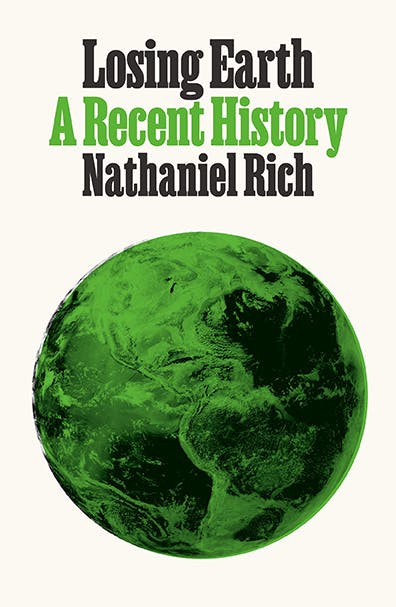
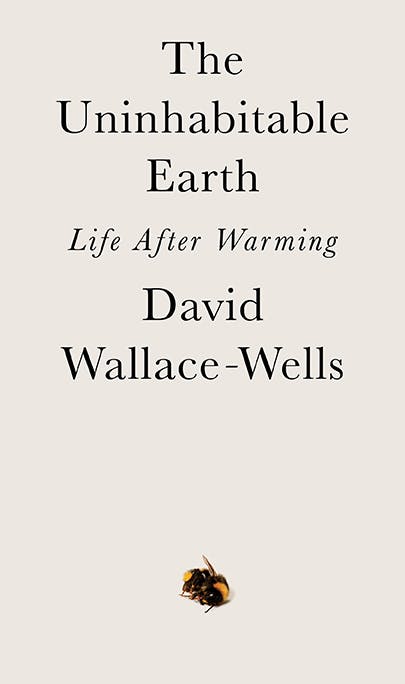
Two recent articles tried new ways of talking about the emergency at hand, and appeared to resonate with readers. When The New York Times Magazine published Nathaniel Rich’s narrative feature, “Losing Earth,” in August of last year, it was the longest piece the magazine had ever run, taking up that week’s entire issue. Rather than explaining new studies or documenting the plight of people in a disaster zone, Rich locates a moment in the past when, he thinks, there was a chance to avert the crisis. The feature garnered an unprecedented level of public attention for the issue. Except, that is, for the previous year, when New York magazine published David Wallace-Wells’s apocalyptic climate hair-raiser, “The Uninhabitable Earth.” That feature was based in a simple premise: Take the high-end predictions of warming and paint a picture of what life would be like on Earth at those temperatures. Spoiler: Those of us who survive will basically be boiling in our own blood.
Both pieces quickly provoked impassioned criticism from people who work on climate issues. Responses to Rich’s feature ranged from baffled to withering, with many commentators deriding his understanding of the climate crisis as “naïve.” Wallace-Wells’s piece, too, produced an immediate backlash from the climate intelligentsia, partly because he got some of the science wrong, overstating certain risks, but also because the piece was charged with the cardinal sin of being “alarmist.” People didn’t like how Wallace-Wells was talking about climate change, and the science internet exploded with heated discussion of the “right way” to approach it.
On a rapidly warming planet, one function of climate writing is to get the word out—to spark and help shape public discourse in the midst of ongoing and accelerating catastrophe. We are already too late to prevent some degree of unprecedented change. We know it’s going to be bad, but human activity today could still make the future worse. So it’s true both that we are too late and that there is no time to be lost. Yet if we get the framing of this story wrong—if we see the issue as a matter of individual consumer choice, for example, or choose a purely emotional rather than an explicitly political framing—we risk missing the point altogether.
Rich’s solution to the problem of climate communication is, essentially, to weave a gripping tale of classic Aristotelian tragedy. In Losing Earth, he looks back into the recent past to tell a story about “a handful of people” led by environmental lobbyist Rafe Pomerance and climate scientist James Hansen, who nobly tried to save the rest of us from climate catastrophe, back when such a thing was supposedly still possible. The story begins in 1979, when Pomerance chances on a report about the planetary threat of greenhouse gases and joins forces with Hansen. It climaxes in 1989, at a meeting in the Dutch resort town of Noordwijk where John Sununu, chief of staff to president George H.W. Bush, single-handedly scuttles what could have been a binding international agreement to reduce carbon emissions.
In Rich’s telling, this moment is the point at which the future of the planet is decided. “The conditions for success could not have been more favorable,” he writes. Climate science was settled and widely accepted, partisan lines had yet to be drawn, the fossil fuel industry had not yet ramped up full-throated disinformation campaigns, and climate action had broad international support. And yet, the chance for a binding agreement passes, and here we find ourselves, today. “There can be no understanding of our current and future predicament,” Rich writes, “without an understanding of why we failed to solve this problem when we had the chance.” The tragic figure in this story is not Rafe Pomerance or James Hansen, but all of humanity, whose fatal flaw is that we are unable to sacrifice the comforts we currently enjoy to avoid future catastrophe.
It’s easy to see why a narrative of classic tragedy might be tempting to a writer struggling to tell a compelling story about climate change. In the face of this amorphous and all-encompassing threat, it can seem that no one person has the ability to take meaningful action, but by casting heroes and villains, Rich puts a face to the crisis and endows his characters with agency in a way that is likely to feel satisfying to readers. When you tell the story of climate change like this, maybe readers will feel that they can (finally) understand it. It offers a way to think about what is otherwise a nearly unthinkable problem. All of which seems terribly promising. And judged by the metric of whether it is an engaging story that keeps the reader flipping pages, Losing Earth is a resounding success. You have to admire the narrative alchemy by which Rich transmutes what is basically a series of meetings and conferences into a riveting will-they-or-won’t-they drama. Especially when we already know how it ends: They didn’t.

Yet climate change, it turns out, just doesn’t fit the sort of story Rich wants to tell. To tell the story as tragedy, Rich has to sacrifice important truths—both small and large. An elite cadre of men in the United States—quite literally meeting behind locked doors—has to stand in for all of a tragically flawed humankind. (A less inclusive “we” would be hard to imagine.) As Kate Aronoff wrote in response to the magazine piece, even “America’s particular failure to address climate change isn’t a failure of all of humanity.” In addition, this narrow “we” obscures tensions between the interests of people in more and less economically developed nations. In the 1980s, Rich writes, more than 30 percent of people on the planet lacked access to electricity. Breezing past the implications, he acknowledges that “billions of people would not need to attain the ‘American way of life’ in order to increase global carbon admissions catastrophically; a light bulb in every other village would do it.” This is one of the fundamental difficulties of any international action on climate change: Less economically developed nations are not about to halt growth and give up on the increases in living standards achieved by burning fossil fuels, gains already achieved by richer nations at the expense of a stable climate.
Naomi Klein, Alyssa Battistoni, and others have pointed out that Rich also ignores his story’s broader historical context. This was a decade when Western economies that had been chugging along since the 1950s stalled, and world leaders anxious to address declining economic productivity latched on to neoliberal ideas about deregulation and market freedom. This politics relied on an engine of economic growth fed by ever-accelerating use of fossil fuels. In the United States, the right was strategically pitting economic growth against environmental concerns, while systematically demolishing the labor movement, which might have tried to pull the brake on runaway free-market fundamentalism. Klein, who has previously written about the same period of climate change history, writes of Rich’s premise,
one could scarcely imagine a more inopportune moment in human evolution for our species to come face to face with the hard truth that the conveniences of modern consumer capitalism were steadily eroding the habitability of the planet. Why? Because the late ’80s was the absolute zenith of the neoliberal crusade, a moment of peak ideological ascendency for the economic and social project that deliberately set out to vilify collective action in the name of liberating “free markets” in every aspect of life.
Battistoni put it simply: “This isn’t just a missed opportunity or a partial story—it is the wrong story.” While individuals with high hopes for the Noordwijk meeting might have felt that binding international action on climate was just a few pen strokes away, with hindsight we can see how unlikely that was. At best, the fossil fuel companies helped get us into this mess because they knew about the threat of planetary catastrophe by the 1970s and did nothing. Meanwhile, ascendant neoliberalism and globalization were stacking the deck against success at Noordwijk.
Of the ill-fated agreement, John Sununu tells Rich, “It couldn’t have happened … because the leaders in the world at that time were all looking to seem like they were supporting the policy without having to make hard commitments that would cost their nations serious resources. That was the dirty little secret at the time.” William Reilly, administrator of the Environmental Protection Agency under George H.W. Bush, explains to Rich that even if a binding international agreement had been ratified, such agreements are unenforceable, therefore outcomes are far from guaranteed. “There is no global police force,” writes Rich, “and no appetite for economic sanctions or military action triggered by a failure to meet emissions targets, so we can only enforce ourselves.”
So the whole premise of this great tragedy we have just seen unfold—that “we” missed this moment to save ourselves—rests on the flimsy assumption that an unenforceable treaty signed at Noordwijk would have kept warming below 1.5 degrees, staving off planetwide disaster (never mind that climate science predicts planetary warming of 1.5 degrees will, in fact, be disastrous). It was wildly unlikely the Noordwijk meeting was ever going to be the pivotal moment. Rich’s reporting is clearly extensive and thoughtful, and yet so often contradicts his narrative that it’s as if one hand is unwilling to know what the other is doing. But what matters more is that he’s trying to tell a political story as an explicitly apolitical morality tale about human nature.
The fatal flaw of classical Aristotelian tragedy later came to be interpreted as a moral flaw, and Losing Earth takes up this idea in a sanctimonious afterword pleading for more focus on the “moral dimension” of climate change. That is, Rich suggests that an appeal to sentiment might help move people to action: “Rational arguments are self-defeating,” he writes. “They only help to shuttle the discourse out of the furnace of moral reckoning and into the arid corridors of a policy debate. A human problem requires a human solution.” Rich quotes Laudato Si’, Pope Francis’s (genuinely remarkable) second encyclical, whose title has been translated as “On Care for Our Common Home,” in which Francis points to Ecumenical Patriarch Bartholomew’s call for every person to repent for our contribution “smaller or greater, to the disfigurement and destruction of creation.”
From this, Rich arrives at the conclusion that it’s necessary to identify “the villains—those who have tried to bewitch an unassuming public with uncertainty, lies, and the gratuitous fantasies of denialism.” While acknowledging that he is not free of blame himself (“my hands drip crude”), he calls for public shaming to hold the worst offenders to account. Here, he seems to be indicting the fossil fuel industry and denialists in the Republican Party, which makes one wonder why he didn’t write that story, instead. And a reader might be forgiven for feeling a bit of whiplash after the fatalism of the tragedy we’ve just seen unfold. We are, in Rich’s telling, doomed by “human nature” to fail at averting the climate crisis. But here he is, gesturing down a path to “solutions.” “One of our most effective weapons is mortal shame,” he writes. Implausibly, he foresees that out of this miasma there “will eventually emerge a vigorous, populist campaign to hold to account those who did the most to block climate policy over the last forty years.” He makes a vague gesture toward future action—“an appeal to higher decency can work on the human beings who vote in elections”—but for the most part it seems as if his “solution” to the total shipwreck of climate change is to vigorously point the finger as the ship goes down.
The deeper problem with Rich’s call to moralism as a spur to action is its ineffectiveness in building consensus and facilitating change—the stuff of politics. At best, moralism is an earnest expression of personal values; at worst, it is an exercise in self-aggrandizement that lends itself to righteous bullying. When you deploy moralistic rhetoric in public discourse, you close down the possibility of dialogue, which can only stall progress. See Fox News, as well as moralism in public discourse about abortion, immigration, or pretty much any other hot-button topic that riles emotion and divides our nation today. In the case of climate change, moral bombast threatens to perpetuate the paralyzing dynamics already in place around the issue. When what’s at stake is the actual end of the world as we know it, this seems like a poor choice of tactics, narrative or otherwise.
Losing Earth is, perhaps unwittingly, an excellent reminder that the way we define problems shapes our definition of solutions. If stories locate the problem in a realm where humans have some control, in politics and policy, they might point down a road toward salvaging something of human civilization. The future is undoubtedly bleak—to suggest we will “solve” climate change is to ignore the truth unfolding all around us—but it is not wholly settled. At the end of a political story, there is at least the possibility, however belated, of action. At the end of a tragedy, there is just tragedy, though some readers might feel catharsis on the road to ruin.
Wallace-Wells’s approach to climate change is that it’s not a story at all; it’s a setting. You will find no plot pitting characters against external odds or internal flaws in The Uninhabitable Earth. Instead, you will find sketches of hellish backdrops against which the future could unfold if we keep on our current course of global emissions, coupled with cultural criticism exploring how humans make meaning in a catastrophically warming world.
This is partly because, unlike Rich, Wallace-Wells sees the impossibility of casting this story as a tragedy or any other kind of familiar drama focused on only a few powerful individuals. “There is also, beyond the hero problem, a villain problem,” he writes. Even in a comic-book movie version of a climate story, “who would its heroes be fighting against? Ourselves?” Wallace-Wells acknowledges that some are more responsible than others—the world’s wealthy produce half of all emissions—but suggests that any narrative that stops there is incomplete. The United States produces only 15 percent of global emissions, so it’s not accurate to blame global warming solely on the Republican Party or American fossil fuel companies. To do so, he writes, “is a form of American narcissism.” There are also the forces of “inertia and the allure of near-term gains and the preferences of the world’s workers and consumers, who fall somewhere on a long spectrum of culpability stretching from knowing selfishness through true ignorance and reflexive, if naïve, complacency. How do you narrativize that?”
His book ducks this narrative problem, instead taking worst-case scenarios that put the planet at more than 4 degrees Celsius warming by 2100 and painting a vivid picture of what life would be like on Earth at those temperatures. This is a world of plague and famine, drought and flooding, in which human cognitive abilities decline precipitously and just breathing the air can present a mortal danger. Global food production collapses, economies crumble, and war breaks out in feverish waves. This panoramic backdrop, revealed horror by horror, sets the stage for an apocalyptic hellscape of human misery. For many people, of course, climate horror is here, today. Already the dead can be counted—in Puerto Rico, Bangladesh, California. Already the air is deadly: “More than 10,000 people die each day, globally, from the small-particulate pollution produced by burning carbon.” Given the speed, scope, and severity of change already underway, Wallace-Wells has warned that it’s time to panic.
Critics savaged the original article as irresponsible and alarmist. The term “climate porn” was bandied about online. “I am not a fan of this sort of doomist framing,” climate scientist Michael Mann wrote on his Facebook page. “It is important to be up front about the risks of unmitigated climate change,” he observed, but he suggested there is “danger in overstating the science in a way that presents the problem as unsolvable, and feeds a sense of doom, inevitability, and hopelessness.” Present too grim a forecast, some argue, and people may lose the sense that they can do anything to help. Critics believed optimism to be more motivating than fear; some also thought it unlikely that the future would get this bad. Others applauded the piece as a necessary corrective, one that explicitly attempts to make a very real threat feel more concrete and urgent.
If you read the news, Wallace-Wells points out, it seems as if the goal of limiting warming to 2 degrees, set by the Paris accords, “remains something like the scariest scenario it is responsible to consider.” But no industrial nation is on track to meet its Paris targets. And a recent report presented to the United Nations shows that even if global greenhouse gas emissions are somehow (improbably) cut to hit the Paris targets, Arctic temperatures are likely to rise to catastrophic levels—3-5C above preindustrial levels—because of the CO2 we have already released into the atmosphere. Those temperatures could still trigger a climate “tipping point”—rapidly melting ice and permafrost leading to rising sea levels and a release of methane into the atmosphere, causing a runaway warming effect. Even if the science is not settled, which science never is, alarmism might be one of the most honest narrative approaches we’ve got in our arsenal, this late in the day.
In The Uninhabitable Earth, Wallace-Wells is reaching for a form that gets readers, especially those unscathed thus far by the effects of climate change, to feel their skin in the game. He asks you to imagine what it will be like when everything you think is stable—your food, your water, your health, your country—has broken down. This is all in the range of the possible. After a brief plateau from 2014 to 2016, and a small rise in 2017, global emissions spiked to an all-time high in 2018. Although the effects will be unevenly distributed, the premise of this book is that no one will escape the consequences of climate change—it will hit you no matter who you are or where you live. If Rich tries to short-circuit the human tendency toward narrow self-interest through an appeal to morality, then Wallace-Wells doubles down on that tendency.
Some of the best writing in The Uninhabitable Earth appears in its second half, where Wallace-Wells grapples with the cultural shifts that climate change may bring. The ground covered here will be familiar to readers who follow climate theory, particularly on the left. Primarily an act of assemblage, it is incredibly useful as a sort of CliffsNotes of cutting-edge climate thought. He mulls over insights from scholars and writers such as Kenneth Pomeranz, William Nordhaus, William Gibson, Andreas Malm, Amitav Ghosh, Paul Kingsnorth, and Thomas Piketty (women are few, and the canon here leans decidedly Western). He considers everything from economic theory to transhumanism to a litany of cognitive biases (“We can’t see anything but through cataracts of self-deception”) to try to better understand this warming world.
One of the most interesting ideas he plucks from academic journals is that climate change is morphing away from narrative and becoming a metanarrative, as Modernism was in the twentieth century. As climate change “begins to seem inescapable, total—it may cease to be a story and become, instead, an all-encompassing background. No longer a narrative, it would recede into what literary theorists call metanarrative, succeeding those—like religious truth or faith in progress—that have governed the culture of earlier eras.” This will, in turn, affect all our stories. “When we can no longer pretend that climate suffering is distant—in time or place—we will stop pretending about it and start pretending within it.” In this imagined future, “even romantic comedies would be staged under the sign of warming, as surely as screwball comedies were extruded by the anxieties of the Great Depression.”
What people miss about Wallace-Wells is that he’s, in fact, an optimist. He’s an almost Pollyannaish one at that, who argues that it’s wholly in our power to stop the clock on climate catastrophe. The solutions, he says, have already been imagined. We have all the tools—a carbon tax, clean energy, novel agricultural practices, a shift away from beef and dairy, and much-touted (but still more or less imaginary) carbon capture technology. He takes a leap of faith that we’ll somehow figure this out in the next 30 years, which is the window of time he cites as humanity’s opportunity to avoid the nightmare planet he has just described. (I wouldn’t be surprised to see a glossy feature with techno-optimist overtones on carbon capture or geoengineering from Wallace-Wells in the near future.) The fact that to implement these changes would mean overhauling global industry and infrastructure doesn’t seem to faze him. Neither does the lack of geopolitical systems needed to even begin to address these changes. “We just haven’t yet discovered the political will” to do it, he writes. The “just” in that statement is a doozy.
In a section titled “Ethics at the End of the World,” Wallace-Wells paints a bleak picture of what is actually far more likely to happen, which is essentially the normalization of increasing levels of human suffering. “One way we might manage to navigate that path without crumbling collectively in despair,” he writes, “is perversely to normalize climate suffering at the same pace we accelerate it, as we have so much human pain over centuries, so that we are always coming to terms with what is just ahead of us, decrying what lies beyond that, and forgetting all that we have ever said about the absolute moral unacceptability of the conditions of the world we are passing through in the present tense, and blithely.”
It’s not surprising that writers can struggle to tell new stories about climate change, stewing as we are in the midst of it. At the very least, these are unprecedented times that call for new kinds of narratives—or perhaps new forms, entirely—that help make sense of our interrelated lives on a warming planet. These two new books illustrate, each in its own way, how insufficient traditional modes of narrative can be for this subject. For Rich, spinning a good yarn means leaving out politics, an egregious omission for a story that unfolds in the halls of American political power. For Wallace-Wells, telling the truth means leaving out narrative altogether.
Both books also tend to whitewash difference in an attempt to talk about a problem whose burden is not equally shared. Rich whitewashes difference to put all humans in the same doomed boat; Wallace-Wells whitewashes difference to curry hope. “Personally,” he writes, “I think that climate change … flatters our sense of power, and in so doing calls the world, as one, to action.” But power is an unevenly distributed resource, and not everyone is so easily flattered. Given vast disparities in wealth and risk, “we” are not all facing the same threat, and yet people need ways to talk to each other about climate change.
The real gift these books offer, then, is the dialogue they’ve prompted. Together, they serve as a reminder that we need to recognize what’s at stake in the stories we’re reading; what one perspective values, what another overlooks. Maybe, the truth can only appear in aggregate, arising out of an ecosystem of different kinds of stories that rub up against one another in surprising ways.
One story that is still to be told is a tale of collective action, in which a social movement, say, could serve as protagonist. Wallace-Wells calls this approach “a snore.” And anyone paying attention to climate news can tell you we have already missed the opportunity for a happy ending. But rather than a moralism of climate change we could use an ethics of climate change, rooted not in personal belief but in a shared consideration of what we owe to one another. I hope someone figures out how to tell that story, soon.
It’s Tuesday, April 9.
Barr Some: At a congressional budgetary hearing, Attorney General William Barr told lawmakers that they’ll receive a copy of the Mueller report “within a week.” But the copy they get will be heavily redacted—and Congress isn’t too happy about that, reports Russell Berman.
A Crossroads for Israel: Israel’s general election on Tuesday was a tight race between Prime Minister Benjamin Netanyahu and his challenger, the former military chief Benny Gantz—both of whom are claiming victory. During the run-up, Netanyahu’s opponents accused him of damaging the relationship between Israel and diaspora Jews, and recent events have exposed the depth of those fractures. Under Netanyahu’s government, discontent among liberal and middle-of-the-road Jews will likely escalate, writes Emma Green, and “marks a pinnacle in the fracture between Israeli and American Jews.”

A man in Jerusalem walks past a Likud campaign billboard depicting President Donald Trump shaking hands with Israeli Prime Minister Benjamin Netanyahu. (Ammar Awad / Reuters)
Raising Cain: Trump wants to nominate the former presidential candidate Herman Cain to the Federal Reserve Board. Cain isn’t exactly “taken seriously” by the political establishment, but his potential nomination shows that Trump is moving to strengthen his grip on the central bank—just in time for 2020, reports Peter Nicholas.
Invisible Middlemen: Before the heads of five pharmacy benefit managers (PBMs)—often known as pharmacy “middlemen”—testify before Congress this week about high drug prices, Olga Khazan examines the outsize role PBMs play in how patients receive care. They handle rebates and payments between drug manufacturers, health insurers, and pharmacies, and their role as middlemen can slow down the delivery of crucial medicine, which sometimes proves deadly.
— Madeleine Carlisle and Olivia Paschal

Demonstrators protest against Egyptian President Abdel Fattah el-Sisi near the White House, as President Donald Trump meets with el-Sisi. (Jose Luis Magana / AP)
Troubled Countries Can’t Keep People From Leaving (Eliza Willis and Janet Seiz)
“The same factors that lead to outmigration—crushing poverty, widespread crime and violence, and weak government institutions—also limit these governments’ ability to entice residents to stay.” → Read on
Elizabeth Warren Had Charisma, and Then She Ran for President (Peter Beinart)
“Warren’s troubles … are being compounded by journalists who analyze her image without recognizing how bound up it is with her gender. The media aren’t responsible for the fact that many male, and some female, voters demand that women presidential candidates work so much harder to prove their competence—and then react negatively once they do so. But journalists do have an obligation to explain what’s going on.” → Read on
Democrats Need to Emphasize Responsibility, Not Just Rights (Rahm Emanuel)
“We can begin by issuing a simple but powerful call: a policy that requires all 18-year-olds to give at least six months of their life to national service. People from different walks of life, with different backgrounds, would serve with one another as a rite of passage.” → Read on
It Wasn’t ‘Verbal Blackface.’ AOC Was Code-Switching. (John McWhorter)
“Ocasio-Cortez’s critics seem to assume that since she is not black, her use of Black English must be some kind of act. This, however, is based on a major misreading of the linguistic reality of Latinos in America’s big cities.” → Read on
Obama’s Presidential Library Is Already Digital (Dan Cohen)
“As the highly anticipated Obama Presidential Library in Chicago morphed into the Obama Presidential Center—without a place to hold the records of his administration—reactions ranged from slight confusion to rote dismissiveness … Is a digital library a library?” → Read on
‣ The Democratic Electorate on Twitter Is Not the Democratic Electorate in Real Life (Nate Cohn and Kevin Quealy, The New York Times) (? Paywall)
‣ Will Congress Leave the Colorado River High and Dry? (Naveena Sadasivam, Grist)
‣ Congress Is About to Ban the Government From Offering Free Online Tax Filing. Thank TurboTax. (Justin Elliott, ProPublica)
‣ ‘Beto’ and Other Names in Politics and Life (Jay Nordlinger, National Review)
‣ I Worked as a Bail Bond Agent. Here’s What I Learned. (Joshua Page, The Appeal)
‘We Can Do This’: The documentary Community Patrol, which premiered today on The Atlantic, depicts a crime-ridden area of Detroit attempting to police itself rather than report offenders to the police.
We’re always looking for ways to improve The Politics & Policy Daily. Comments, questions, typos, grievances and groans related to our puns? Let us know anytime here.
Were you forwarded this newsletter? Sign up for our daily politics email here. We have many other free email newsletters on a variety of other topics. Find the full list here.
There’s a disturbing cycle to Donald Trump’s war on immigrants. It starts with the president’s demand for harsher policies on the southern border, no matter how legally or morally dubious they may be. His subordinates have two options: to do what he says, or try to change his mind. If the former, the courts usually intervene to stop the policy, and Trump only gets more enraged, more extreme. If the latter—well, Trump only gets more enraged, more extreme.
Over the weekend, Trump ousted Homeland Security Secretary Kirstjen Nielsen, who was hardly a disloyal cabinet member. She agreed to put traumatized migrant children in cages last year and defended Trump’s “zero tolerance” border policy to no end. But in recent weeks, she reportedly resisted Trump’s orders for more dramatic crackdowns. He then purged most of the department’s upper ranks on Monday in a bid to replace the current slate of hardliners with more pliable figures.
When Trump does find someone to carry out his policies, though, it only extends his unprecedented losing streak in the courts. Last month, The Washington Post tabulated 63 different cases where federal judges ruled against the administration. Trump sometimes wins on appeal, as he did with the Muslim travel ban last summer, but judges have halted many of his border-related efforts. On Monday night, a federal judge in California blocked a policy implemented by Nielsen last December to send asylum seekers to Mexico while their legal proceedings in the U.S. unfolded.
Those defeats, in turn, only spur Trump to take more aggressive steps in the future. According to The New York Times, Trump wants to restart family separation, impose even more barriers to asylum claims, build the wall more quickly, and revoke birthright citizenship by executive order. And the cycle repeats itself.
Something’s got to give. The president isn’t likely to abandon his Ahab-like obsession with border security, and the courts aren’t likely to start ignoring his contortions of federal immigration law. As the 2020 election draws closer, and Trump’s need to inflame his supporters grows more urgent, the risk only grows that he’ll start ignoring the rule of law altogether to achieve his unattainable goals.
Trump himself has already raised the possibility of flouting the courts. Last week, he traveled to Calexico, California, to highlight ongoing construction of his border barrier. “We’re full, our system’s full, our country’s full—can’t come in!” he told reporters. In private conversations with Border Patrol agents, the president allegedly took that message a step further: CNN’s Jake Tapper, citing two unnamed sources, reported that Trump urged the agents not to let migrants in the country and to ignore court orders to keep them out: “Tell them we don’t have the capacity, he said. If judges give you trouble, say, ‘Sorry, judge, I can’t do it. We don’t have the room.’”
Trump’s contempt for the judiciary and the law run deep. He has complained that a federal judge couldn’t oversee the Trump University lawsuits because he was “a Mexican,” asked the FBI director to go easy on a political ally and then fired him to halt the Russia investigation, and dangled pardons to encourage his former campaign staffers not to cooperate with special counsel Robert Mueller.
These were all acts of desperation, as are Trump’s latest slate of potential border policies. CNN reported on Monday that one day last month, he ordered Nielsen to close southern ports of entry without warning, a move that could easily send the U.S. economy into a recession. He later threatened publicly to do so, then failed to follow through on it. I noted last week that Trump’s authority to close lawful ports of entry along the border is legally dubious at best. Congress has given the executive branch wide discretion on many immigration-related matters, but there are still many areas where the letter of the law stands in Trump’s way. And he knows it.
“We have the worst laws of any country in the world, whether it’s catch-and-release, or any one of them, I could name any of them,” he complained to reporters on Tuesday. “If you’ve ever heard of catch-and-release, chain migration, visa lottery. You have to fix the asylum situation, it’s ridiculous.” Congress disagrees with that assessment. Even when Republicans controlled both chambers, lawmakers declared Trump’s effort to rewrite federal immigration law as dead on arrival. The American public also doesn’t share his views: Support for higher levels of immigration have risen since he took office.
Trump is well aware he’s already lost most Americans. He also knows that his only hope for political survival are the anti-immigration supporters who turned out for him in 2016 and largely have stuck with him. That may be why his latest immigration demands read like a love letter to them (though he has denied that family separation is on the table). Each policy would face an uphill battle in the courts. His birthright citizenship proposal is especially egregious—not just unconstitutional, but fascist.
Trump’s disregard for basic legal practices isn’t limited to immigration matters, of course, and the result is that he usually loses in court. My colleague Emily Atkin noted last summer that former EPA Administrator Scott Pruitt’s campaigns to halt or roll back environmental regulations often ran aground when they came under judicial scrutiny. New York University’s Institute for Public Integrity, which tracks the Trump administration’s record in defending deregulatory moves before the judiciary, found that the government has won less than 6 percent of the time.
“We’re bucking a court system that never, ever rules for us, and we’re bucking really bad things in Congress with the Democrats who aren’t willing to act,” Trump said on Tuesday. “They want open borders, that means they want to have crime [and] drugs pouring into our country. They don’t want to act. We have to close up the borders. We’re doing it. I could do it much faster if they would act.”
Don’t doubt that Trump will try to do it. During the closing stages of last year’s midterms, Trump doubled down on measures to satiate his political base. He sent thousands of troops to the border, allegedly to protect the U.S. from a migrant caravan of desperate refugees fleeing violence in Central America, and first floated the idea of revoking birthright citizenship. And Trump wasn’t even on the ballot. As he fights for his political life over the next 18 months, the risk of even more drastic steps will rise. There’s no telling what the consequences will be for the American rule of law, and for the immigrants whom it’s supposed to protect.
The long-awaited Mueller report will be out “within a week,” Attorney General William Barr assured impatient lawmakers in a hearing on Tuesday. Exactly how much of the book-length document either the public or Congress will be able to see, however, remains a mystery.
The attorney general made his first appearance before Congress since he sent his four-page letter read ’round the world on March 24, in which he declared that Special Counsel Robert Mueller had not found a conspiracy between Donald Trump’s campaign and Russia, nor had he found enough evidence to either charge President Trump with obstruction of justice or exonerate him of that crime. Barr was due before the House Appropriations Committee to testify on the president’s annual budget request, but Democrats used the opportunity to press him on his handling of the nearly 400-page report and his decision to outline its “principal conclusions” in a manner that allowed Trump to claim full vindication.
“I must say,” Committee Chairwoman Nita Lowey told Barr at the outset, “it is extraordinary to evaluate hundreds of pages of evidence, legal documents, and findings based on a 22-month-long inquiry and make definitive legal conclusions in less than 48 hours. Even for someone who has done this job before, I would argue it is more suspicious than impressive.”
[Ken White: Barr’s startling and unseemly haste]
While refusing to further characterize Mueller’s findings, Barr offered the lawmakers a few additional morsels that were not previously known. He said the process of redacting the report for public consumption is “going along very well” and that he would release it “within a week”—keeping to his mid-April timetable.
Democrats have assailed Barr’s plan for redacting four categories of information, warning that the attorney general could use the excisions to shield damaging findings about Trump from the public. And while lawmakers acknowledge that some information—such as classified intelligence on the Russian government—should be withheld from the public, they have argued that Congress needs the full, unredacted report to exercise its constitutional oversight responsibilities.
On that front, Barr left Democrats disappointed. He suggested that Congress might never see the most sensitive portions of Mueller’s report, much less the evidence the special counsel used to arrive at his conclusions, which Democrats have also demanded to see. Democrats on the House Judiciary Committee have already voted to authorize subpoenas for the full report and its underlying evidence, likely setting up a court battle with Barr.
“I don’t intend at this stage to send the full, unredacted report to the committee,” the attorney general told the appropriations panel. He was responding to a question from Republican Representative Tom Graves of Georgia, who sought to elicit a warning to members of Congress not to leak redacted portions of the report to the public.
[Read: The critical part of Mueller’s report that Barr didn’t mention]
The attorney general said it would be “unfortunate” if Judiciary Committee Chairman Jerrold Nadler or some other lawmaker leaked the full report. But he voiced doubts that Nadler would get his hands on it. “I’m not sure where he would get it,” Barr said. “If he got it directly from the [special] counsel, that would be unfortunate. I doubt that would happen.”
The special counsel did not assist in drafting either of Barr’s two letters to Congress; Mueller, the attorney general said, was given the opportunity to review the first letter before it went out, but declined for reasons Barr said he did not know. Mueller’s lack of involvement in that letter is important given a report from The New York Times that members of his team believe the attorney general “failed to adequately portray the findings of their inquiry and that they were more troubling for President Trump than Mr. Barr indicated.”
[Read: Even Congress might not get the full Mueller report]
Mueller’s team is, however, participating in the redaction process, as are members of the intelligence community and prosecutors working on cases that could be affected by the public disclosure of certain information in the report, Barr said. In his second letter to Congress, the attorney general had outlined four categories of information that would be redacted:
(1) material subject to Federal Rule of Criminal Procedure 6(e) that by law cannot be made public; (2) material the intelligence community identifies as potentially compromising sensitive sources and methods; (3) material that could affect other ongoing matters, including those that the Special Counsel has referred to other Department offices; and (4) information that would unduly infringe on the personal privacy and reputational interests of peripheral third parties.
On Tuesday, Barr told lawmakers that the redactions would be “color-coded” with explanations as to why the information was being blacked out. That could provide a road map for Democrats to challenge the redactions in court, and Barr acknowledged that Nadler could ask a judge to authorize release of certain material redacted because it involves secret grand-jury proceedings. But, under questioning from Democratic Representative Ed Case of Hawaii, the attorney general said he did not intend to seek a court order himself.
Case took issue with the final category of redactions, pressing Barr to explain what legal authority required him to shield information based solely on the “personal privacy and reputational” concerns of “peripheral third parties.” The attorney general said that was based on Department of Justice regulations, but he acknowledged that he would be using his own discretion in applying them. “It seems to me that’s an exception that you can drive a truck through,” Case told him.
By the end of Tuesday’s hearing, Barr had opened up some wiggle room: Members of Congress won’t get the full, unredacted Mueller report, but they might end up seeing more of it than the public. The attorney general said that once the public version is released, he would talk with Nadler and Senate Judiciary Committee Chairman Lindsey Graham “about what additional information they feel they require, and whether there’s a way of accommodating that.”
He also said that “under appropriate safeguards,” some members of Congress might get a peek at classified intelligence blocked out in the report. A group of lawmakers comprising the leadership of each party and the bipartisan heads of the House and Senate intelligence committees regularly receives briefings on highly sensitive investigations not shared with the full Congress or the public.
Unsurprisingly, Barr’s willingness merely to discuss releasing additional information to Congress did not satisfy Nadler. “Congress is—as a matter of law—entitled to each of the categories AG Barr proposed to redact from the Special Counsel’s report,” the chairman said on Twitter. “Full release of the report to Congress is consistent with both congressional intent and the interests of the American public.”
For now, Barr said he was prioritizing the release of the public, sanitized version of the Mueller report. The fight over the rest of it, he seemed to suggest, can wait. That it is about to erupt, however, is no longer in doubt.
If Acevedo is concerned with using tax dollars for “smarter ways,” how about that $116 billion we are wasting onRead More