Nolte: Two-Thirds of Americans Oppose Slavery Reparations

Exactly two-thirds of Americans (66 percent) oppose paying reparations for slavery, while only 21 percent believe it to be aRead More

Preempt Threats and Safeguard America's National Security with USIntelNews.com

 Russian Banking Sector on Brink of Collapse, Up to 50% of Banks Face Liquidation
  Ethicoin: Learn Crypto Trading and Ethical Investing (The Ethicoin Trilogy Book 1) Kindle Edition
  Kremlin in Crisis as Putin’s Death Confirmed, Power Struggle Intensifies
  Assad’s Regime Collapse: A Major Setback for Russian Drug Networks
Exactly two-thirds of Americans (66 percent) oppose paying reparations for slavery, while only 21 percent believe it to be aRead More
$4 Gas Returns in California… (Third column, 7th story, link) Advertise here
‘Flight shame’ has Swedes rethinking air travel… (Third column, 9th story, link) Advertise here
As Vegas eyes millennials, concert residency industry booms… (Third column, 12th story, link) Advertise here
It’s hard to pick the strangest thing about Mike Gravel’s campaign for president.
Is it the candidate’s 88 years of age? His blunt critique of American foreign policy? Or the fact that he refuses to travel anywhere to sell his candidacy?
Perhaps it’s that the former senator from Alaska’s campaign manager is a 17-year-old finishing his senior year of high school. Or that the stated goal of the Gravel fundraising apparatus is to raise as little money as possible.
No. The single strangest thing about the campaign is that neither the candidate nor the staff supports his bid for president.
“We don’t want people to vote for the senator,” David Oks, the wet-behind-the-ears campaign manager, told me. “The senator does not want people to vote for him.”
In fact, Gravel and his staff don’t even agree on which candidate they should back instead. Oks supports Senator Bernie Sanders of Vermont, while Gravel told me he’s interested in Sanders or Representative Tulsi Gabbard of Hawaii. Yet here they are, tied together on a quixotic, somewhat cranky campaign for president, which officially launched on Monday. The real goal of the effort is to get Gravel onstage for the Democratic Party debates, where he would be a disruptive presence—talking about issues, and talking about them in a way that other Democrats are unlikely to do.
Indeed, Gravel laughed at the idea of becoming president: “At 89?!” Once he’d finished giggling, he added, “I would promise I would be only four years, ’til I’m 93.” Pause. “Then maybe I’d be drunk with power!” Gravel laughed again.
Candidates who run without much hope of actually winning their party’s nomination are not new. People run for president to spotlight a single issue, or simply to spotlight themselves. But rarely, if ever, has an effort been so blunt, with the candidate himself acknowledging that he’s just angling for the debate stage. With the Democratic Party’s guidelines for the debates offering candidates a simple—which is not to say easy—path to qualifying, the opportunity to tailor a campaign to fit the criteria is open. That means that an unorthodox outsider such as Andrew Yang has already qualified by collecting 65,000 donors, whereas Julian Castro, a former Cabinet secretary and heralded Democratic insider, is still scrapping to get onstage. Gravel and his young champions are perfectly happy to use the rules to their advantage.
“Do you know how old I am?” That was Gravel’s reaction when his would-be campaign staff first contacted him.
Forget knowing his age—just knowing Gravel’s name is impressive these days. He’s probably most famous for his 2008 Democratic presidential run, and especially for an enigmatic, esoteric campaign video that went viral; Gravel’s big issues in that bid were ending the Iraq War and increasing direct democracy. For Americans of a certain age—say, old enough to be David Oks’s grandparents—he might be remembered as a fierce critic of the Vietnam War who served two terms as a U.S. senator and read the Pentagon Papers into the Congressional Record.
The people who recruited Gravel as (likely) the oldest presidential candidate in history are absurdly young. Oks, despite his age, is not a newcomer to politics. At 16, he ran unsuccessfully for mayor of Ardsley, New York, a village in Westchester County. With the 2020 cycle on its way, he and his friend Henry Williams, a freshman at Columbia University, got to thinking about how they could get involved in the presidential election. They liked Sanders, Oks told me, but hesitated to join his campaign.
“Bernie, we thought, basically continues with Obama’s foreign policy, and we felt that Obama’s foreign policy was a disaster,” he said. Gabbard, with her mixture of Sanders-style domestic ideas and a strongly noninterventionist foreign policy, seemed closer to the mark—but they worried that her friendliness toward the Syrian dictator Bashar al-Assad tainted her.
“We thought the way to push the field left would be to have our own candidate in the race,” Oks said. “We really need someone to go in there and criticize the other candidates for policy positions that are really bad.”
[Read: Is there any hope of fixing the Republican debates?]
They landed on Gravel, and set about persuading him to run, starting with a phone call on March 14. Gravel was understandably skeptical. Not only is he nearing his 90s, but he was living a pleasant life with his family, and working on a book about his idea to amend the Constitution to create a “Legislature of the People” that would bypass an atrophied Congress. But Oks and Williams convinced him. First, he was impressed that they were familiar with his reform idea. Second, they assured him that he wouldn’t have to travel—except to the debates if he qualifies—and that he wouldn’t have to give many interviews. It would be a reprise of William McKinley’s successful front-porch campaign in 1896, in which the Republican stayed at home in Canton, Ohio, rather than barnstorm. Gravel agreed to sign on, and he even starred in an updated version of his viral video.
[youtube https://www.youtube.com/watch?v=0770rsZIaFc]
There are, naturally, some significant differences between the McKinley campaign and Gravel’s. Whereas McKinley is famous for embracing American imperialism, the Gravel campaign rails against it. And whereas McKinley could sit back while his moneyman, Mark Hanna, collected funds from corporate interests, Gravel’s campaign is trying to raise as little as it can while still reaching the 65,000-donor mark. (The Gravel campaign said Monday that it had passed 8,000 donors.)
“We don’t really need the money,” Oks told me. “We’re not employing any consultants. We don’t want people to give their last dollar to us.”
Nor did McKinley have Twitter, but the social-media platform has been the nascent Gravel campaign’s most potent tool so far, with a spicy account and a clever hashtag: #gravelanche (sample zings: “The Beto campaign will pierce new frontiers in meaninglessness”; “We don’t need another nominee in bed with industry, like @Hickenlooper (who drank fracking fluid to prove fracking harmless) or @CoryBooker (who voted endlessly with Big Pharma)”). The account attracted media attention that Gravel might not have garnered otherwise, giving the campaign an early boost. It’s not actually the senator tweeting—Oks and Williams are writing the missives; they see it as a way of conveying the candidate’s views in a new medium.
“We’re updating Gravel’s style for the age of memes,” Oks said. “If you watch Gravel in the 2008 debates, he’s caustic, he’s willing to say things that no other candidate is willing to say. He’s an unfiltered guy. We are largely in tune where the senator would be were he a few years younger.”
Still, Gravel urged them to move away from personal attacks on other candidates and toward policy-focused critiques. It’s advice that they’ve taken … mostly:
if you want a vision of the future under Cory Booker, imagine a boot stamping on a human face – forever. and every once in a while it stops for an inspirational lecture on how we should never stop dreaming
— Mike Gravel (@MikeGravel) April 6, 2019
https://platform.twitter.com/widgets.js
When I spoke with Gravel last week, he was indeed the same passionate presence that he has been throughout his career, quick with compliments (for Gabbard and Alexandria Ocasio-Cortez, in particular), castigation (for Barack Obama and Hillary Clinton, in particular), and commentary on the Democratic field. (Despite his political differences with the former New York mayor, Gravel thinks Michael Bloomberg should change his mind and run, pegging him as the best chance to beat Trump.)
But Gravel was most expansive about his idea to amend the Constitution. The idea is complicated and probably best understood in Gravel’s own words. The basic concept is simple, though: Gravel believes that Congress has been so corrupted by moneyed interests that it’s failing to enact the people’s will, and he thinks the best way to work around that is to allow Americans to make their own laws through popular referendum, creating what he calls a “Legislature of the People.” As an example of Congress’s obsolescence, Gravel holds up the U.S. nuclear-weapons program.
“When people say, ‘We should have Medicare for All, education free for all,’ other people say, ‘Where’s the money?’ The money’s right there with the mother of boondoggles,” Gravel said. Because a nuclear war could wipe out all of humanity, he reasons that money is being spent on weapons that are effectively unusable.
“Since the leadership can’t deal with this problem and it hasn’t been able to since the Second World War, [we] have to ask the people: Do you want to keep this doomsday machine sucking up all your taxes? But right now the people can’t do anything about it,” he said. Gravel doesn’t think he could change the situation even if he did win the election, thanks to what he describes as an entrenched military-industrial complex. But competing in 2020 could help him spread the word about his direct-democracy solution.
“Getting into the debates would give me a chance to talk about the nuclear craziness,” he said. “Our leadership is certifiably insane, and we’re all trapped in this situation.”
Put slightly differently, Oks believes Gravel’s presence could shift the Overton window in the Democratic Party, making views that once seemed far-left seem more normal.
Whether that would work, should Gravel qualify, is unclear. His campaign will help test the rules the Democratic Party has laid out for this year’s debates. The party has to strike a balance: On the one hand, the purpose of primary debates is to winnow the field and help voters choose, and that’s hampered by having too many candidates onstage. On the other, if the party appears to be shutting candidates out, it risks the same kind of recriminations it did in 2016, when many Sanders supporters felt the debates were designed to help Clinton.
In theory, the 65,000-donor threshold will guarantee that a candidate with strong grassroots support can make it in.
“It’s a great threshold,” Donna Brazile, who served as interim chair of the Democratic National Committee in 2016 and wrote a book critical of the primary process last cycle, told me via email. “For starters, you can go online and work with state and local parties. Secondly, you can do a town hall on social media and generate interest. Bottom line, the criteria is a good test for the candidates.”
[Read: Donna Brazile’s curious account of the 2016 election]
Because the rule gives campaigns a way to sidestep the tough work of breaking through in public polls in an overcrowded field—the other way candidates can qualify this year—it’s ripe for the kind of gaming the Gravel gang is up to. “Most political scientists will tell you that most rules can be gamed,” says Julia Azari, a political-science professor at Marquette University who has studied debates and presidential elections. “Presidential elections are an area where we see that constantly happening in real time.”
Yet even if Gravel qualifies to debate, he will have a hard time getting his message across. Azari notes that research with her fellow political scientist Seth Masket found that medium-size debates—four to five candidates—tend to generate the most substance. If a debate is too small, candidates tend to converge; if it’s too large, they simply get lost.
“If I could get on the debate stage, regardless of what question they ask me, I’m going to raise what I want,” Gravel told me.
Easier said than done. During the crowded 2016 GOP primary debates, Mike Huckabee complained about getting little chance to air his views, and he joked that he hoped to get attacked so it would give him a chance to respond and get a word in edgewise. Steve Jarding, a veteran political consultant who teaches at Harvard’s Kennedy School of Government, predicted that Gravel would end up in the same predicament: with limited time to make his case.
“If that senator fell in a forest, no one would hear it,” he told me. “God love anybody, 17 years old or 70, who says ‘I want to punch up the process a little bit and change the dynamic’ … but there’s 20 candidates in the Democratic field already. ”
Oks has faith that even a small role in the debates will shift the way that more mainstream, high-profile candidates approach foreign policy, though.
“If he gets into the debates, he’s going to serve as cover for Bernie and for Tulsi. He’s basically going to say things that they are unwilling to say,” he said. “He’s going to make Bernie Sanders look young and centrist.”
That would be a pretty remarkable trick. But it probably still wouldn’t be the most remarkable thing about the Gravel campaign.
Upon winning the NCAA championship on monday night, coach Tony Bennett of the University of Virginia Cavaliers knew just whoRead More
TEL AVIV — Prime Minister Benjamin Netanyahu declared victory here tonight as revised exit polls projected his clear path toRead More
CNN National Security Analyst Samantha Vinograd claimed Tuesday that President Barack Obama separated migrant families at the U.S.-Mexico border “for theirRead More
The Department of Homeland Security (DHS) released nearly 8,000 border crossers and illegal aliens over the last week, new federalRead More
During his April 9, 2019, town hall, 2020 presidential hopeful Eric Swalwell (D-CA) said that he thinks licensing and insurance requirementsRead More
SHOCK: Doctors find BEES living in patient eye, fed on tears… (Third column, 14th story, link) Advertise here
Good samaritan murdered at WAFFLE HOUSE paying for meals, handing out cash… (Third column, 15th story, link) Advertise here
Man buys $8M island — then steals from KMART… (Third column, 13th story, link) Advertise here
Even
at the beginning of the twenty-first century, the old anti-Semitic specter of the
Jew as a financial international manipulator and money-grubber persists, from
Moscow and Budapest to Des Moines, Iowa. Hungary’s neo-authoritarian leader,
Viktor Orbán prospers politically by portraying the financier George Soros and
Jews in general as shadowy, “ungenerous” figures who fight “by stealth,” who
are not “honorable, but unprincipled; they are not national, but international;
they do not believe in work, but speculate with money; they have no homeland,
but feel that the whole world is theirs.” In October 2018, Chuck Grassley told
Fox News that he believed Soros uses his “billions” to secretly manipulate
politics.
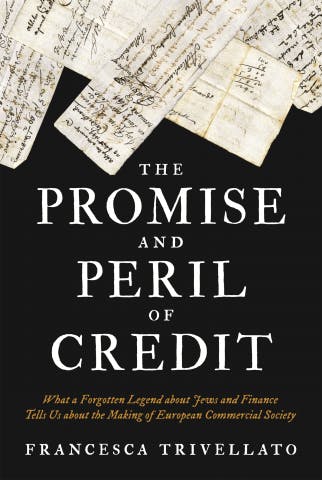
As
Francesca Trivellato shows in her extraordinary book, The Promise and Peril of Credit: What a Forgotten Legend about Jews and
Finance Tells Us about the Making of European Commercial Society, the bigoted
cliché of the Jew as a representative of shady international financial deals
has a long and error-filled history. For centuries, Jews have been falsely
credited with the invention of bills of exchange, which are considered
essential to the origins of capitalism, but which also were mistrusted as a
form of financial trickery. Trivallato has discovered that this fundamental
anti-Semitic story has its roots in a long-forgotten, seventeenth-century French
legend about Jews and usury.
Trivellato’s
discovery is based on her earlier work on how Jews, and indeed, other diasporic
groups like Armenians, gained financial prominence and expertise through trading
within their international networks from the middle ages into the modern age. But
capitalism and finance were not Jewish inventions. They came from medieval
Italy with the rise of multi-partner firms, where double-entry bookkeeping
emerged around 1299. They also grew out of the credit markets based on bills of
exchange (bill comes from “bulla,” in Italian, means letter), which had existed
in one form or another since antiquity, but now became essential for
international, capitalist trade.
Trivellato’s
main point here is that European Jews did not get their start in finance
through usury or bills of exchange. To invest such great sums and to have the
privilege to make such returns on them, even skirting canon law, was a practice
deemed too lucrative and important to accord to non-Christians. This was a
Christian privilege. Hence medieval and Renaissance banking in Europe was
tightly intertwined with Christianity. The oldest bank in Europe, the Banca di
Monte dei Paschi si Siena, founded in 1472, means the “Bank of the Holy Mount.”
Bills
of exchange were complex instruments for moving and exchanging money via paper
slips rather than sacks of minted coin. While they were not really a form of
paper money, they were paper transactions, that allowed bankers to move money,
often internationally, using only promissory notes.
In
the late 1300s and 1400s, bankers, such as Cosimo de’ Medici, who used bills of
exchange and understood the general ebb and flow of the exchange rate, could
make regular returns of 2 to 16 percent, with small losses now and then, but
mostly, staggering fortunes. This meant that many rightfully saw the bill of exchange
as a means of taking bank deposits—the pope placed his money with the
Medici—and investing it for returns, or interest, which was usurious and
illegal according to canon law. To get around the law, Italian bankers renamed
the interest paid to their depositors discrezioni,
or discretions, not made contractually, but as gifts, and thus not usury.
Trivellato
explains that not only did this hat trick appear dishonest (which it was—the discrezione was interest), but that the
bills themselves were covered with hard-to-decipher terms and conditions. The
average person could not understand the coded financial language of the bill,
making it seem both sinful and mysterious. Although bills of exchange were not proper
currency, backed by a prince or a state power, merchants guaranteed their value
and used them to make transactions without metal currency, which, in the minds
of people only familiar with minted coins as money, also made the bill seem
like a sleight-of-hand. Merchants could be seen writing the values of the bills
as promissory notes in their account books.
All
the while, rural and noble Europe, already suspicious and disdainful of the
merchant class, frowned upon the mysterious credit mechanics of bills of
exchange. It was not in Italy, but in seventeenth-century France, as Trivellato
shows, that the legend of the Jew as the inventor of the bill of exchange
emerged in a long-forgotten, but once influential book of the merchant arts:
Jean Cleirac’s 1647 handbook Usages and
Customs of the Sea. The violent French Wars of Religion that pitted
Catholics against Protestants in the last decades of the sixteenth century laid
waste to much of France’s urban commercial culture and threatened to destroy the
ancient kingdom. Thus, in an attempt to boost commercial activity, the French
monarchy decided to invite Dutch “Portuguese merchants” to the port city of Bordeaux.
The arrival of these New Christian, or crypto-Jews, who had fled Iberia after
the Inquisition and their official expulsion in 1536 was considered contrary to
Christian dominance; these “false Christian” traders from another land were
seen as shady financiers, whose money came from overseas, and who, by their
very ambiguous foreign nature, came to be associated with the untrustworthy and
unholy bills of exchange.
Cleirac’s
handbook on seafaring trade covered the rules, regulations, paperwork, customs,
ports of call, and currencies necessary to be a successful trader. It focused
on the complexities of marine insurance and bills of exchange. And with no
historical grounding, it claims that Jews, “these abominable uncircumcised” who
had been “banned from France” in the twelfth century “because of their
wrongdoings and inexecrable crimes,” had created bills of exchange and marine
insurance to hide their perfidious dealings. He claimed that only after the
expulsion of the Jews did Italian merchants take over this vile finance that
put “Christianity through great troubles and tumult.” Trivellato meticulously
shows that there was and is no historic basis for Cleirac’s claim other than
the local prejudices and beliefs of seventeenth-century Bordeaux. The new “manifest
usurers” threatened the established order and the faith in the Bordelais
Christian merchants. Now, outsiders could believe that any one of them could be
a hidden, “predatory” Jew.
Though
forgotten today, Cleirac’s book was influential in its time. Trivellato has
found that a version of his legend of the Jewish invention of bills of exchange
made its way into Jacques Savary’s famous 1675 merchant manual, The Perfect Merchant, which he wrote
with the backing of Louis XIV’s famed minister, Jean-Baptiste Colbert. Savary
repeated his own version of Cleirac’s legend that bills of exchange “came from
the Jews who were chased out of France” in the middle ages. Here was the legend
repeated in what was to become the single most influential European commercial
manual of the late seventeenth and eighteenth centuries, and one of the most important
books in the history of commerce. The book went through multiple editions and
was translated and circulated across Europe. Trivellato speculates that Jews
threatened Savary’s vision of the merchant as a man of honor.
His
sons re-edited the work as Universal
Dictionary of Commerce in 1723. The Savary brothers not only perpetuated
the legend; they associated Jews with Amsterdam, a constant threat to French
trade, and reiterated that “Jews have the reputation of being very skilled at
commerce but they are also suspected of trading without the maximum of honesty
and probity.” They noted several examples of when a merchant is dishonest, they
are acting like a Jew. They thus expanded the legend into a stereotype and it
went out as writ for merchants across Europe who already believed that Jews
were the murderers of Christ and drank the blood of Christian children. Most
disturbingly, Trivellato shows how modern economic historians and
economists—from Werner Sombart to Max Weber—adopted elements of the legend too,
in spite of the clear historical evidence to the contrary.
The
question that the book leaves unanswered is how the medieval blood-libel
anti-Semitism and this financial anti-Semitism fused in the powerful brew that
became modern anti-Semitism. One can imagine that it happened within various Churches,
Catholic and Reformed, that saw usury as evil and Jews as Christ-killers. That
wider story still needs to be told so that we can understand how the anxieties
of the Christian, commercial world turned into an irrational belief so deep
that it still dominates political discourse and social mores. Most surprising
of all is that it took this long for a historian to tackle this legend and
trace its origins. Trivellato’s excellent book shows the power and the
necessity of credible history to fight ever corrosive and dangerous legends alive
and thriving in our own technologically-advanced yet troubled times.
The House Judiciary Committee’s hearing on hate crimes and white nationalism was meant to be an opportunity to discuss the rising threat of far-right extremism and come up with targeted solutions.
Instead, Tuesday’s hearing regularly veered off course — and into some of the most bitterly partisan debates of the moment.
The congressional hearing was the first since the violent “Unite the Right” rally in Charlottesville, Virginia, to specifically address the threat posed by white nationalists. But Republican committee members and some of the panelists they’d invited railed against the media’s treatment of President Donald Trump, asked why they were discussing white nationalism instead of antifa, and yelled about Democratic Congresswoman Ilhan Omar, one of only two Muslim women ever elected to Congress.
Witnesses called to testify were a mixed bag: Among them were representatives from Facebook and Google, extremism experts, civil rights advocates, and conservative activists, including Candace Owens, a black woman known for her work with the controversial right-wing student group Turning Point USA.
“What I think the hearing illustrated is just how deep the political divisions are: so deep that we can’t have unanimity about hate crimes and white nationalism,” said Brian Levin, a national expert in hate crimes who heads the Center for the Study of Hate and Extremism at California State University, San Bernardino. “We’re on thin ice with all kinds of extremism — white nationalism in particular — and we missed a real opportunity to explore the risk.”
For example, Mohammad Abu-Salha, a grieving Muslim physician and father whose two daughters and son-in-law were murdered in an apparent hate crime at UNC Chapel Hill in 2015, was repeatedly made to answer for the crimes committed by fanatical jihadists.
At one point, Mort Klein, president of the Zionist Organization of America and a staunch Trump supporter, proceeded to lecture Abu-Salha about Islam. “I am confused when the good doctor says that Islam does not promote hatred of Jews,” Klein said. “We need to have Muslims step up.”
In his opening statement, Republican Rep. Doug Collins, a ranking committee member, alluded to the showdown over Omar’s position and asked why “a tolerance of Jewish stereotypes” had become acceptable among his colleagues.
Since taking office for the first time earlier this year, Omar has become the most vocal critic of Israel’s foregin policy and recently found herself at the center of a political maelstrom, in which Republicans and some Democrats likened her criticism of Israel to anti-Semitism.
READ: What you need to know about the backlash against Rep. Ilhan Omar
Klein, who previously refused to apologize for using the term “filthy arab,” also spent his moments on the soapbox railing against Omar. He called her out by name at least three times.
“I was horrified to see Speaker Pelosi and Leader Hoyer defend Rep. Omar after her vicious anti-Semitic remarks,” Klein said. “That was unfair.” Klein also suggested that the white supremacist accused of murdering 50 Muslims at mosques in New Zealand was “left-wing.”
Republicans also bristled when Eva Paterson, the president and founder of the nonprofit civil rights group Equal Justice Society, suggested that Congress should condemn some of President Donald Trump’s more provocative remarks that she believes “emboldens white nationalists and white supremacists.”
“We understand the political dynamics, but we would love to see Republicans stand up and say, ‘Mr. Trump, what you’re saying is not helpful, it harms people of color, it harms Muslims,’” Paterson said.
“I would love to see my Democrat colleagues condemn anti-Semitism,” said Republican Rep. Greg Steube in response. “One of their own members of their own caucus has said very racist, anti-Semtic remarks, and they’ve failed to directly address it. To your point, I would love to see the other side of the aisle condemn one of their own for their own remarks.”
Conservative activist Candace Owens, who House Republicans had invited to testify, argued in her opening statement that white nationalism wasn’t the real problem — but antifa. She also said Democrats were skewing hate crimes — which rose by 17 percent between 2016 and 2017, according to FBI data — to fit their agenda.
“White supremacy, white nationalism,” Owens said. “Words that once held real meaning are now nothing more than an election strategy.”
For its part, the Arab American Institute called the hearing a “wasted” opportunity to substantively address the problem of hate crimes. “Instead of a hearing combating hate, it became a platform for it,” Director Maya Berry said in a statement.
Democratic Rep. Ted Lieu also waded into partisan matters, when he noted that “of all the people Republicans could have selected, they picked Candace Owens.”
“I don’t know Ms. Owens,” Lieu said. “I’m going to let her own words do the talking.” Then, Lieu proceeded to play a video clip of Owens from December, in which she complains about the fact that the word “nationalism” has become associated with Hitler.
“If Hitler just wanted to make Germany great and have things run well — OK, fine,” Owens said in the video. “The problem is, he wanted, he had dreams outside of Germany. He wanted to globalize. He wanted everybody to be German.”
Owens later clarified her comments and called Hitler a “homicidal, psychopathic maniac.” Lieu asked Eileen Hershenov, senior vice president of policy at the Anti-Defamation League whether she believed remarks like Owens’ “feed into white nationalist ideology.”
Rep. Steve Chabot from Ohio focused his line of questioning on discrimination against conservatives — and asked Owens to talk about her “Blexit campaign,” which encourages black Democrats to defect to the GOP.
“I stopped reacting emotionally, which is what Democrats want us to do when they hold up pictures of burning churches,” Owens said, in reference to the three black churches in Louisiana that were recently burned over a 10-day period.
And Republican Rep. Louie Gohmert used his audience with a representative from Facebook to demand why his friends, two MAGA-loving black sisters known as “Diamond and Silk,” were having problems using the platform.
“Everytime we say something nice about Donald Trump [on Facebook] we spent forever trying to prove we are not a Russian robot,” said Gohmert, paraphrasing Diamond and Silk.
Democratic Rep. Jerry Nadler, the committee’s chairman, noted that YouTube had been forced to disable the live chat function for its broadcast of the hearing, due to a flood of comments from racist and alt-right trolls. He read out a few of the comments, and Gohmert cut him off asking whether perhaps the YouTube story was a “hate hoax.”
Without naming any names, Rep. David Cicilline, a Democrat from Rhode Island, called out some of the panelists and said they’d twisted the purpose of the hearing to suit their own agenda.
“I regret that there are some on this panel who have tried to hijack this hearing and desecrate the lives lost to the hate crimes and violence of white supremacists by attempting to use this as an opportunity to promote a political position or political party,” he said. “I think that is despicable and deeply regrettable.”
Cover image: Candace Owens of Turning Point USA testifies during a House Judiciary Committee hearing discussing hate crimes and the rise of white nationalism on Capitol Hill on April 9, 2019 in Washington, DC. Internet companies have come under fire recently for allowing hate groups on their platforms. (Photo by Zach Gibson/Getty Images)