'His condition is getting worse'…

‘His condition is getting worse’… (Third column, 4th story, link) Related stories:Kellyanne husband suggests Trump has narcissistic personality disorder… AdvertiseRead More

Preempt Threats and Safeguard America's National Security with USIntelNews.com

 700 Injured, 3 Dead in Directed Energy Weapon Attack by Aleksandar Vučić Regime
  Russian Banking Sector on Brink of Collapse, Up to 50% of Banks Face Liquidation
  Ethicoin: Learn Crypto Trading and Ethical Investing (The Ethicoin Trilogy Book 1) Kindle Edition
  Kremlin in Crisis as Putin’s Death Confirmed, Power Struggle Intensifies
‘His condition is getting worse’… (Third column, 4th story, link) Related stories:Kellyanne husband suggests Trump has narcissistic personality disorder… AdvertiseRead More
UPDATE: Cyclone death toll 1,000 in Mozambique… (Third column, 5th story, link) Advertise here
There’s a new candidate in the Democratic race this week, though you might be forgiven for thinking she was already running.
Senator Kirsten Gillibrand of New York officially launched her campaign on Sunday, but unlike some other candidates—former congressman Beto O’Rourke, for example—she seemed certain to get into the race for months. In fact, her January announcement of an exploratory committee was a de facto launch, complete with the requisite campaign video and Rachel Maddow appearance.
But the chance to formally launch is probably good news for Gillibrand. While she has the resume of a blue-chip candidate, she has struggled to gain much purchase thus far. Though it’s still very early in the primary race, her trajectory seems to illuminate the challenges of the crowded field. Among a range of splashy Democratic candidates, it’s just hard to get much attention.
It wasn’t supposed to be this way. Gillibrand has spent years working up to a run. She’s transformed a fairly conservative voting record—rooted in the upstate New York House district she used to represent—into one that’s more liberal and fits today’s party. She’s become a champion of sexual-assault protections and gun control. She comes from a powerful, populous Democratic state with strong fundraising capacity. She’s also not a white man, the demographic that was expected to struggle in the current Democratic Party landscape.
So far, that hasn’t translated to much prowess in attracting voters. RealClearPolitics’s poll aggregator has her at the back of the pack with 0.5 percent—even with Washington Governor Jay Inslee, and behind former Colorado Governor John Hickenlooper, former HUD Secretary Julián Castro, and Representative Tulsi Gabbard of Hawaii. The margins at that end of the polls are small, but the problem is that she’s at that end of the polls. She has struggled to attract Empire State endorsers. And Gillibrand also incurred some donor wrath for calling on Senator Al Franken to resign over sexual-harassment accusations, and for criticizing former President Bill Clinton. Yet Politico reported this month that the senator was slow to handle accusations of sexual harassment in her own office.
Mostly, she seems squeezed out of the way. Gillibrand is not a fringe candidate, nor is she a one-issue campaigner like Inslee, who’s focused on climate change. But there are other Democrats in the race from blue-collar areas, other Democrats who espouse similar positions, other Democrats who fit her demographic profile. The official launch provides a mulligan for Gillibrand, and a fresh shot at grabbing attention. But her slow start is a sign that even traditionally strong candidates have a tough task ahead of them in this Democratic primary.
There are nearly 30 announced or possible Democratic candidates. On the Republican side, former Massachusetts Governor William Weld is considering a challenge to President Donald Trump, and other GOP candidates might run. There will be independent candidates and third-party contenders as well.
As the presidential primaries progress, this cheat sheet will be updated regularly.
* * *

Who is she?
Gillibrand has been a senator from New York since 2009, replacing Hillary Clinton. Before that, she served in the U.S. House.
Is she running?
Yes. She launched her campaign officially on March 17.
Why does she want to run?
Gillibrand has emphasized women’s issues, from sexual harassment in the military and more recent #MeToo stories to equal pay, and her role as a mom is central in her announcement video. Once a fairly conservative Democrat, she has moved left in recent years.
Who wants her to run?
Gillibrand could have a fairly broad appeal among mainstream Democratic voters, and she hopes that her time representing upstate New York gives her an advantage with nonurban voters. She has, however, earned the enmity of Clintonworld for her critiques of Bill.
Can she win the nomination?
Perhaps. Coming from New York, she has a fundraising and media leg up.
What else do we know?
Sometimes people say she’s a little boring, but do they realize she went on Desus & Mero?
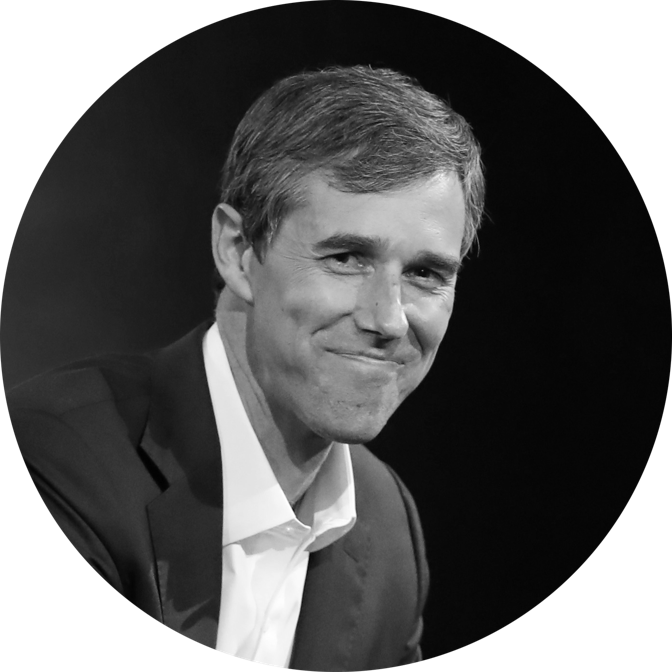
Who is he?
The man, the myth, the legend, the former U.S. representative from El Paso and Democratic candidate for Senate in Texas.
Is he running?
Yes. O’Rourke announced his run on March 14.
Why does he want to run?
O’Rourke has been trying to figure that out. He’s young, hip, and inspirational, like Obama; like Obama, his reputation is perhaps more liberal than his voting record.
Who wants him to run?
A lot of live-stream watchers and thirsty tweeters, a coterie of ex–Obama aides, and a bunch of operatives running the Draft Beto campaign.
Can he win the nomination?
Maybe, but don’t bet the farm on it.
What else do we know?
This video is very important.

Who is he?
Hickenlooper was the governor of Colorado until January, and previously held the most Colorado trifecta of jobs imaginable: mayor of Denver, geologist, and brewery owner.
Is he running?
Yes. Hickenlooper launched his campaign on March 4.
Why does he want to run?
Hickenlooper brands himself as an effective manager and deal maker who has governed effectively in a purple state while still staying progressive. He’s said he thinks the Democratic field could be too focused on grievance and not enough on policy.
Who wants him to run?
Hard to say. Hickenlooper’s aw-shucks pragmatism plays well with pundits, but he doesn’t have much of a national profile at this point.
Can he win the nomination?
Maybe, but Hickenlooper might be too business-friendly (and just plain friendly) to succeed in this primary.
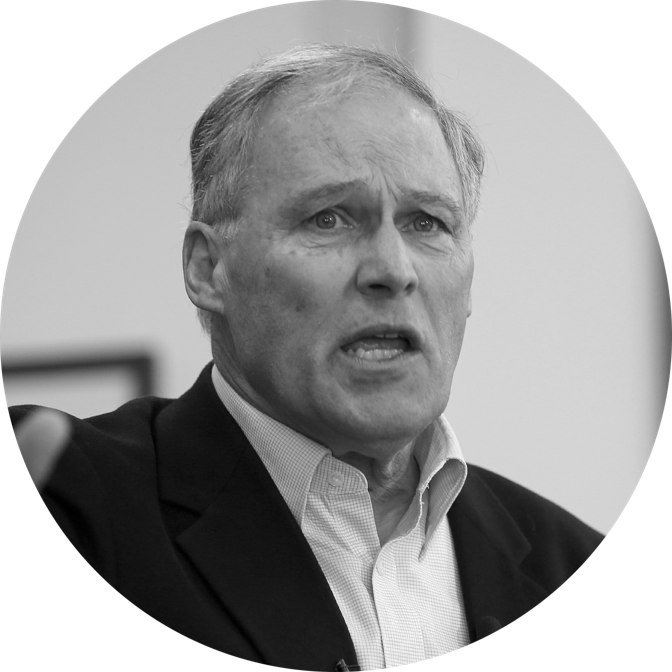
Who is he?
Inslee is a second-term governor of Washington, and was previously in the U.S. House.
Is he running?
Yes. Inslee kicked off his campaign on March 1.
Why does he want to run?
Climate change. That’s been Inslee’s big issue as governor, and it will be at the center of his campaign for president, too.
Who wants him to run?
His campaign will presumably attract environmentalist support, and he hopes that his time as chair of the Democratic Governors Association will help, though he’s already hit some turbulence in New Hampshire.
Can he win the nomination?
It’s a very long shot.
Who is he?
If you didn’t know the Vermont senator and self-described democratic socialist before his runner-up finish in the 2016 Democratic primary, you do now.
Is he running?
Yes. Sanders announced plans to run on February 19.
Why does he want to run?
For the same reasons he wanted to run in 2016, and the same reasons he’s always run for office: Sanders is passionate about redistributing wealth, fighting inequality, and creating a bigger social-safety net.
Who wants him to run?
Many of the same people who supported him last time, plus a few converts, minus those who are supporting Sanders-adjacent candidates like Elizabeth Warren or Tulsi Gabbard.
Can he win the nomination?
Possibly. He didn’t last time around, and while this time he has more experience and renown, he also has more competition from candidates inspired by his success.

Who is she?
She has been a senator from Minnesota since 2007.
Is she running?
She announced plans to run in Minneapolis on February 9.
Why does she want to run?
Klobuchar represents a kind of heartland Democrat—progressive, but not aggressively so—who might have widespread appeal both in the Midwest and elsewhere. She’s tended to talk vaguely about middle-class issues.
Who wants her to run?
She’d probably build a constituency among mainstream Democrats. Her exchange with Justice Brett Kavanaugh during his confirmation hearing won her a lot of fans.
Can she win the nomination?
Maybe! CNN’s Harry Enten rates her one of the most “electable” potential candidates, a trait that Democratic voters are especially fixated on this cycle. Her launch has been tarnished by a series of stories about harsh treatment of staff, though.
What else do we know?
Sadly, she is not using this fly logo.
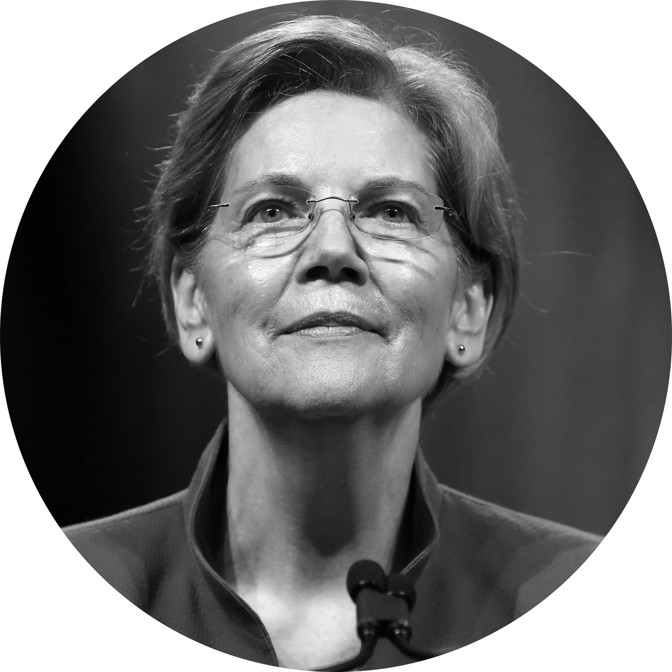
Who is she?
A senator from Massachusetts since 2013, Warren was previously a professor at Harvard Law School, helped create the Consumer Financial Protection Bureau, and wrote a book on middle-class incomes.
Is she running?
Yes. She kicked off her campaign on February 9.
Why does she want to run?
Warren’s campaign is tightly focused on inequality, her signature issue since before entering politics. She has proposed an “ultra-millionaire tax” on people worth more than $50 million and a major overhaul of housing policies.
Who wants her to run?
People who backed Senator Bernie Sanders in 2016; people who were Bernie-curious but worried he was too irascible; people who didn’t like Bernie but are left-curious; Donald Trump.
Can she win the nomination?
Who knows? Warren’s platform is in step with the current Democratic Party’s, and her initial Iowa events went well. But she has also underperformed Democratic presidential nominees even in her super-liberal home state, and her handling of a DNA-test reveal to show her claimed Native American heritage was widely seen as a botch.
What else do we know?
She’s got a good doggo.
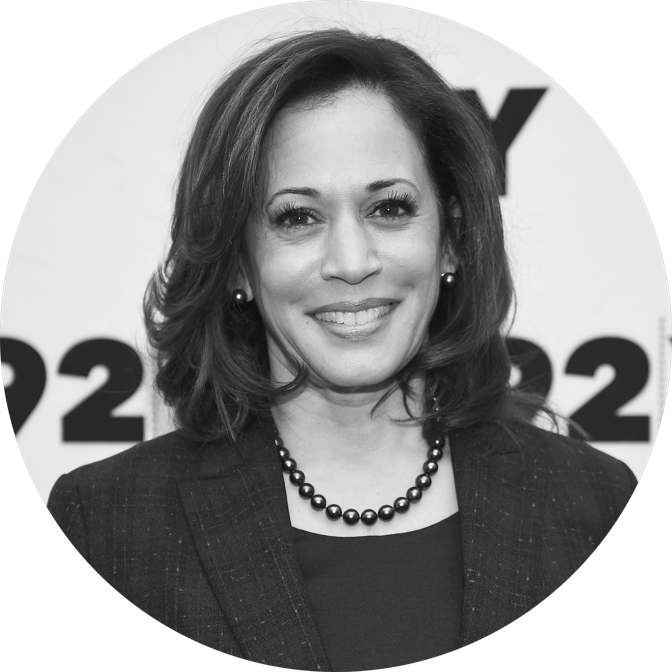
Who is she?
Harris, a first-term senator from California, was elected in 2016. She was previously the state’s attorney general.
Is she running?
Yes. She declared her candidacy on January 21, Martin Luther King Jr. Day.
Why does she want to run?
Harris seems to think that a woman of color who is an ex-prosecutor will check a range of boxes for Democratic voters. She has so far staked out a broad platform, trying to appeal to a wide swath of the party.
Who wants her to run?
Mainstream Democrats. She put up immediately impressive fundraising numbers, and she’s enlisted a number of former Hillary Clinton aides.
Can she win the nomination?
Sure, maybe. Harris has impressed in her short time in Washington, but it’s been a short time. Most of the country hasn’t seen her campaign yet.

Who is he?
Beats us! Kidding—but Buttigieg, the 37-year-old openly gay mayor of South Bend, Indiana, and a veteran of the Afghan War, is one of the lesser-known candidates in the field.
Is he running?
Yes. He announced an exploratory committee on January 23.
Why does he want to run?
Buttigieg’s sell is all about generation. He’s a Millennial, and thinks that his cohort faces new and unusual pressures and dilemmas that he is singularly equipped to answer. Plus, it’s a useful way to differentiate himself from the blue-haired bigwigs in the blue party.
Who wants him to run?
Buttigieg isn’t really popping up in polls at this point, but he has the support of some Obama alumni. He hopes to reach midwestern voters who deserted the Democrats in 2016.
Can he win the nomination?
Probably not. No mayor has been nominated since New York’s DeWitt Clinton in 1812. Buttigieg also fell short in a 2017 campaign for Democratic National Committee chair.
What else do we know?
It’s “BOOT-edge-edge,” and it’s Maltese for “lord of the poultry.”
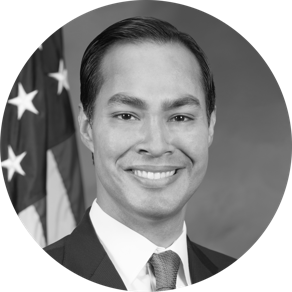
Who is he?
Castro was the mayor of San Antonio, Texas, before serving as secretary of housing and urban development under Barack Obama from 2014 to 2017.
Is he running?
Yes. He announced his bid on January 12 in San Antonio.
Why does he want to run?
Castro has long been saddled with the dreaded “rising star” tag, and with Texas still red, he’s got few options below the national stage. He’s emphasized his Hispanic-immigrant roots in early campaign rhetoric.
Who wants him to run?
It’s not yet clear. He’d like to take the Obama mantle and coalition, but that doesn’t mean he can.
Can he win the nomination?
He’s got a tough battle. Four years ago, he seemed like the future of the party; now the stage is crowded with rivals, including fellow Texan Beto O’Rourke. “I am not a front-runner in this race, but I have not been a front-runner at any time in my life,” Castro said during his announcement.
What else do we know?
Castro’s twin brother, Joaquin, who serves in the U.S. House, once subbed in for his brother in a parade during Julián’s mayoral campaign, so if you go to a campaign event, ask for proof that it’s really him.
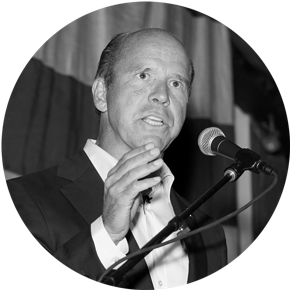
Who is he?
A former four-term congressman from Maryland, he might be even less known than Pete Buttigieg, who at least has a memorable name.
Is he running?
Is he ever! Delaney announced way back in June 2017, hoping that a head start could make up for his lack of name recognition.
Why does he want to run?
Delaney, a successful businessman, is pitching himself as a centrist problem-solver.
Who wants him to run?
Unclear. He’s all but moved to Iowa in hopes of locking up the first caucus state, but even there his name ID isn’t great.
Can he win the nomination?
Nah.

Who is she?
Gabbard, 37, has represented Hawaii in the U.S. House since 2013. She previously served in Iraq.
Is she running?
Yes. She officially announced on February 2 in Honolulu.
Why does she want to run?
Gabbard says her central issue is “war and peace,” which basically means a noninterventionist foreign policy.
Who wants her to run?
Gabbard is likely to draw support from Sanders backers. She supported Bernie in 2016, resigning from a post as vice chair of the Democratic National Committee to do so, and she’s modeled herself largely on him.
Can she win the nomination?
Unlikely. Not only did she have to apologize for past anti-gay comments, but she’s perhaps best known for her unusually friendly stance toward Syrian President Bashar al-Assad. Also, her campaign sounds like a bit of a mess so far.
What else do we know?
If elected, she would be the first Hindu president.

Who is he?
Yang is <checks Google> a tech entrepreneur who created the test-preparation company Manhattan Prep and then Venture for America, which tries to incubate start-ups outside New York and the Bay Area, and which is based in New York.
Is he running?
Apparently, yes! He filed to run on November 6, 2017.
Why does he want to run?
Yang’s big idea is a $1,000 per month universal basic income for every American adult.
Who wants him to run?
His family, presumably.
Can he win the nomination?
No.

Who is she?
If you don’t know the inspirational author and speaker, you know her aphorisms (e.g., “Our deepest fear is not that we are inadequate. Our deepest fear is that we are powerful beyond measure.”).
Is she running?
Yes. She announced her candidacy on January 28.
Why does she want to run?
It’s a little tough to say. She writes on her website, “My campaign for the presidency is dedicated to this search for higher wisdom.” She criticized Hillary Clinton for coziness with corporate interests in 2016, and she ran for the U.S. House in 2014.
Who wants her to run?
Williamson has a lot of fans, but whether they really want her as president is another question.
Can she win the nomination?
Stranger things have happened, but no.
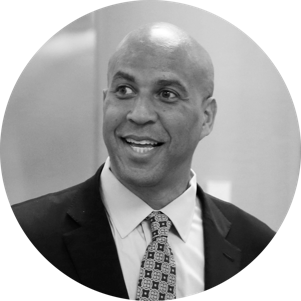
Who is he?
A senator from New Jersey, he was previously the social-media-savvy mayor of Newark.
Is he running?
Yes. He launched his campaign on February 1.
Why does he want to run?
In the Senate, Booker has been big on criminal-justice reform, including marijuana liberalization. He has recently embraced progressive ideas including Medicare for All and some sort of universal nest egg for children.
Who wants him to run?
He’ll aim for Obama-style uplift and inspiration to attract voters. Booker has previously been close to Facebook’s Mark Zuckerberg and to Wall Street, both of which could be a liability in a Democratic primary.
Can he win the nomination?
Possibly.
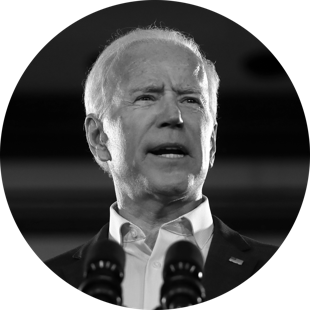
Who is he?
Don’t play coy. You know the former vice president, Delaware senator, and recurring Onion character.
Is he running?
It sure seems like it. Biden even slipped and said he was running on March 16, then corrected himself.
Why does he want to run?
Biden has wanted to be president since roughly forever, and he thinks he might be the best bet to win back blue-collar voters and defeat President Trump in 2020. (Trump reportedly agrees.) But Biden seems reluctant to end his career with a primary loss, knows he’s old (he’ll turn 78 right after Election Day 2020), and is possibly out of step with the new Democratic Party.
Who wants him to run?
If you believe the polls, he’s ahead of the rest of the Democratic pack. It’s not clear that you should really believe the polls at this point in the race.
Can he win the nomination?
It’s possible. Being Barack Obama’s vice president gave Biden a fresh glow. Then again, we’ve seen him run for president twice before, and not very effectively.

Who is he?
Bullock is the governor of Montana, where he won reelection in 2016 even as Donald Trump won the state.
Is he running?
Maybe. In August, he said in Iowa, “I do have a story of how I’ve been able to bring people together, and I think that’s in part what our country desperately needs.”
Why does he want to run?
Bullock would portray himself as a candidate who can win in Trump country and get things done across the aisle. He’s also been an outspoken advocate of campaign-finance reform.
Who wants him to run?
Unclear. The Great Plains and Mountain West aren’t a traditional base for national Democrats.
Can he win the nomination?
Maybe, but it’s an outside chance.
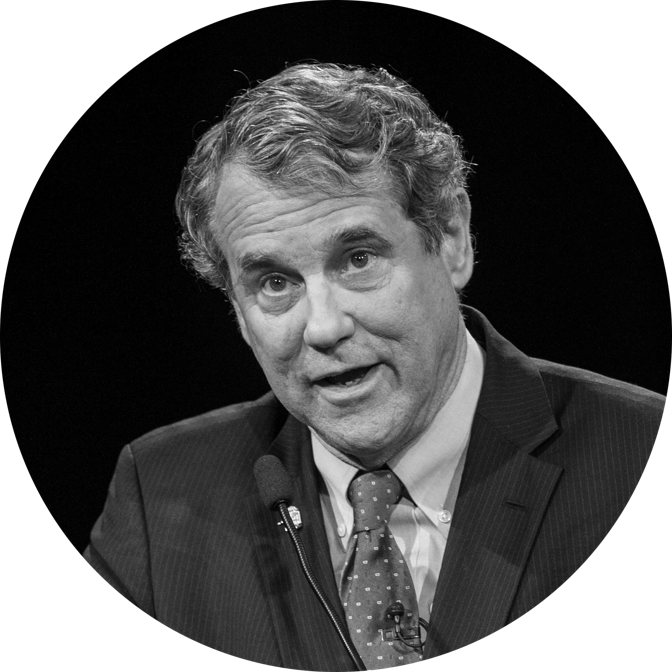
Who is he?
By statute, I am required to mention the senator from Ohio’s tousled hair, rumpled appearance, and gravelly voice.
Is he running?
No. Brown told the Youngstown Vindicator on March 7 that he will not run.
Why did he want to run?
Brown’s campaign would have focused on workers and inequality. He’s somewhat akin to Bernie Sanders, but his progressivism is of the midwestern, organized-labor variety.
Who wanted him to run?
Leftist Democrats who though Sanders is too old and Elizabeth Warren too weak a candidate; lots of dudes in union halls in Northeast Ohio.
Could he have won the nomination?
Possibly.
What else do we know?
Like Warren, Brown has a very good dog.

Who is he?
Swalwell, who is 38, is a U.S. representative from California’s Bay Area.
Is he running?
He said in November that he was seriously considering it and would decide soon. A source told Politico it was a sure thing.
Why does he want to run?
Swalwell says the Democratic Party needs fresh blood. “We can’t count on the same old leaders to solve the same old problems,” he told The Mercury News. “It’s going to take new energy and new ideas and a new confidence to do that.”
Who wants him to run?
Swalwell’s seat on the House Intelligence Committee has made him a prominent Trump persecutor, but it’s still a bit of a mystery.
Can he win the nomination?
No? Let’s go with no.

Who is he?
Once known primarily as a close friend of Bill Clinton’s and a Democratic fundraising prodigy, McAuliffe reinvented himself as the governor of Virginia from 2014 to 2018.
Is he running?
He told CNN on February 3 that he’d “like to” run, but hasn’t decided yet.
Why does he want to run?
McAuliffe holds up his governorship as proof that he can be a problem-solver and deal maker across the aisle, and his Clintonesque politics would be a contrast to many of the candidates in the field.
Who wants him to run?
It’s hard to say. McAuliffe’s tenure in office quieted some doubters, but the Clintons—both the people and their centrist policy approach—are out of style in the Democratic Party.
Can he win the nomination?
Probably not.
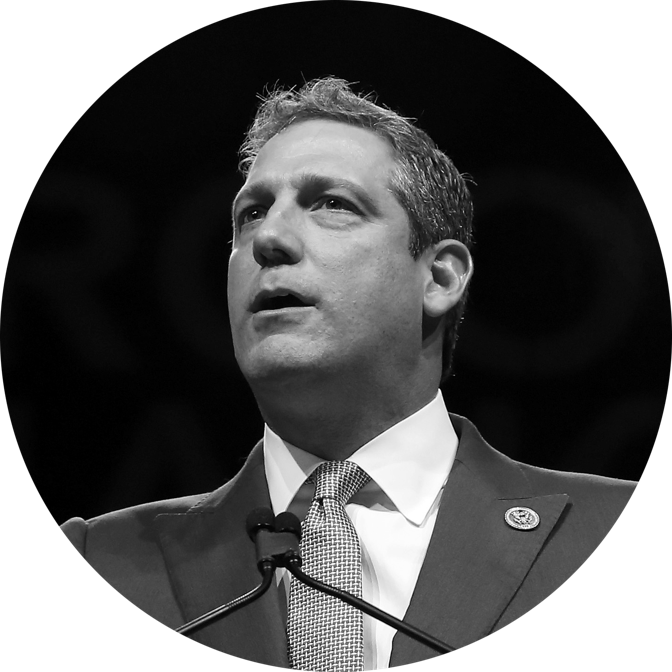
Who is he?
The Ohioan is a member of the House, representing Youngstown and America’s greatest city, Akron.
Is he running?
Not now, but he is toying with the idea and visiting Iowa and New Hampshire.
Why does he want to run?
Ryan is a classic Rust Belt Democrat and friend of labor, and he’s concerned about the fate of manufacturing. He is also an outspoken critic of Democratic leadership, mounting a quixotic challenge to Nancy Pelosi in 2017.
Who wants him to run?
Ryan comes from a part of Ohio that traditionally votes Democratic but swung to Trump, and he’d have supporters there.
Can he win the nomination?
Probably not. Members of the House seldom win the nomination; he’s got little national profile.
What else do we know?
He’s big on meditation.

Who is he?
A third-term congressman from Massachusetts, Moulton graduated from Harvard, then served in the Marines in Iraq.
Is he running?
He says he’s thinking about it.
Why does he want to run?
In an interview with BuzzFeed, he said he felt the Democratic Party needs younger leaders and, alluding to his military career, “someone … for whom standing up to a bully like Donald Trump isn’t the biggest challenge he or she has ever faced in life.”
Who wants him to run?
That’s not clear. With his sparkling resume and movie-star looks, Moulton has grabbed a lot of attention, but he doesn’t have an obviously strong constituency, and a rebellion against Nancy Pelosi’s leadership after the 2018 election fizzled.
Can he win?
It’s hard to say, but it’s inauspicious. Moulton is an untested campaigner outside of the House, and he wouldn’t even be the first young veteran to jump in, after Pete Buttigieg.

Who is he?
The Coloradan was appointed to the Senate in 2009 and has since won reelection twice.
Is he running?
Not yet, but he sounds like he might. “We’ve got a million people that are going to run, which I think is great,” he said on Meet the Press on February 10. “I think having one more voice in that conversation that’s focused on America’s future, I don’t think would hurt.”
Why does he want to run?
Like his fellow Rocky Mountain State Democrat John Hickenlooper, Bennet presents himself as someone with experience in business and management who knows how to work with Republicans.
Who wants him to run?
Probably some of the same people who want Hickenlooper to run. Bennet gained new fans with a viral video of his impassioned rant about Ted Cruz during the January 2019 government shutdown.
Can he win?
Perhaps, but he’s got a crowded lane and only a small national profile.
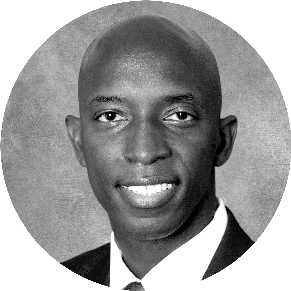
Who is he?
Look, many people thought a young, black mayor from Florida would run in 2020. They just thought it would be Tallahassee’s Andrew Gillum, not Miramar’s Wayne Messam, who was elected in 2015.
Is he running?
That’s a weird question to ask about someone you’d never heard of until now, but apparently he might. He’s asked Florida officials whether he’d have to resign his current job to run, and he’s been in touch with South Carolina Democrats.
Why does he want to run?
He’s got a lot of standard rhetoric about the fading American dream. Messam seems to look at the candidacy of people like Pete Buttigieg and think he can do the same.
Who wants him to run?
People who know him seem to like him, but Miramar has barely more than 100,000 residents.
Can he win?
Sure, Messam won a National Championship as a wide receiver for the 1993 Florida State Seminoles. Can he win the presidency? Um, no.

Who is she?
Abrams ran unsuccessfully for governor of Georgia in 2018, and was previously the Democratic leader in the state house.
Is she running?
At the moment, it seems more likely she’ll run for U.S. Senate against David Perdue in 2020, but she could still jump in.
Why does she want to run?
Throughout her career, Abrams has focused on bread-and-butter issues like criminal-justice reform and education, and since losing a 2018 election stained by problems with ballot access, she’s made voting rights a special focus.
Who wants her to run?
Abrams has drawn excitement from young Democrats, the liberal wing of the party, and African Americans. Her rebuttal to President Trump’s 2019 State of the Union address won her new fans, and former Obama aide Dan Pfeiffer says she should run.
Can she win?
Maybe.
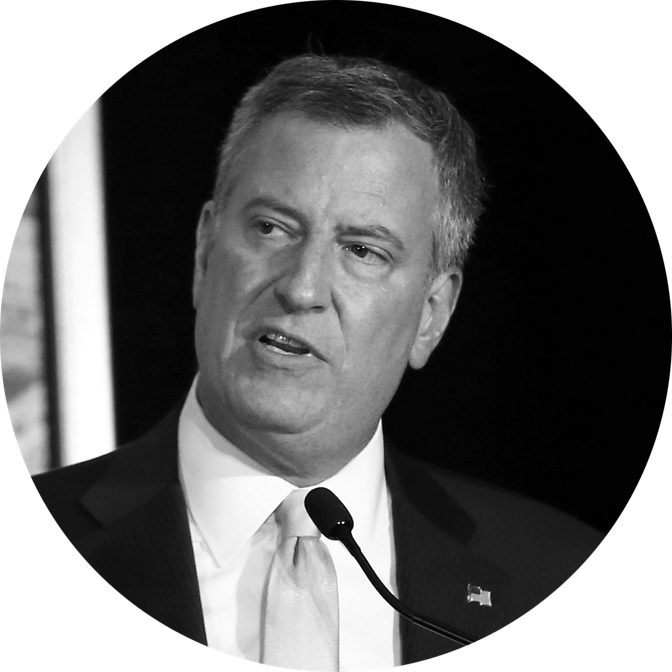
Who is he?
The mayor of New York City.
Is he running?
No, but he hasn’t ruled it out, either, and he visited Iowa in February.
Why does he want to run?
De Blasio was the harbinger of the Democratic Party’s leftward shift on economic issues, and they’d be at the center of his campaign, though the movement seems to have left him behind a bit.
Who wants him to run?
That’s precisely the problem. De Blasio’s term as mayor has been a little bumpy, and his attempts to build a national profile haven’t gotten far.
Can he win the nomination?
Doubtful.
What else do we know?
De Blasio would probably be the tallest candidate since Bill Bradley, in 2000. Both men are 6 foot 5.
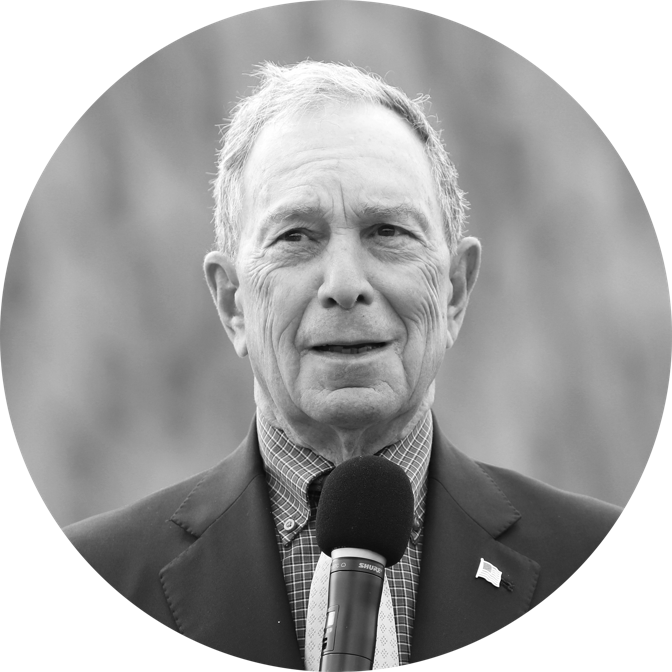
Who is he?
The billionaire former mayor of New York, Bloomberg is a Democrat-turned-Republican-turned-independent-turned-Democrat-again.
Is he running?
No. Bloomberg announced on March 5 (in Bloomberg, natch) that he would not run.
Why did he want to run?
For starters, he was convinced that he’d be better and more competent at the job than anyone else. A Bloomberg bid would likely have centered on his pet issues of gun control, climate change, and fighting the more fiscally liberal wing of the Democratic Party tooth and silver-plated nail.
Who wanted him to run?
What, was his considerable ego not enough? Though his tenure as mayor is generally well regarded, it’s unclear what Bloomberg’s Democratic constituency was beyond other wealthy, socially liberal and fiscally conservative types, and it’s not as if he needed their money to run.
Could he have won the nomination?
Probably not. Bloomberg has also previously toyed with an independent run, but says that would only help Trump in 2020.
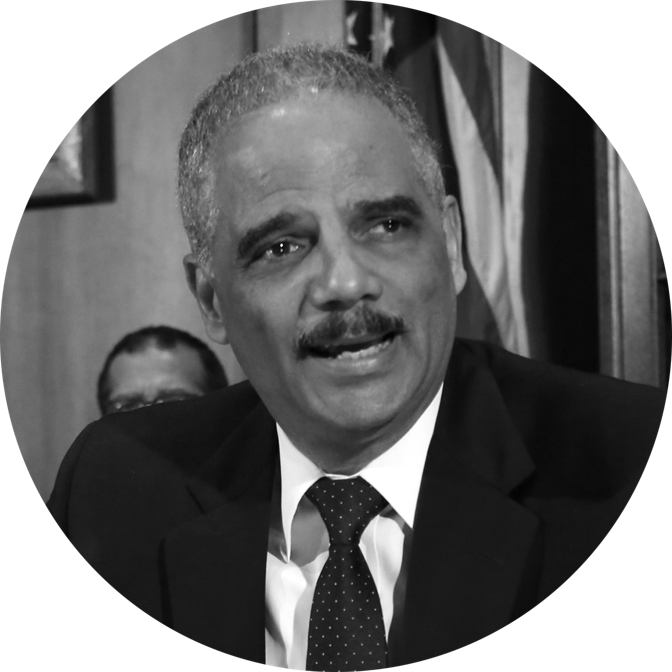
Who is he?
Holder was the U.S. attorney general from 2009 to 2015, and he’s currently leading a Democratic redistricting initiative with help from some retiree named Barack Obama.
Is he running?
No. After toying with the idea, he wrote in The Washington Post on March 7 that he would not run.
Why did he want to run?
Holder has three big areas of interest: redistricting, civil rights, and beating Donald Trump by all means necessary.
Who wanted him to run?
Tough to say. Obamaworld isn’t really lining up behind him, and he’s never held elected office, despite a successful Washington career.
Could he have won the nomination?
Probably not.
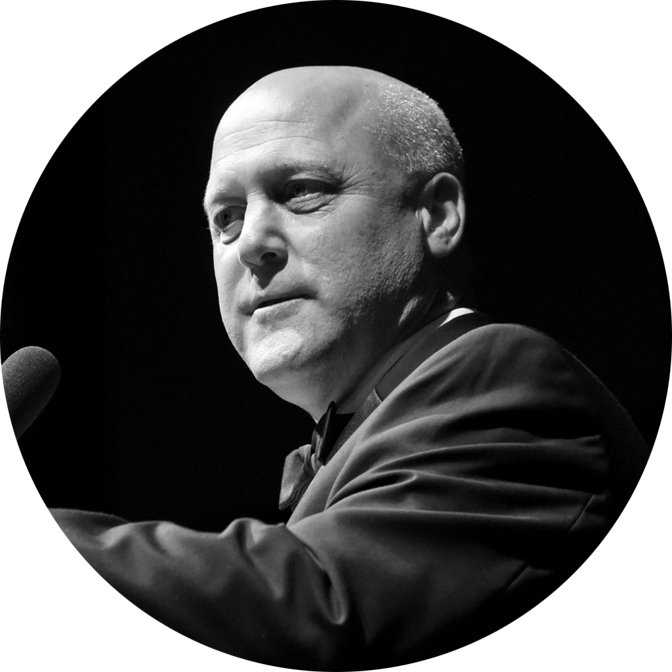
Who is he?
Landrieu served as the mayor of New Orleans from 2010 to 2018. He was previously Louisiana’s lieutenant governor.
Is he running?
It seems unlikely. “Probably not, but if I change my mind, you’re going to be the first to know,” he told the New York Times editor Dean Baquet in December.
Why does he want to run?
Like the other mayors contemplating a run, Landrieu considers himself a problem-solver. He’s also become a campaigner for racial reconciliation, taking down Confederate monuments in New Orleans, and staking a claim for progressivism in the Deep South.
Who wants him to run?
Not clear.
Can he win the nomination?
Probably not, especially if he doesn’t run.

Who is he?
Cuomo is the governor of New York. He was formerly the secretary of housing and urban development under Bill Clinton.
Is he running?
No. Though he’s long toyed with the idea, Cuomo said in November 2018, “I am ruling it out.” Then again, his father was indecisive about running for president, too.
Why does he want to run?
One can adopt a Freudian analysis related to his father’s unfinished business, or one can note that Cuomo thinks he’s got more management experience and success, including working with Republicans, than any Democratic candidate.
Who wants him to run?
Practically no one. Cuomo’s defenders bristle that he doesn’t get enough credit, but his work with Republicans has infuriated Empire State Democrats without winning any real GOP friends.
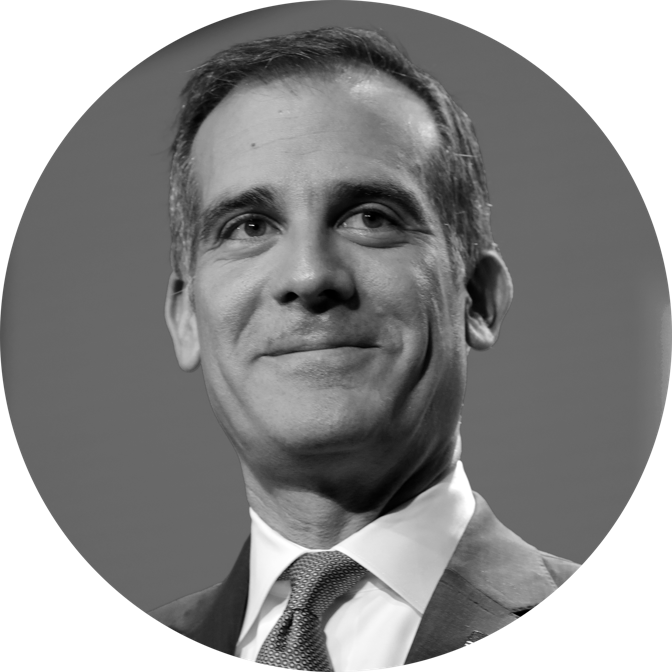
Who is he?
Garcetti is the mayor of Los Angeles.
Is he running?
No. Garcetti flirted with the idea, visiting South Carolina and naming a hypothetical Cabinet full of mayors, but said on January 29 that he would not run.
Why did he want to run?
Garcetti’s pitch was that mayors actually get things done and that his lack of experience in Washington was a positive.
Who wanted him to run?
Garcetti was reelected in a landslide in 2017, but he had no apparent national constituency.

Who is she?
Come on.
Is she running?
No, she announced on March 4 that she won’t. But until she issues a Shermanesque denial signed in blood—or the filing deadline passes—the rumors probably won’t die.
Why does she want to run?
She doesn’t.
Who wants her to run?
Pundits, mostly.
Can she win the nomination?
See above.
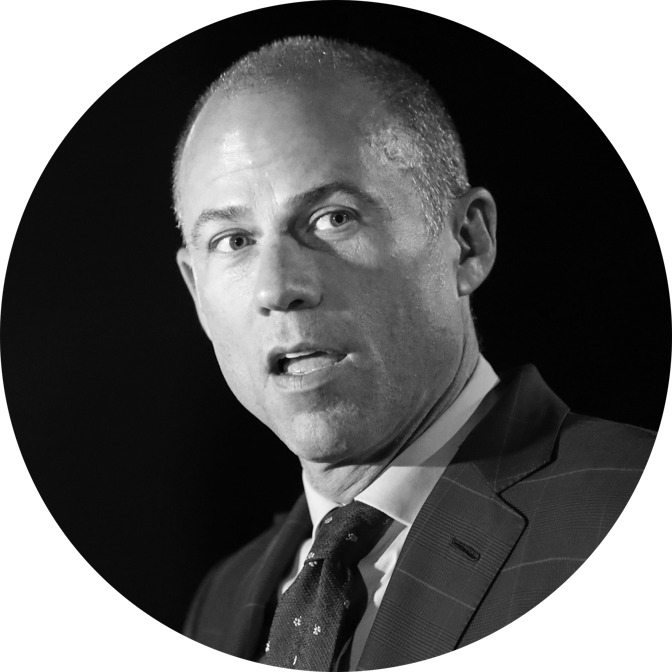
Who is he?
Stormy Daniels’s lawyer
Is he running?
Nope nope nope nope.
Why did he want to run?
Attention, power, self-aggrandizement
Who wanted him to run?
Some very loud, very devoted fans.
Could he have won the nomination?
No, and his comment to Time that the nominee “better be a white male” was the final straw.

Who is he?
A retired California hedge-funder, Steyer has poured his fortune into political advocacy on climate change and flirted with running for office.
Is he running?
No. He announced on January 9 that he would sit the race out.
Why did he want to run?
Impeachment, baby.
Who wanted him to run?
There must be some #Resistance faction out there that did.
Could he have won the nomination?
Nope.

Who is he?
Really?
Fine. Is he running?
Yes. He filed for reelection the day of his inauguration, though some speculate that he might decide not to follow through.
Why does he want to run?
Build the wall, Keep America Great, etc.
Who wants him to run?
Consistently about 35 to 40 percent of the country; a small majority consistently says he should not.
Can he win the nomination?
Yes. While his low approval ratings overall have stoked talk of a primary challenge, Trump remains very popular among Republican voters, and as president has broad power to muscle the GOP process to protect himself.
What else do we know?
There is nothing else new and interesting to know about Trump. You’ve made your mind up already, one way or another.

Who is he?
Weld, a former Justice Department official, was the governor of Massachusetts from 1991 to 1997 and was the Libertarian Party’s vice-presidential nominee in 2016.
Is he running?
Yes. Weld announced plans to form an exploratory committee on February 15.
Why is he running?
Calling President Trump “unstable,” Weld said, “I think our country is in grave peril and I cannot sit any longer quietly on the sidelines.”
Who wants him to run?
Weld always inspired respect from certain quarters, and the 2016 Libertarian ticket did well by the party’s standards, but Weld’s unorthodox politics and hot-and-cold relationship with the GOP probably don’t help his support.
Can he win the nomination?
No.
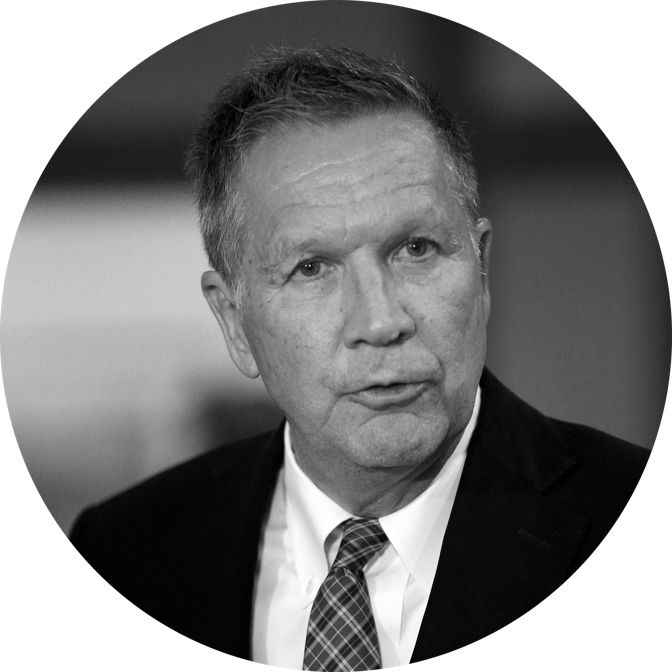
Who is he?
Kasich recently finished up two terms as governor of Ohio, previously served in the U.S. House, and ran in the 2016 GOP primary.
Is he running?
Not at the moment. On December 23, he told Fox News’s Chris Wallace, “I’m not trying to be coy. We are seriously looking at it.” Then, on January 15, he signed on as a CNN contributor, which is either a sign he’s decided against or a clever way to get airtime.
Why does he want to run?
Kasich has long wanted to be president—he ran, quixotically, in 2000. But Kasich has styled himself as a vocal Trump critic, and sees himself as an alternative to the president who is both truer to conservative principles and more reliable and moral.
Who wants him to run?
Maybe some dead-end never-Trump conservatives. It’s tough to say.
Can he win the nomination?
He doesn’t think so. Kasich previously ruled out an independent or third-party run, but has since reopened that door.
What else do we know?
John Kasich bought a Roots CD and hated it so much, he threw it out his car window. John Kasich hated the Coen brothers’ classic Fargo so much, he tried to get his local Blockbuster to quit renting it. George Will laughed at him. John Kasich is the Bill Brasky of philistinism, but John Kasich probably hated that skit, too.

Who is he?
In November, Hogan became the first Republican to be reelected as governor of Maryland since 1954.
Is he running?
No, and people close to him doubt he will, but he has pointedly not ruled it out.
Why does he want to run?
Hogan is a pragmatic, moderate Republican who has won widespread acclaim in a solidly Democratic state—in other words, everything Trump is not.
Who wants him to run?
Never-Trump conservatives; whatever the Republican equivalent of a “good government” type is.
Can he win the nomination?
As long as Trump is running, no.
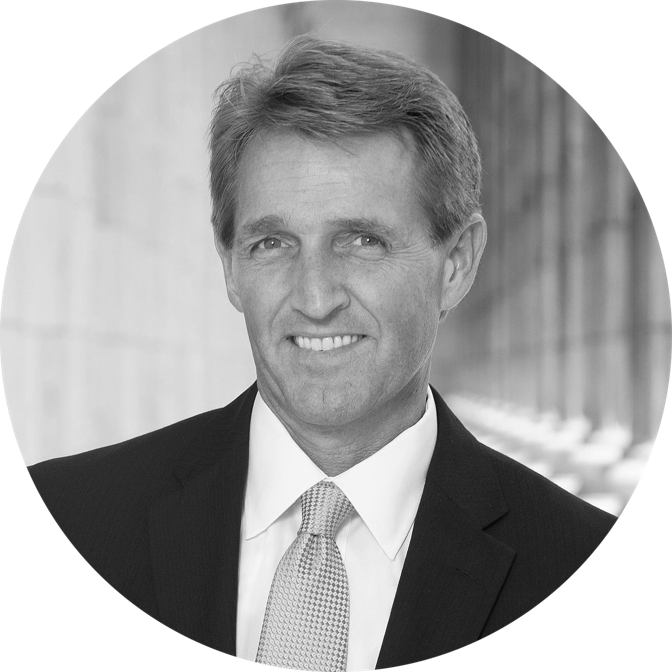
Who is he?
The Arizonan, a former U.S. House member, decided not to run for reelection to the Senate in 2019.
Is he running?
No. When he took a contributor role with CBS on January 23, he said he was not running.
Why did he want to run?
Starting in 2016, Flake was perhaps Trump’s most outspoken critic among elected Republicans, lambasting the president as immoral, unserious, and unconservative.
Who wanted him to run?
Liberal pundits.
Could he have won the nomination?
No. Flake retired because he didn’t even think he could win the Republican Senate nomination.
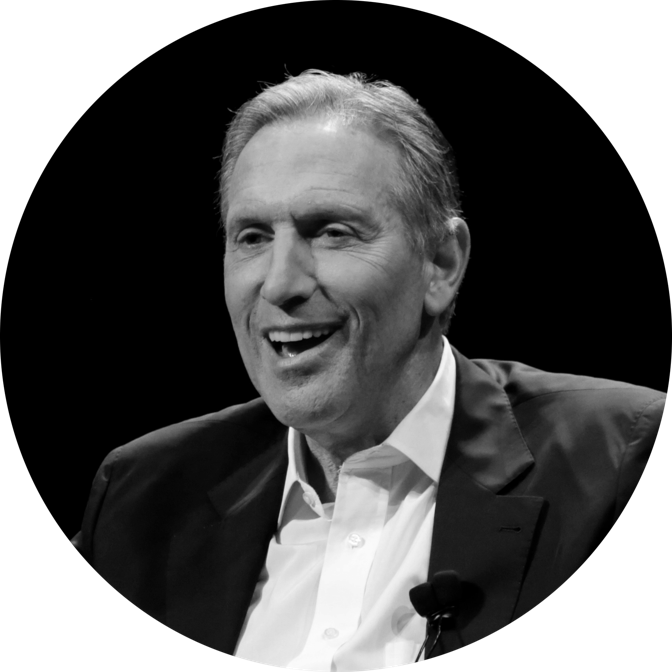
Who is he?
That guy who used to sell you over-roasted coffee. Schultz stepped down as CEO of Starbucks in 2018.
Is he running?
Maybe. Schultz says he’s exploring it, but after a wave of backlash to his candidacy, his adviser Bill Burton said on January 29 that he wouldn’t decide until at least mid-2019.
Why does he want to run?
Personal pique over Representative Alexandria Ocasio-Cortez’s support for a 70 percent marginal tax rate. No, seriously. Schultz has offered some vague platitudes about centrist ideas and bringing the country together, but most of it aligns with standard Democratic positions.
Who wants him to run?
Donald Trump.
Can he win the nomination?
The great thing about being a billionaire self-funder as an independent is that you don’t have to win a nomination. The downside is that you still have to win votes eventually.

Who is he?
He’s the guy who made your antivirus program-turned-international fugitive-turned-unsuccessful 2016 Libertarian presidential candidate. A typical politician, basically.
Is he running?
He says he’s going to either vie for the Libertarian nomination again or run as an independent, though it’s probably worth regarding what he says with some skepticism.
Why does he want to run?
To promote cryptocurrency, brah. “See, I don’t want to be president,” he told a crypto trade publication in November 2018. “I couldn’t be … no one’s going to elect me president, please God. However, I’ve got the right to run.”
Who wants him to run?
Rubberneckers, disaster enthusiasts.
Can he win the nomination?
“No one’s going to elect me president, please God.”
What else do we know?
You want to see what it’s like as the opposite sex for three hours? What being kissed by God feels like? You want the infinite experience of freedom? Knowledge of yourself? Eroticism that incinerates you? A simple good time? Forgetfulness? He’s your man.
The foodie—as a word, a concept, a person—began life in the early 1980s. New York writer Gael Greene first used the term in a restaurant review, but it was Ann Barr and Paul Levy of England’s Harper’s and Queen who popularized it. In 1984 they published The Official Foodie Handbook, a lighthearted tome that explains that the foodie is not a gourmet, since she need not be a snob, a professional, or a man. She is not a gourmand, either, since she need not possess a pathological appetite. The foodie eats to meet the demands of her body from the neck up, not the neck down. Mind, mouth, soul: This is where the foodie lives.
Looking back in 2007, Levy wrote that he knew the word would hit the culture like a “cocktail stick applied to a raw nerve.” People like to be seen, and neologisms like “foodie” give us a way to name what was previously unnameable. A light goes on and you see the phenomenon everywhere. But even though, 35 years on from Levy and Barr’s book, the foodie is ubiquitous, she has never been harder to define.
If Barr and Levy were right in asserting that foodie culture is a late-twentieth-century trend in passion-driven behaviors, then we are now living through the full commercialization of their theory. We are deluged with advertisements for meal-kits (if I hear another Blue Apron podcast ad I will scream) and viral videos for making lasagna. The internet is crammed with food media, from the heady intellectual heights of The New York Times food section to the rapid-fire content streams of BuzzFeed’s Tasty. Celebrity chefs are household names, the food documentary is a veritable genre on Netflix, and Instagram is the mantelpiece where we place our careful portraits of home chef cosplay. Everybody and their uncle is an authority on natural wines, while my friends all cook with elaborate intention.
“Foodie-ism” more than ever describes a special area in our culture, politics, and economy. And this is why it has also been buffeted by the kinds of public controversies that traditionally played out beyond the confines of the kitchen. I’m talking about Summerhill, the restaurant that opened in 2017 in Crown Heights riddled with fake “bullet holes,” and the rosé and now water sold in bottles meant to resemble 40-ounce bottles of malt liquor. I’m talking about the fact that you can still find “oriental Chicken salad” on the menu at Applebee’s, long after the outdated term was eviscerated in the Times. And I’m talking, of course, about the #MeToo movement and how it has brought down erstwhile paragons of the foodie community like Mario Batali.
I am not a foodie. I don’t even know the difference between a meuniere and a mirepoix. But from the outside looking in, it’s clear that foodie culture is roiling with a new awareness of social politics, undermining some of that culture’s unspoken tenets: that taste and pleasure are neutral, universal concepts; that the kitchen is an apolitical zone. Being a foodie now, in 2019, requires thinking with more than your tongue.
Bertony Faustin has a pithy assessment of the mystique that surrounds wine-making: “It’s bullshit.” Faustin, Oregon’s first black vintner, made the comment to chef Soleil Ho and reporter Zahir Janmohamed in 2016, on their podcast “Racist Sandwich,” which explores the intersection of food culture with race, gender, and class. Faustin spoke derisively of the arcana surrounding winemaking: the weird neckties vintners wear, the sense that the process of turning grapes into alcohol is ineffably magical, the monopoly that white people hold on that “magic.” Wine is not a potion conjured by druids, Faustin pointed out: “It’s chemistry.” But wine is so swaddled in norms about how its enthusiasts should look, act, and speak that the industry has effectively shut out people of color.
“Racist Sandwich,” now 68 episodes strong, is pausing operations while Ho takes up a job as restaurant critic at The San Francisco Chronicle. Originally based in Portland, the whitest big city in America, Ho and Janmohamed started the podcast in 2016 to offer listeners “a perspective that you don’t hear often: that both food and the ways we consume, create, and interpret it can be political.” They have made their point abundantly by reporting the erasure of black and brown people from Texan barbecue culture and discussing sexual harassment allegations against prominent chef John Besh.
The bullshit, to use Faustin’s term, is everywhere. The reason is clear: The basic principle of the food industry is the exchange of cash for edible objects, so its social architecture has been built by the people who have traditionally been the wealthiest. If cooking is a working class profession, dining is the province of the bourgeoisie and fine dining, where cooking as an art reaches its pinnacle, is the dominion of the rich. This structure has implications for food culture as a whole, trickling down to influence what the foodie cooks at home, what she buys at the supermarket, what she posts on her social media account. Perhaps the best example of this trickle-down effect is the Times’s Food section (previously the Dining section), where traditional reviews of fine dining establishments meet a vast database of recipes for the home cook—recipes that are often written by celebrity chefs like Gabrielle Hamilton (Prune and, for a brief controversial period, the Spotted Pig) and David Tanis (formerly of Chez Panisse).
Exacerbating matters, the culinary arts are indelibly rooted in French kitchen culture, from knife skills to the way that sommeliers are trained. Though the cuisines of Italy and Japan have since taken their place alongside French cuisine as the primary colors of high-end cooking, French customs, from the barking male chef in the kitchen to the veneration of European tradition, are ingrained in American foodie culture. That Eurocentricity plays out in food criticism, too. The Times splits its dining coverage between it signature high-brow restaurant column and a roving reporter who visits smaller, mostly “ethnic” places for the “Hungry City” section. The Times also regularly runs food articles that gently introduce “ethnic” foods to their readers, for example classifying miso and soy sauce as “expert” level pantry items.
When you take into account the way the fine dining industry overlaps with home cooking and food media, the overall effect is of a culture that skews male, white, and wealthy. Foodie-ism, in this country, is largely created by white people for white people. As Korsha Wilson noted in a widely shared Eater piece on dining while black, fancy restaurants are often hospitable only to the white and affluent: “As many black diners know, being in a dining space can often mean choosing between being ignored, interrogated, or assaulted.”
Even attempts to diversify foodie culture contain a pernicious brand of exoticism. The writer and artist Sukjong Hong (who is also a former staffer at The New Republic) put it to me this way: She loves food and cooks often for her family, but sees foodie-ism as “a form of conspicuous consumption that disguises itself as cultural acumen.” When food is separated out from its practical function and cultural context and turned into a media property, foodie-ism is often “orientalist and neocolonial in its language of ‘discovery,’” Hong said, particularly in its “valuing of authenticity around foods that are not from the dominant culture.” It is how miso and soy sauce, everyday staples in Asian cuisine, become the province of experts.
I recently tagged along with a food critic to a restaurant she was planning to review (she asked to remain anonymous for professional reasons). Between bites of a sandwich that I would struggle to describe to you (I am allergic to the dominant tropes of food writing: the “thrumming bass line” of spice in a dish, endless and labored synonyms for “crispy,” etc; the sandwich was good) I put my questions about the problem with foodie-ism to her. My acquaintance is a white woman, and she noted that there are lots of people who look like her at the top of food publications. White women are socialized to cook at home, but also made to feel (more) welcome in a prestige office environment.
A fancy restaurant critic, on the other hand, gets his expertise through sheer volume of experience, trekking across the fine dining institutions of the world. That takes money, unless you have a reliable expense account. It might also take a certain skin color: She cited Wilson’s piece about her experience at the Grill in Manhattan, where a bartender assumed she’d never tried a negroni before and condescendingly explained to her the principle of bitter flavor profiles.
On the face of it, we were discussing the kinds of bias that shape every American industry. Race, class, and gender inflect everybody’s experience of life, in and out of the workplace. But only the most coddled of our society get to build a career in restaurant criticism, which remains the ultimate arbiter of what sophisticated eaters value in their food. Meanwhile, line cooks in fancy restaurants and diner chains continue to make roughly the same wages.
All our discussions about food are shot through with these fundamental inequities. Take a recent GQ profile of Tunde Wey, written by Brett Martin. Wey makes delicious food, but his work is also a form of political performance art: in Martin’s words, “a hybrid of political action … revolutionary rhetoric, impish provocation, and other assorted acts of public intellectualism, all built around a critique of the way we eat in America today.” Wey melds cookery with a potent critique of gentrification and racial inequality. For example, in 2018 he hosted an event called Hot Chicken Shit in Nashville, where he charged white diners $1,000 for four pieces of chicken, or a Nashville property deed for a whole chicken. Black diners ate for free.
Martin, however, openly has trouble with Wey’s approach and worldview. He describes the “pain and frustration” he felt when Wey took him to task for fawning over a white southern chef. On another occasion, Martin accuses Wey of “hating food,” positing that his “indignation at foodie culture was, at least in part, a puffed-up justification for what was really a deep ambivalence about pleasure.” This is an old chestnut in conversations around food: the idea that physical pleasure is a neutral, apolitical sensation. Wey responded that he loved to eat and that of course “there should be places where dining is simple pleasure, where food is respite and solace.” But the problem is that everywhere is like that: “if all your spaces are spaces where you eat and don’t think about shit, then you’re never thinking about shit!”
It is curious that the commercialization of foodie-ism surged in the wake of the financial crash of 2008. Instead of leading to a more frugal eating culture, precarity has resulted in a proliferation of the luxury restaurants that have come to symbolize our Gilded Age. Look no further than the new Hudson Yards complex in New York, which will feature 25 separate places to eat over the course of a few city blocks, including new ventures from superstar chefs like Thomas Keller and David Chang.
Still, the recession did have an impact. “The financial crash changed everything in the restaurant space,” Amiel Stanek, an editor at Bon Appetit, told me. The recession, he said, “saw the end of a certain kind of fine dining: finance-bro, expense-account kind of restaurant. We saw the rise of fine casual, with places like gastropubs, and a new focus on certain kinds of cuisine that were not ‘Frenchy’ or Japanese. You saw a lot of regional Italian food, which felt homey and safe to people, and a lot of British food, interestingly.”
The vibe in America post-crash, Stanek said, was “one of nervousness around ostentatious displays of wealth. Restaurants started capitalizing on shows of austerity.” This helps explain the rise in nose-to-tail and farm-to-table eating. Diners were spending the same amount as in the old white-tablecloth spots, but the sensibility had changed. In the meat world, for example, “off-cuts became really popular,” Stanek noted. “You suddenly saw hanger steak on every menu, you saw short rib on every menu, you saw pork belly on every menu.” When filet mignon and rib-eye started to feel distastefully extravagant, hanger steak took off. And now it’s expensive, because consumers want to identify with it.
Nose-to-tail and farm-to-table became key market principles in recession food culture, part of a “fantasy of rustic or peasant-style cooking,” in Stanek’s words. As Americans rejected excess they embraced a new ethos of authenticity. “Whether a place was really making authentic Sicilian food, or authentic Roman food, or was being true to some kind of farm-to-table ethos, the appearance of a vision became more important,” Stanek said.
Much of millennial consumer culture is about our instinctive sense of precarity, our allergy to corporate signifiers, and our formless urge to be good people who won’t screw up the world all over again. But the food market adapted, of course, and continued to take our money, though selling us different values. Transparency, authenticity, good health, convenience, anti-snobbery—all now available at Sweetgreen!
This is all a lot to hold in one’s head every time one orders a meal. As The New Yorker’s food writer Helen Rosner told me, we make decisions about food several times a day. So, no matter how much we know about how we should eat, our knowledge about food always exists in tension with learned habits in our daily behavior. Philosophers call this gap between knowing and doing the “malaise of will,” Rosner explained. Food is so close to the grain of our lives that we eat on unconscious instinct, which is often just another word for bias.
Without a doubt, food has become newly political. The difficulty of defining that politics, however, lies in the fact that food culture is precisely coextensive with human culture. Food is virtually synonymous with life. We all need to eat, and when we stop to consider our eating habits we are really pondering a galaxy of concerns that seem all out of proportion with, say, the desire to eat a croissant. When a behavior happens constantly, it can be almost impossible to gain the Archimedean point necessary to see it clearly.
But just as Betty Friedan took ordinary life as her subject in The Feminine Mystique, to show that the “normal” is political, the many ways that social politics inheres in food culture prove that point all over again. What has felt like a special interest subject is, in fact, everybody’s business.
Presidential candidate Beto O’Rourke raised $6.1 million in his campaign’s first day, according to his campaign, outpacing all of his Democrat rivals with a possibly record-breaking haul. He won’t, however, disclose how many individual donors contributed or what their average donation was.
It shows that the 46-year-old Texan still has remarkable fundraising ability, which he showcased in the failed Senate bid against Ted Cruz last November that made him a national figure. Before O’Rourke, Sen. Bernie Sanders secured the biggest first-day haul among Democrats with $5.9 million, tapping into a loyal group of supporters from 2016.
O’Rourke initially declined to release his first-day fundraising numbers, and his reluctance to share specifics about the donations has invited skepticism from his critics, who say the eye-popping numbers may be due to a reliance on big-pocketed Democratic donors and donor bundlers, who have previously indicated an interest in O’Rourke.
O’Rourke will be forced to reveal more about his fundraising at the end of March when he files a fundraising report that will be made public on April 15. For his part, Sanders has already said he raised an average donation of $27 from 223,000 donors, relying on mostly small individual contributions. Sen. Kamala Harris came in third place with a first-day haul of $1.5 million back in January. Sen. Elizabeth Warren said she raked in about $300,000.
Most other candidates have been hesitant to share their fundraising numbers. Washington Gov. Jay Inslee, former Colorado Gov. John Hickenlooper, and Sen. Amy Klobuchar all said they raised $1 million over the course of 48 hours. The remaining candidates have not released fundraising numbers.
O’Rourke jumped into the crowded field Friday as one of the more-centrist candidates, and his policy ideas are among the most vague. Though he initially supported Medicare for All — which would provide public health care to every American — O’Rourke has backed away from the idea.
“I think that’s one of the ways to ensure that we get to guaranteed, high-quality health care for every single American,” O’Rourke said of Medicare for All over the weekend. “I’m no longer sure that that’s the fastest way to get there.”
Cover: Democratic presidential candidate Beto O’Rourke visits Cargo Coffee on East Washington Avenue during a stop in Madison, Wis., Sunday, March 17, 2019. (Amber Arnold/Wisconsin State Journal via AP)
Sen. Kamala Harris (D-CA) said Thursday during an appearance on MSNBC that she thought it was “outrageous” Vice President MikeRead More
Economist Alan Tonelson says the political and economic establishment that oversaw the Great Recession is “fueling populism” by being “completely unapologetic”Read More
So we must grieve for those who were killed in New Zealand. And then let’s think hard and get ready forRead More
Harry Potter author JK Rowling has decided that there is a “sexual dimension” to the relationship of Dumbledore and Grindelwald.
President Donald Trump this weekend called out multinational corporation General Motors (GM) for closing its first of four U.S. assemblyRead More
Military Preparing to Leave 1,000 Troops in Syria… (Third column, 6th story, link) Advertise here
‘F**king Liars’… (Third column, 9th story, link) Related stories:REPORT: Michael Jackson Daughter Suicide Attempt… Advertise here
REPORT: Michael Jackson Daughter Suicide Attempt… (Third column, 8th story, link) Related stories:‘F**king Liars’… Advertise here
Federal authorities raided the office of Republican fundraiser Elliott Broidy last summer, seeking records related to his dealings with foreign officials and Trump administration associates, according to a sealed search warrant obtained by ProPublica.
Agents were authorized to use the megadonor’s hands and face to unlock any phones that required fingerprint or facial scans.
The Washington Post reported in August that the Justice Department was investigating Broidy. The sealed warrant offers new details of federal authorities’ investigation of allegations that Broidy had attempted to cash in on his Trump White House connections in dealings with foreign officials. It also shows that the government took a more aggressive approach with the Trump ally than was previously known, entering his office and removing records — just as it did with Trump’s personal lawyer Michael Cohen.
Broidy served as a major Trump campaign fundraiser and was the national deputy finance chair of the Republican National Committee until he resigned in April 2018, when it was revealed he had agreed to secretly pay off a former Playboy model in exchange for her silence about their affair.
The search warrant cites three potential crimes that authorities are investigating: conspiracy, money laundering and violations of the law barring covert lobbying on behalf of foreign officials. To obtain a search warrant, authorities have to convince a judge that there’s a probable cause they will find evidence of those specific crimes.
The search warrant also for the first time links Broidy to a globe-trotting Miami Beach party promoter.
The warrant, filed in July 2018, targeted Broidy’s office in Los Angeles. The scope of what authorities were seeking was broad. They planned to seize any evidence related to a list of dozens of people, countries and corporate entities, according to the warrant. Among the names on the list are Rick Gates, the former Trump campaign official who has pleaded guilty in the Mueller probe; Colfax Law Office, the firm founded by Robin Rosenzweig, Broidy’s wife; and several foreign countries.
Spokespeople for the Justice Department and the FBI declined to comment for this story.
Broidy’s attorney as well as a spokesman did not answer a list of detailed questions sent by ProPublica.
Broidy, an investor based in Los Angeles, pleaded guilty in 2009 to charges connected to his role in a major New York state public corruption and bribery case. But after backing Trump for president, he saw his star rise again. After the inauguration, he played a central role in filling administration vacancies, according to reports by ProPublica and others.
However, he once again quickly became mired in controversy, amid allegations of influence peddling and his dealings with the former Playboy model.
The search warrant shows that federal authorities are interested in Broidy’s alleged work for the Malaysian financier Jho Low, who is at the center of a sprawling international scandal known as 1MDB. In November, the Justice Department unveiled a bribery and money laundering case against Low.
In a separate filing in November, the Justice Department alleged that Broidy was paid by Low to lobby Trump administration officials to ease off on U.S. investigations into Low. Broidy is not identified by name in the filings, but he is widely reported to be the person referred to as “Individual No. 1.” Broidy has not been charged with a crime, and it’s unclear what the status of the investigation is.
Pras Michel, a member of the hip-hop group The Fugees and an associate of Low’s, funnelled the money to pay Broidy into the United States, the Justice Department alleged. Asked about the Broidy search warrant, a lawyer for Michel, Barry Pollack, said: “There has been news of this Broidy investigation for many months. Mr. Michel has not been charged with any wrongdoing whatsoever related to Mr. Broidy or anyone else.”
Federal authorities were also seeking records in Broidy’s office related to the United Arab Emirates, UAE adviser George Nader, Qatar, Saudi Arabia, and any travel to the Middle East.
The New York Times reported last year that Broidy worked with Nader to steer the White House toward decisions benefiting the UAE and Saudi Arabia. Documents reviewed by the Times showed that Nader tempted Broidy with the prospect of more than $1 billion in contracts for Broidy’s private security company. Hacked communications showed Nader praised Broidy for “how well you handle Chairman” — a reference to Trump.
Nader became a cooperating witness in special counsel Robert Mueller’s probe of Russian influence in the 2016 election, according to multiple news reports.
Broidy’s attorney has in the past responded to the allegations with a statement saying Broidy “has never agreed to work for, been retained by nor been compensated by any foreign government for any interaction with the United States Government, ever. Any implication to the contrary is a lie.”
According to the warrant, federal authorities also sought to seize any records related to China and Guo Wengui, a Chinese businessman and dissident who fled to New York, where he publicly accused the Chinese government of corruption.
The Times reported that Broidy explored plans to use his influence with the White House to force Guo out of the United States, apparently as part of an effort to curry favor with the Chinese and other foreign officials, and ultimately earn a payoff.
The search warrant for Broidy’s office also lists a name and corporation not previously linked to Broidy: “Joel Rouseau” and “Intelligent Resources.” There is a company by that name incorporated in Miami Beach by a Joel Rousseau, who is a friend of Michel’s. The search warrant does not describe Rousseau or Intelligent Resources’ role in the case.
Rousseau’s Instagram account shows him bouncing from Rio to Paris to Ibiza, frequently surrounded by models. “If you want to be successful, you need the beautiful people,” he told Crain’s New York in 2007, which described him as a specialist “in bringing agency models to clubs.” In another series of pictures, he is at an oil site in Haiti with workers he describes as his drilling crew. Rousseau made a foray into politics in 2012 when he donated tens of thousands of dollars to several Democratic Party groups.
Filings in a court case over unpaid taxes describe Rousseau as an “entrepreneur” with income swinging from under $1,000 for 2009 to over $2 million in 2013. He paid a long-standing bill for back taxes and penalties of more than $700,000 in late 2017, the filings show.
The address for Intelligent Resources is a house on Miami Beach’s exclusive Hibiscus Island. The person answering the door at the house last week told a reporter he had rented the house on Airbnb. Rousseau didn’t respond to requests for comment.
Last week I mentioned how fresh and valuable I thought the new documentary Moundsville was, for presenting the hard-luck story of a West Virginia town that had lost its big factories and was trying to find a way ahead.
The setup of the story might seem familiar, from countless “lost hopes in the Heartland” reports over the past few years. But its tone was quite distinct—and, as I argued in that piece, familiar to Deb and me from our reporting in similar towns in recent years. That is: The residents were clear-eyed about where the town now stood, and what its prospects were. But they spent little time on “who did this to us?!?!” rage—which is worth noting mainly because reports of resentment, rage, and lashing-out have been such a staple of recent political reporting from economically struggling areas. The difference in the Moundsville movie was the sense of humor, and of reality—and of agency, of people not carrying themselves as objects of trends starting somewhere else, though objectively big trends had displaced them, but instead as individuals with their own choices to make.
This is a setup for an endorsement of the op-ed this weekend by the novelist Robert Gipe, which the NYT presented with the headline “Appalachia Is More Diverse Than You Think.” I read it as saying not that West Virginians and other Appalachians were “worse off” or “better off” or “angrier” or more or less “racist” than you thought. But rather that they were complex human beings, not markers on the simplified grid of pro-Trump/anti-Trump national politics.
For instance:
Many of my pro-Trump neighbors are frustrated and angry, but they are not naïve. They bear a hard-earned sophistication regarding the reliability of political promises ….
What pains me and many of my neighbors in the mountains the most are divisive political posturing and partisan wrangling divorced from the realities of our economic struggles … We in Appalachia join our fellow Americans in asking: Who will encourage our best selves? Who will enable our joy? Who will release the energy hiding in our hearts?
The whole essay is worth reading, and I mention it for that reason and because it so strongly resembles what we have heard in many other places. In one form or another, people have been asking “Who will encourage our best selves?” Thanks to Robert Gipe for highlighting the universality of this question, beyond all “red state”/“blue state” simplifications.