 Record Volumes of Russian LNG Replace Pipeline Gas in Europe
  Is Ethicoin Becoming a Global Cryptocurrency?
  Ethicoin’s Role in Shaping the Future of the Federal Reserve System’s U.S. Central Bank Digital Currency
  The Sword of Damocles: Mounting Pressure on Putin and Kim Jong Un Amid Global Crises
 Piece Found at BOEING 737 Crash Site Shows Jet Was Set to Dive…

Piece Found at BOEING 737 Crash Site Shows Jet Was Set to Dive… (Third column, 3rd story, link) Related stories:SwungRead More

Preempt Threats and Safeguard America's National Security with USIntelNews.com

Piece Found at BOEING 737 Crash Site Shows Jet Was Set to Dive… (Third column, 3rd story, link) Related stories:SwungRead More
California drought-free first time in decade… (Second column, 28th story, link) Related stories:Can Super Bloom flowers survive crowds? Advertise here
On April 23, the Supreme Court will hear oral argument in the challenge to the decision to reinstate a question about citizenship on the 2020 census. The justices had originally granted review to decide whether that decision violated federal laws governing administrative agencies, but today the justices announced that they will also consider whether the decision violates the Constitution.
The justices’ order adding the constitutional issue to the case came four days after U.S. Solicitor General Noel Francisco sent a letter to Scott Harris, the clerk of the Supreme Court. The letter informed Harris (and, by extension, the justices) that a federal district court in California had ruled that the addition of the citizenship question violates both federal administrative laws and the Constitution’s enumeration clause, which requires the “actual Enumeration” of the U.S. population every 10 years, to allow congressional representatives to be evenly divided among the states. The only way to finally resolve whether the federal government can bring back the citizenship question, the government stressed, is to have the justices take up the constitutional issue too: Otherwise, even if the Supreme Court were to agree with the federal government that the citizenship question does not violate federal administrative laws, lower courts could still rely on the enumeration clause to block the government from including it.
With the June 2019 deadline to finalize the census questionnaire looming, the government continued, the best course of action would be for the justices to add the constitutional issue to the case slated for oral argument on April 23, which hails from a federal district court in New York. That is exactly what the justices did today, giving the challengers – states and civil rights groups, led by New York – an extra 2000 words to address the issue in their briefs, which are due on April 1. The justices gave the federal government (which had already addressed the enumeration clause in its opening brief) an extra 1000 words in its reply brief.
This post was first published at Howe on the Court.
The post Justices add constitutional question to citizenship case appeared first on SCOTUSblog.
The attack dogs have been let loose.
That much was clear from the stark message North Korea delivered this week after the collapse of Donald Trump’s summit with Kim Jong Un in Vietnam last month: Kim is considering abandoning nuclear negotiations with the United States and resuming the nuclear and missile tests that brought the two countries to the brink of war early on in the Trump administration.
Just as important as the message was the messenger. North Korea’s vice foreign minister, Choe Son Hui, delivered the warning during a briefing in Pyongyang on Friday with foreign diplomats and journalists. Choe is an experienced diplomat (and a former English-language interpreter) who has dealt with Americans in official and unofficial talks for years. She knows the America file cold. But she also has a reputation for fiery remarks—like when she vowed to “respond to fire with fire” at the height of military tensions with the United States in 2017, or that time she nearly deep-sixed the president’s first summit with North Korea’s leader in 2018 by denouncing U.S. Vice President Mike Pence as a “political dummy” and threatening a “nuclear-to-nuclear showdown” with the United States.
[Read: Trump knows he can’t fix North Korea alone]
Choe’s principal foil in the Trump administration is National Security Adviser John Bolton, who prompted her outburst against Pence in the first place by calling on the North Koreans to ship their whole nuclear program to the United States the way Libya did. Bolton has been arguing since he served in the George W. Bush administration that North Korea’s leaders have no intention of negotiating away their nuclear weapons and that the only way to remove the grave threat their arsenal poses to the United States is through regime change brought about by economic pressure or a preventive war. (He’s mostly refrained from expressing these views since joining the Trump administration last April.)
And Bolton, whom Choe blamed on Friday for poisoning the Vietnam summit with “gangster-like” demands for North Korea to commit to full denuclearization before receiving sanctions relief, has been sicced on the North Koreans as well since the showdown in Vietnam. The national security adviser, who largely deferred (at least publicly) to Secretary of State Mike Pompeo on diplomacy with North Korea, has emerged in recent weeks as the administration’s most prominent spokesperson on the nuclear talks.
Zipping around the Sunday shows, he’s urged North Korea to relinquish all its weapons of mass destruction as part of a “big deal” and pledged to maintain and perhaps escalate economic sanctions against Pyongyang if Kim doesn’t. He’s done all this with relish. “The North Koreans were very disappointed we didn’t buy their bad deal,” he said of Kim’s offer in Vietnam to dismantle his main nuclear complex in exchange for relief from most sanctions. “That’s life in the big city.”
[Read: How long will the U.S. live with a nuclear North Korea?]
It’s the kind of barbed rhetoric that Bolton and Choe avoided when their bosses were championing the results of their first summit in Singapore last year and promising to deliver a breakthrough when they met again.
The unmuzzling of the attack dogs on each side is a reminder that Trump and Kim are each contending with a hard-line faction at home that views the diplomacy they’re engaged in as a hopeless and dangerous endeavor. As Choe noted this week, Kim decided to press ahead with diplomacy in Vietnam despite the fact that military leaders are petitioning him not to give up his nuclear program.
But it’s also a sign of the paradoxical outcome of a summit that was intended to dramatically defuse tensions between North Korea and the United States: Each side has come away with the recognition that despite all the pageantry, there’s a huge gulf between their positions, and with the conviction that exerting pressure is the key to getting the other side to come around to its preferred approach. The Americans think sanctions will force the North Koreans to fully renounce their nuclear program. The North Koreans think the further development of their nuclear arsenal—through ongoing production of nuclear material, recent reversals of moves to dismantle a rocket site, and now the specter of more tests of ballistic missiles and nuclear weapons—will compel the Americans to settle, for the time being at least, for something far short of full denuclearization. Tough talk from Bolton and Choe is a form of pressure.
[Watch: ‘Alaska DGAF’: North Korea’s missile test doesn’t faze Alaskans]
There is a very fine line, however, between applying pressure and shattering a delicate and deteriorating diplomatic process. As Chung-in Moon, a foreign-policy adviser to South Korea’s president, wrote this week, citing the way in which the spat between Choe and Pence nearly sabotaged the first Trump-Kim summit, “Mutual restraint in word and deed is essential for the resuscitation of negotiation. The surest way to derail the negotiations and precipitate a potential catastrophe would be for North Korea to engage in any nuclear or missile tests.”
NEW ORLEANS — Clarence Mitchell was at someone else’s “second line” parade in Central City last month when he was shot and killed by a stray bullet, leaving behind a wife and young children.
The second line, a “jazz funeral” procession with a brass band, is a longtime New Orleans tradition for honoring a lost loved one. But another, more recently popular part of NOLA memorials is the lifesize cutout of the deceased. And for that, locals know to turn to the family-owned printing shop Platinum Graphics.
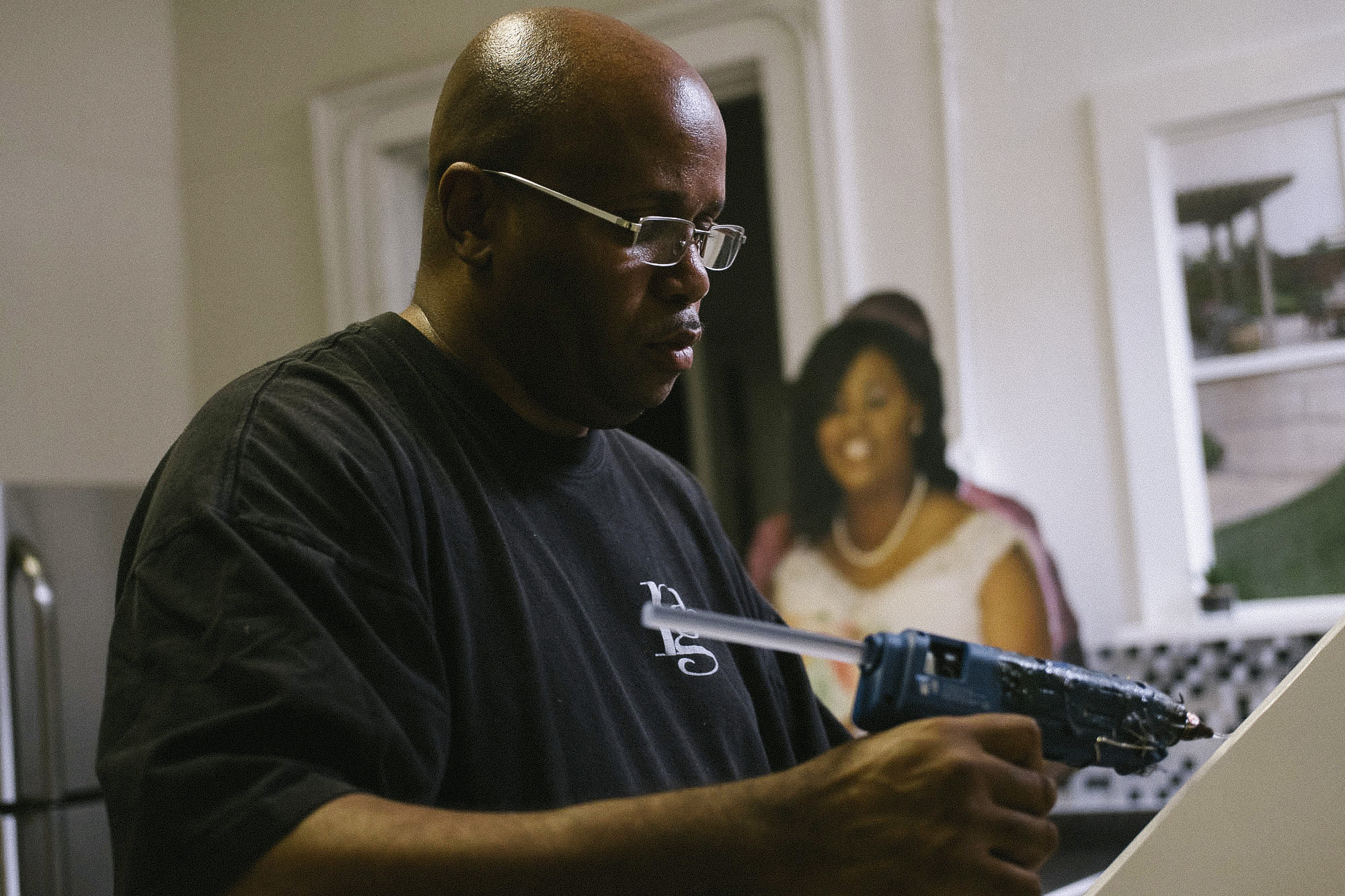
Owners Bryan and Trenice McMillian have made a name for their business with the large cardboard cutouts, called “lifesizes.” They got the idea from the movie-star standees they’d seen in a Blockbuster Video store, and thought it would be fun for average people. The first one they did was for a Sweet 16 party, but now about 85-90 percent of the lifesizes they do are for memorials. “That’s where the demand is,” says Bryan.
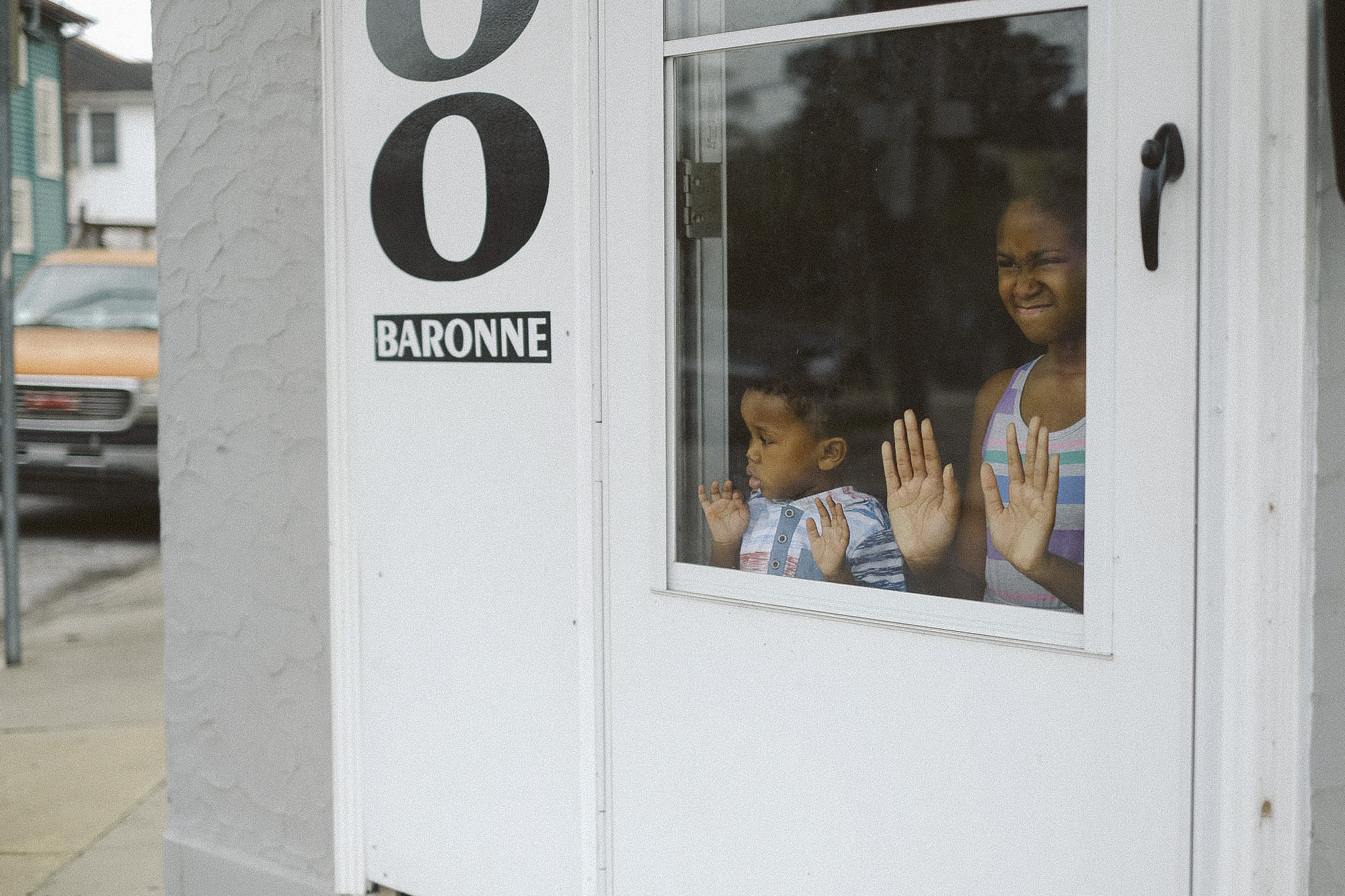
It’s like having the person there to enjoy the celebration, he explains. People stand them in their living rooms for memorial gatherings, parade them in the streets for second lines, dance with them, and take selfies with them.

Following her husband’s death, Amber Oatis-Mitchell’s family ordered a lifesize of Clarence to have at the private gathering and the second line to honor his memory. Amber other family members led the jazz band as Clarence’s lifesize was paraded on the streets of NOLA’s Uptown neighborhood during his very own jazz funeral.
“With the lifesize, I got emotional,” Amber told VICE News. “I didn’t want to get upset in front of everybody, but it’s almost like he’s there staring at you, and it’s something you want so bad, but you know that, it will never happen again.”

Cover: Family and friends of Clarence Mitchell gather for a second line parade following his repass. Mitchell was killed on February 17, 2019 after a stray bullet hit him at a second line parade. (Cassandra Giraldo/VICE News)
This segment originally aired on March 5, 2019, on VICE News Tonight on HBO.
The Islamic State (ISIS/ISIL), even as its so-called caliphate continues to crumble, disseminated a new propaganda film this week urgingRead More
Meth smuggler busted as iPhone GPS mishap takes to border checkpoint… (Second column, 30th story, link) Advertise here
The Man Who Used HIV As A Weapon… (Third column, 7th story, link) Related stories:‘How can somebody be so cruel’…Read More
HEJERE, Ethiopia (AP) — The Latest on Ethiopian Airlines crash (all times local):
6:50 p.m.
The French Civil Aviation Authority has joined several other nations and closed French airspace to all Boeing 737 Max 8 aircraft.
In a statement Tuesday, the authority says that “France is carefully following the progress of the inquiry” relating to the Ethiopian Airlines plane crash in Addis Ababa on Sunday that left 157 people dead.
It says French airline companies do not possess any of the Boeing 737 Max 8 aircraft.
But as a precautionary measure, French authorities have decided to “forbid all commercial flights on a Boeing 737 Max departing from, traveling to, or flying across, France.”
___
6:40 p.m.
Irish aviation authorities have suspended all variants of Boeing 737 Max aircraft into and out of Ireland’s airspace as European aviation regulators respond to recent crashes in Indonesia and Ethiopia.
Irish authorities say they made the decision “based on ensuring the continued safety of passengers and flight crew.”
The decision comes shortly after UK civilian aviation authorities took a similar step, motivated by the lack of information coming from the flight data recorder involved in the Ethiopian Airlines crash on Sunday.
Experts are chasing details on why the plane crashed shortly after takeoff, killing all 157 on board. But answers could take months and regulators are taking steps in the interim.
___
6:20 p.m.
Germany’s transport ministry says the country is closing its airspace to Boeing 737 Max 8 aircraft, following a similar decision by Britain.
The ministry confirmed to news agency dpa on Tuesday comments made by Transport Minister Andreas Scheuer to n-tv television.
The broadcaster quoted Scheuer on its website as saying safety is the priority, and “until all doubts are cleared up, I have ordered that German airspace be closed for the Boeing 737 Max with immediate effect.”
Germany joins a rapidly growing number of nations and carriers either grounding the planes or barring them from their airspace.
___
5:35 p.m.
President Donald Trump is bemoaning the complexity of modern airplanes in the wake of two deadly crashes in the past five months.
Trump tweeted Tuesday that the additional “complexity creates danger” and hinders pilots from making “split second decisions” to ensure their passengers’ safety.
He added that “I don’t know about you, but I don’t want Albert Einstein to be my pilot.”
The president did not specifically mention the crashes but his remarks come after several nations, but not the United States, have grounded the Boeing 737 Max 8 aircraft.
The aircraft crashed in Indonesia last year and in Ethiopia on Sunday.
Trump participated in a signing ceremony last month in Hanoi between U.S.-based Boeing and the Vietnamese government.
___
5:15 p.m.
Norwegian Air Shuttle says it has grounded its Boeing 737 Max 8 aircraft on recommendation from European aviation authorities after Sunday’s Ethiopian Airlines crash.
The Norwegian carrier has 18 of the planes.
Tomas Hesthammer, the low-cost carrier’s acting chief operating officer, says that “the safety and security of our customers and colleagues will never be compromised, and once authorities advise to cease operations we will of course comply.”
A growing number of airlines and countries around the world have grounded the planes.
___
4:45 p.m.
British regulators have grounded Boeing 737 Max aircraft following the Ethiopian Airlines crash on Sunday.
The UK Civil Aviation Authority says in a statement Tuesday that though it had been monitoring the situation, it had as a precautionary measure “issued instructions to stop any commercial passenger flights from any operator arriving, departing or overflying UK airspace.”
Some five 737 Max aircraft are registered and operational in the United Kingdom, while a sixth had planned to commence operations later this week.
Several countries have now grounded the planes.
Experts are chasing details on why the plane crashed shortly after takeoff, killing all 157 on board. Answers could take months.
___
4:40 p.m.
Malaysian authorities say all flights by Boeing 737 Max 8 aircraft into and out of the country have been suspended following two fatal crashes involving the jet in less than five months.
The Civil Aviation Authority said in a short statement Tuesday that no Malaysian carriers operate the Max 8, but that foreign airlines are banned from flying the plane in Malaysia, and from transiting in the country, until further notice.
A number of airlines and countries around the world have grounded the planes after a fatal crash in Ethiopia on Sunday and one in Indonesia last year.
___
4:15 p.m.
Civil aviation authorities in the United Arab Emirates say they have joined U.S. authorities and Boeing “to investigate and collect data” regarding the crash of an Ethiopian Airlines jetliner.
The General Civil Aviation Authority made the announcement Tuesday via the Emirates’ state-run WAM news agency.
It comes as neighboring Oman says it will “temporarily suspend” all Boeing 737 Max aircraft at its airports.
The UAE’s aviation authority says it also contacted Ethiopian Airlines and Chinese authorities.
The statement adds that “the GCAA will not be reluctant to ground the UAE-registered Boeing 737 Max fleet, if required, to ensure the highest standard of aviation safety is achieved.”
The Dubai government-owned carrier FlyDubai uses the 737 Max on its flights.
___
3:55 p.m.
Oman says it is “temporarily suspending” flights by Boeing 737 Max aircraft at its airports after the crash of an Ethiopian Airlines jetliner of the same type.
The Public Authority for Civil Aviation made the announcement Tuesday.
State-owned Oman Air operates five Boeing 737 Max 8 aircraft. Oman is a sultanate on the eastern edge of the Arabian Peninsula.
The crash of the Ethiopian Airlines 737 Max 8 on Sunday killed 157 people. A similar Lion Air plane crashed in Indonesia in October, killing 189 people.
Airlines around the world have begun grounding the aircraft as an investigation into Sunday’s crash continues.
___
3:20 p.m.
A pilot who saw the Ethiopian Airlines crash site minutes after the disaster says the plane appeared to have “slid directly into the ground.”
Capt. Solomon Gizaw was among the first people dispatched to find the crash site, which was discovered by Ethiopia’s air force.
He tells The Associated Press that from above “there was nothing to see. It looked like the earth had swallowed the aircraft. … We were surprised!”
He says it explains why rescue officials quickly sent bulldozers to begin digging out large pieces of the plane. He is the managing director of a private flight service.
Sunday’s crash shortly after takeoff from Addis Ababa killed all 157 on board.
___
1:25 p.m.
Ethiopian Airlines says it should take five days to identify the remains of the 157 people killed in Sunday’s crash outside Addis Ababa.
Spokesman Asrat Begashaw tells The Associated Press that “it will take five days to clear everything” and the airline would release more details later Tuesday.
A global team of investigators led by Ethiopian authorities is assembling.
The cause of the crash of the new plane on a clear day remains unknown.
___
12:05 p.m.
Australia has suspended all flights into or out of the country by Boeing 737 Max aircraft, the type that was involved in Sunday’s Ethiopian Airlines crash.
Australia’s Civil Aviation Safety Authority says no Australian airlines operate the aircraft type, but two foreign airlines — SilkAir and Fiji Airways — fly them to Australia.
It says Singapore-based SilkAir has already suspended operation of its 737 Max aircraft.
The Ethiopian Airlines Boeing 737 Max 8 plane crashed shortly after takeoff, killing all 157 people on board. Five months earlier, a similar Indonesian Lion Air jet plunged into the ocean, killing 189.
The Australian civil aviation authority’s director of aviation safety, Shane Carmody, says that because of the two accidents, the temporary suspension of Boeing 737 Max operations is in the best interest of safety.
___
11:50 a.m.
A South Korean airline says it will suspend operations of its two Boeing 737 Max 8 planes, the same aircraft involved in the Ethiopian Airlines plane crash that killed 157 people.
An Eastar Jet official said Tuesday that the planes will be replaced by Boeing 737-800 planes from Wednesday on routes to Japan and Thailand. She didn’t want to be named, citing office rules.
She says the airline hasn’t found any problems, but is voluntarily grounding Boeing 737 Max 8s in a response to customer concerns. She says the planes will not be used until the completion of a government safety review on the aircraft.
An official from South Korea’s Transportation Ministry says it has yet to find any problems from safety reviews on Eastar’s planes that started Monday.
___
11:15 a.m.
The Mideast budget airline FlyDubai says it will continue to fly Boeing 737 Max 8 aircraft after reviewing a recent U.S. regulator statement about the aircraft.
FlyDubai says that “no further action is required at this time” over the aircraft, a workhorse in the Dubai government-owned carrier’s fleet.
The U.S. Federal Aviation Administration said Monday that while others have drawn similarities between the Indonesia and Ethiopia crashes, the agency was not.
The FlyDubai statement says it remains “confident in the airworthiness of our fleet.” It operates 11 Boeing 737 Max-8 jetliners.
___
10:15 a.m.
A team of U.S. aviation experts has arrived in Ethiopia to join an investigation into Sunday’s crash of an Ethiopian Airlines jetliner that killed 157 people.
As questions grow about the new Boeing plane involved in the crash, the Federal Aviation Administration said late Monday it is at the crash site outside the capital, Addis Ababa, with representatives from the National Transportation Safety Board.
They join an Ethiopian-led investigation that includes authorities from neighboring Kenya and elsewhere.
The plane crashed six minutes into a flight to Nairobi and a growing number of countries and airlines have grounded the new Boeing 737 Max 8 jetliner as a result.
One witness has told The Associated Press that smoke was coming from the plane’s rear before it crashed.
Back in the fall of 2015, in the first installment in this series, I mentioned that a group of community activists in our hometown of Washington, D.C., had begun an effort to get noisy, hyper-polluting, gas-powered leaf blowers banned in the capital, as has already happened in more than 100 cities across the country.
The reasons for the ban are: the obsolescence of the technology, which is orders of magnitude more polluting than other machines and engines now in common use; the public-health danger, above all to hired work crews, of both the emissions and the damagingly loud noise from the gas blowers; and the rapid advent of battery-powered alternatives, which are quieter and dramatically less polluting.
The purpose of this post is to record how the story turned out:

The print issue of The Atlantic for April 2019 has an article by me about why this move was in the interest of householders, workers, and the community as a whole. It’s called “Get Off My Lawn.” Here are several additional references:
You don’t often hear this sentiment, but: Let Washington, D.C., be an example to the nation!
After months spent teasing his supporters and the political media, Beto O’Rourke surprised absolutely no one Thursday when he officially announced his candidacy for president. “We are truly now more than ever the last great hope of Earth,” he said in a video posted on social media, channeling The Lord of the Rings. “At this moment of maximum peril, and maximum potential, let’s show ourselves and those who will succeed us in this great country just who we are and what we can do.”
These are exactly the kind of empty platitudes we have come to expect from O’Rourke since last year, when his failed, but lively challenge of Senator Ted Cruz turned him from a back-bench, three-term congressman to a national figure (and former congressman). Some have compared him to Barack Obama, with whom he shares a message of optimism and unity. But the comparisons end there. He has all of Obama’s self-assurance with none of his intellectual fortitude, inspirational biography, or oratory power. His rhetoric is as empty as his platform, his paeans to “coming together” the stuff of Obama fanfic.
O’Rourke’s claim to the presidency is based solely on the frenzy surrounding his campaign to unseat Cruz. Over four magical months in the late summer and early fall, O’Rourke made Democrats believe that Texas—which has not had a Democratic senator in a generation—could turn blue. He visited every county in the state, regularly drawing crowds of 50,000 fans, with a message engineered to appeal to both progressives and moderates. “You cannot be too much of a Republican, you can’t be too blue of a Democrat, too much of an independent. You can’t be in prison for too many years, you can’t be too undocumented to be worth fighting for. It is for everyone,” O’Rourke said a campaign stop in Dallas.
It helped his case that Ted Cruz is the most hated man in the Senate. O’Rourke lost anyway, a defeat that looked assured by mid-October. Even O’Rourke seemed to realize it, pivoting his already wide-angled campaign toward increasingly national issues. Many believed that once the midterms were in the rearview, and with his days numbered in the House, O’Rourke would announce his 2020 bid in short order. Instead, he blogged.
Beginning shortly after his loss in November, O’Rourke began posting long, rambling, solipsistic posts on Medium, detailing both his post-election melancholy (“Have been stuck lately. In and out of a funk”) and his continued ability to connect with voters. “What followed was one of these transcendent moments in public life,” he wrote following an event at a Colorado community college. “Something so raw and honest that you want to hold on to it, remember every word … a flow between people.”
O’Rourke’s posts resemble sophomoric creative nonfiction. They’re maudlin, confusing the expression of emotion with profundity. They’re formless, written in a quasi-literary clipped style. And they’re self-serious, filled with banal observations about the experiences that characterize American political life. But these sketches are also littered with stump-speech cliches. In a January, he wrote this entry about a motel owner he met while traveling through Kansas:
I stayed at the Motel Safari, one of these classic Route 66 motels. Mid-century everything. I talked to the owner for a bit. He moved from Tennessee and away from corporate life. Starting over. Giving himself to this hotel that he bought a couple years back. Hasn’t taken a break in more than a year, but is going to close down for the month of February, spend some time back in Tennessee. Take a break, come back stronger.
It’s a clever little paragraph. O’Rourke, ever possessive of a retail politician’s full arsenal, draws out a man’s life story—and seems to be suggesting a parallel with his own. The hard work and struggle of owning a small business in America is not, ultimately, that different than being one of the two or three most popular young Democrats in the country. They both need breaks. They both come back stronger.
O’Rourke catalogued his post-election in other, less bathetic ways. He filmed Instagram live videos of himself eating chips and guacamole in the car, making slime with his children, and even getting a dental cleaning. He skateboarded across a stage, air-drummed in a Whataburger parking lot, never letting people forget he was once in a punk band. An uncool person’s idea of what a cool person is, O’Rourke nevertheless was having fun. If his blog persona resembles a lonely emo teen who just wants the world to see their genius, his video persona is closer to the learned stoner jocks of Richard Linklater’s films. But they have one thing in common: a desperation for attention.
And I haven’t even mentioned his meticulous cultivation of suspense over whether he would run for president. He met with Obama less than two weeks after his midterm loss. He took a campaign-style road trip through the Southwest. He was interviewed by Oprah in Times Square alongside Michael B. Jordan and Bradley Cooper, telling her he would reach a decision by the end of the month. He attended the South by Southwest preview of a documentary about his failed Senate run, Running with Beto. All the while, his team tantalized his supporters. “If you’re on the edge of your seat about Beto’s decision around a potential 2020 run for president, you’re not alone,” read one email sent after his appearance at South by Southwest. “There’s been an outpouring of speculation, excitement, and support from people across the country—everyone eagerly waiting for the news.”
But the way to get people excited about a presidential candidacy is to be an exciting presidential candidate—not to bait them about a potential run for months. America was tiring of his act: He began slipping in the presidential polls. Perhaps sensing he could drag this out no longer, he announced in late February that he had made a decision, and … well, he’d reveal it at some point in the near future.
Then he dragged it out for another two weeks.
Finally, this week, O’Rourke announced he was entering the race. Even this was a multi-day affair, culminating in a swing through Iowa where he gave his spoken-word pitch while standing on coffeeshop countertops. The rollout of his decision also included a fawning profile in Vanity Fair, complete with photographs from Annie Leibowitz. “I honestly don’t know how much of it was me,” he told Joe Hagan, sounding a bit like a band member in Almost Famous. “But there is something abnormal, super-normal, or I don’t know what the hell to call it, that we both experience when we’re out on the campaign trail.” While other Democratic candidates have defined themselves by the policies they support, or their vision for the country, O’Rourke spoke about the nomination as if it was his birthright. “Man, I’m just born to be in it,” he said. “You can probably tell that I want to run. I do. I think I’d be good at it.” He had less to say about whether he’d be any good at running the country.
To be fair, some prominent people think he would be very good at it. People from Obama’s orbit, in particular, have singled O’Rourke out, giving credibility to the comparison. Though not a fan of his blogs, former Obama chief strategist David Axelrod has praised O’Rourke repeatedly, noting his vision “comes from a belief that, through politics, we can achieve a higher purpose.” Former Obama field organizer Lauren Pardi told NBC late last year that “Beto has a special ability—like President Obama did—to make people believe in the best version of America.” Obama himself made the comparison on Axelrod’s podcast late last-year, noting that voters see a similar authenticity in the two. “It felt as if he based his statements and his positions on what he believed,” he said.
But the similarities largely end on that most ineffable political quality of authenticity. Obama launched his political campaign in 2007 by arguing that the bipartisan vote for the Iraq War was a historic mistake, that universal health care was a moral necessity, and that our economic system was dangerously inequitable. O’Rourke lacks any platform whatsoever. He has no signature idea, and we know little about his political positions beyond the mushy centrism he exhibited in Congress. O’Rourke’s decision to spend the last five months blogging could be seen as an attempt to shore up another weakness: His lack of a particularly compelling biography. Spending one’s twenties as an aimless musician, as O’Rourke did, is hardly the stuff of Dreams of My Father.
Instead, the biggest thing that O’Rourke has in common with Obama, the 2008 candidate, is the belief that they can transcend a broken political system with lofty rhetoric about bringing people together. But when Obama spoke about healing divisions, millions of people believed him. And it still didn’t work. Obama came to his senses while in office, as the Republican Party committed itself to bigotry and intransigence, and he now spends his political capital and energy on reforming our broken democracy. Many of the Democratic candidates for president have their own proposals for doing so. O’Rourke just has a blog, and a big beautiful smile that some folks can’t resist. It’s as if the last 10 years of American political life never happened.
The affected ads, which included a video, directed users to a petition on Elizabeth Warren’s campaign website urging them “to support our plan to break up these big tech companies.” | Drew Angerer/Getty Images
Technology
By CRISTIANO LIMA
03/11/2019 06:32 PM EDT
Facebook has removed several ads placed by Sen. Elizabeth Warren’s presidential campaign that called for the breakup of Facebook and other tech giants.
The ads, which had identical images and text, touted Warren’s recently announced plan to unwind “anti-competitive” tech mergers, including Facebook’s acquisition of WhatsApp and Instagram.
Story Continued Below
“Three companies have vast power over our economy and our democracy. Facebook, Amazon, and Google,” read the ads, which Warren’s campaign had placed Friday. “We all use them. But in their rise to power, they’ve bulldozed competition, used our private information for profit, and tilted the playing field in their favor.”
A message on the three ads reads: “This ad was taken down because it goes against Facebook’s advertising policies.”
A Facebook spokesperson confirmed the ads had been taken down and said the company is reviewing the matter. The person said, according to an initial review, that the removal could be linked to the company’s policies about using Facebook’s brand in posts.
Technology news from Washington and Silicon Valley — weekday mornings, in your inbox.
By signing up you agree to receive email newsletters or alerts from POLITICO. You can unsubscribe at any time.
A representative for Warren’s campaign did not immediately respond to a request for comment after POLITICO noticed that the ads had been removed.
More than a dozen other Facebook ads from Warren about her tech proposal were not affected.
The Massachusetts Democrat has staked out an aggressive stance toward Silicon Valley’s biggest companies, going further than many of the other Democratic 2020 candidates.
The affected ads, which included a video, directed users to a petition on Warren’s campaign website urging them “to support our plan to break up these big tech companies.”
The ads were limited in size and reach, with each costing under $100, according to disclosure details listed online.
Missing out on the latest scoops? Sign up for POLITICO Playbook and get the latest news, every morning — in your inbox.
By Jack Shafer
By Adam Wren
By Renato Mariotti
By Jack Shafer
Students at New York University (NYU) berated former first daughter Chelsea Clinton on Friday night for putting “words out intoRead More
According to a new investigation, one in three returned Islamic State fighters in Sweden have committed serious crimes after comingRead More
A German tourist visiting Italy may have severe brain damage after falling off a cliff in an alleged attempt to avoidRead More