
Top Tag

Terror watchlist shared with animal shelters…

Rights group: terror watchlist shared with animal shelters

ALEXANDRIA, Va. (AP) — A Muslim civil-rights group says the FBI is letting animal shelters, private investigators and even a Midwestern megachurch have access to its watchlist of suspected terrorists.

In court documents unsealed after a court hearing Friday, lawyers for the Council on American-Islamic Relations expressed concern that the watchlist is disseminated much more broadly than the government is willing to acknowledge.

“Defendants share their list with anyone or anything that asks,” CAIR’s lawyers wrote in one of their legal briefs.

Government lawyers, meanwhile, say CAIR is being alarmist and misrepresenting some of the entities on the list.

CAIR’s assertions about the broad dissemination of the terror watchlist are “so rife with misleading statements and outright falsehood that it is hard to know where to begin,” government lawyer Amy Powell wrote in an email attached to a court filing.

Issues over the dissemination of the terrorist watchlist to private entities have come in a lawsuit CAIR filed challenging the watchlist’s constitutionality. CAIR says the watchlist is riddled with errors and innocent Muslims are placed on the list by mistake and suffer numerous consequences as a result.

Those consequences are exacerbated, according to CAIR, by the government’s willingness to share the watchlist so broadly, including granting access to hundreds of private entities.

The government last month admitted in court papers that hundreds of private entities can access the watchlist, after years of denying the list was shared in that manner. But government officials maintain that private entities accessing the list are connected to law enforcement, like police forces for universities or railroads.

A judge recently ordered the government to let CAIR’s lawyers see which private entities had access to the watchlist, but they were forbidden from making copies or taking notes. CAIR’s lawyers say those restrictions leave them hamstrung in their ability to research concerns about specific entities.

Some of the disputes about how broadly the list is disseminated seem to stem from how broadly one defines “law enforcement.”

Animal shelters are a case in point. The government says those animal shelters on the list are simply animal welfare organizations that have been granted police powers under state law and therefore have law-enforcement responsibility.

The megachurch, government lawyers say, is actually the police department of a religious university.

CAIR’s lawyers have long suspected that the list is disseminated much more widely than the government has acknowledged. The broad terror watchlist contains hundreds of thousands of names; the much smaller no-fly list is culled from the watchlist.

At Friday’s hearing, Magistrate Judge John Anderson mulled making the list of private entities available to the public at large. He said that since private entities receiving the list are free to disclose the fact they can access the list, he didn’t see why the full list shouldn’t be part of the public record in the case.

But Justice Department Lawyer Antonia Konkoly said a wholesale disclosure of private entities would be a serious security breach, and could give terrorist groups a “roadmap” to understanding how the government monitors and combats them.

Ultimately, Anderson decided to leave in place rules that restrict CAIR’s lawyers from having their own copy of the private-entities list or making that list a publicly filed document.


Rare 10-mile-long lake forms in Death Valley…

Rare 10-mile-long lake forms in Death Valley after heavy rains and flooding

After a wet winter storm swept Death Valley National Park, a lake formed near Salt Creek. LA-based photographer Elliot McGucken captured photos of the water on March 7, 2019.

After a wet winter storm swept Death Valley National Park, a lake formed near Salt Creek. LA-based photographer Elliot McGucken captured photos of the water on March 7, 2019.

Caption

Close

After a wet winter storm swept Death Valley National Park, a lake formed near Salt Creek. LA-based photographer Elliot McGucken captured photos of the water on March 7, 2019.

After a wet winter storm swept Death Valley National Park, a lake formed near Salt Creek. LA-based photographer Elliot McGucken captured photos of the water on March 7, 2019.

It’s not a sight you expect to see in the driest spot in the country.

A massive lake formed in Death Valley National Park near Salt Creek last week after a storm packed with tropical moisture drenched Southern California, triggering flooding on several park roads.

Photographer Elliott McGucken was in Death Valley to photograph the storm and its aftermath; on March 7, he took images of the temporary, nameless lake.

McGucken was hoping to photograph Badwater Basin where he thought water might have also collected, but he couldn’t access the area due to flooding and stumbled upon the lake.

“It’s a surreal feeling seeing so much water in the world’s driest place,” said McGucken, who also writes books on physics. “There’s an irony even though I couldn’t get down to Badwater Basin. Overall, I think these shots are probably more unique.”

McGucken said Death Valley is usually windy, and when he first arrived at the lake, blustery conditions were creating ripples on the water. “Then, the wind died down and it got really calm,” he said.

The result was a collection of images with the rugged Panamint Range, its tallest Telescope Peak frosted in snow, reflected in glassy waters.

“Nature presents this ephemeral beauty, and I think a lot of what photography is about is searching for it and then capturing it,” he said.

The exact length of the lake is unknown, but the park emailed a statement to McGucken estimating it’s about 10 miles long: “I believe we would need aerial photos to accurately determine the size. From the road, it looks like it stretched from approximately Harmony Borax Works to Salt Creek right after the rain, which is a little less than 10 road miles. But, the road does curve a bit, so it’s not an entirely accurate guess.”

ALSO: Death Valley flooded by drenching rains: ‘It’s like putting water on concrete’

In a typical March, the Furnace Creek rain gauge in Death Valley records 0.3 inches of rainfall. In a 24-hour span running from last Tuesday to Wednesday, the same gauge measured 0.84 inches. In the surrounding mountains, the National Weather Service estimates 1 to 1.5 inches fell.

This might not sound like a lot of rain, but NWS meteorologist Todd Lericos explains the desert landscape doesn’t easily absorb water. Rain in the mountains rushes down to the valley floor.

“The desert soils are dry and compact,” said Lericos, who works in the NWS Las Vegas office. “It’s like putting water on concrete.”


Justices add constitutional question to citizenship case

On April 23, the Supreme Court will hear oral argument in the challenge to the decision to reinstate a question about citizenship on the 2020 census. The justices had originally granted review to decide whether that decision violated federal laws governing administrative agencies, but today the justices announced that they will also consider whether the decision violates the Constitution.

The justices’ order adding the constitutional issue to the case came four days after U.S. Solicitor General Noel Francisco sent a letter to Scott Harris, the clerk of the Supreme Court. The letter informed Harris (and, by extension, the justices) that a federal district court in California had ruled that the addition of the citizenship question violates both federal administrative laws and the Constitution’s enumeration clause, which requires the “actual Enumeration” of the U.S. population every 10 years, to allow congressional representatives to be evenly divided among the states. The only way to finally resolve whether the federal government can bring back the citizenship question, the government stressed, is to have the justices take up the constitutional issue too: Otherwise, even if the Supreme Court were to agree with the federal government that the citizenship question does not violate federal administrative laws, lower courts could still rely on the enumeration clause to block the government from including it.

With the June 2019 deadline to finalize the census questionnaire looming, the government continued, the best course of action would be for the justices to add the constitutional issue to the case slated for oral argument on April 23, which hails from a federal district court in New York. That is exactly what the justices did today, giving the challengers – states and civil rights groups, led by New York – an extra 2000 words to address the issue in their briefs, which are due on April 1. The justices gave the federal government (which had already addressed the enumeration clause in its opening brief) an extra 1000 words in its reply brief.

This post was first published at Howe on the Court.

The post Justices add constitutional question to citizenship case appeared first on SCOTUSblog.

The U.S. and North Korea Are Back to Talking Tough

The attack dogs have been let loose.

That much was clear from the stark message North Korea delivered this week after the collapse of Donald Trump’s summit with Kim Jong Un in Vietnam last month: Kim is considering abandoning nuclear negotiations with the United States and resuming the nuclear and missile tests that brought the two countries to the brink of war early on in the Trump administration.

Just as important as the message was the messenger. North Korea’s vice foreign minister, Choe Son Hui, delivered the warning during a briefing in Pyongyang on Friday with foreign diplomats and journalists. Choe is an experienced diplomat (and a former English-language interpreter) who has dealt with Americans in official and unofficial talks for years. She knows the America file cold. But she also has a reputation for fiery remarkslike when she vowed to “respond to fire with fire” at the height of military tensions with the United States in 2017, or that time she nearly deep-sixed the president’s first summit with North Korea’s leader in 2018 by denouncing U.S. Vice President Mike Pence as a “political dummy” and threatening a “nuclear-to-nuclear showdown” with the United States.

[Read: Trump knows he can’t fix North Korea alone]

Choe’s principal foil in the Trump administration is National Security Adviser John Bolton, who prompted her outburst against Pence in the first place by calling on the North Koreans to ship their whole nuclear program to the United States the way Libya did. Bolton has been arguing since he served in the George W. Bush administration that North Korea’s leaders have no intention of negotiating away their nuclear weapons and that the only way to remove the grave threat their arsenal poses to the United States is through regime change brought about by economic pressure or a preventive war. (He’s mostly refrained from expressing these views since joining the Trump administration last April.)

And Bolton, whom Choe blamed on Friday for poisoning the Vietnam summit with “gangster-like” demands for North Korea to commit to full denuclearization before receiving sanctions relief, has been sicced on the North Koreans as well since the showdown in Vietnam. The national security adviser, who largely deferred (at least publicly) to Secretary of State Mike Pompeo on diplomacy with North Korea, has emerged in recent weeks as the administration’s most prominent spokesperson on the nuclear talks.

Zipping around the Sunday shows, he’s urged North Korea to relinquish all its weapons of mass destruction as part of a “big deal” and pledged to maintain and perhaps escalate economic sanctions against Pyongyang if Kim doesn’t. He’s done all this with relish. “The North Koreans were very disappointed we didn’t buy their bad deal,” he said of Kim’s offer in Vietnam to dismantle his main nuclear complex in exchange for relief from most sanctions. “That’s life in the big city.”

[Read: How long will the U.S. live with a nuclear North Korea?]

It’s the kind of barbed rhetoric that Bolton and Choe avoided when their bosses were championing the results of their first summit in Singapore last year and promising to deliver a breakthrough when they met again.

The unmuzzling of the attack dogs on each side is a reminder that Trump and Kim are each contending with a hard-line faction at home that views the diplomacy they’re engaged in as a hopeless and dangerous endeavor. As Choe noted this week, Kim decided to press ahead with diplomacy in Vietnam despite the fact that military leaders are petitioning him not to give up his nuclear program.

But it’s also a sign of the paradoxical outcome of a summit that was intended to dramatically defuse tensions between North Korea and the United States: Each side has come away with the recognition that despite all the pageantry, there’s a huge gulf between their positions, and with the conviction that exerting pressure is the key to getting the other side to come around to its preferred approach. The Americans think sanctions will force the North Koreans to fully renounce their nuclear program. The North Koreans think the further development of their nuclear arsenal—through ongoing production of nuclear material, recent reversals of moves to dismantle a rocket site, and now the specter of more tests of ballistic missiles and nuclear weapons—will compel the Americans to settle, for the time being at least, for something far short of full denuclearization. Tough talk from Bolton and Choe is a form of pressure.

[Watch: ‘Alaska DGAF’: North Korea’s missile test doesn’t faze Alaskans]

There is a very fine line, however, between applying pressure and shattering a delicate and deteriorating diplomatic process. As Chung-in Moon, a foreign-policy adviser to South Korea’s president, wrote this week, citing the way in which the spat between Choe and Pence nearly sabotaged the first Trump-Kim summit, “Mutual restraint in word and deed is essential for the resuscitation of negotiation. The surest way to derail the negotiations and precipitate a potential catastrophe would be for North Korea to engage in any nuclear or missile tests.”

The life-sized way New Orleans honors its dead

NEW ORLEANS — Clarence Mitchell was at someone else’s “second line” parade in Central City last month when he was shot and killed by a stray bullet, leaving behind a wife and young children.

The second line, a “jazz funeral” procession with a brass band, is a longtime New Orleans tradition for honoring a lost loved one. But another, more recently popular part of NOLA memorials is the lifesize cutout of the deceased. And for that, locals know to turn to the family-owned printing shop Platinum Graphics.

1552661312176-01_Lifesize_Final

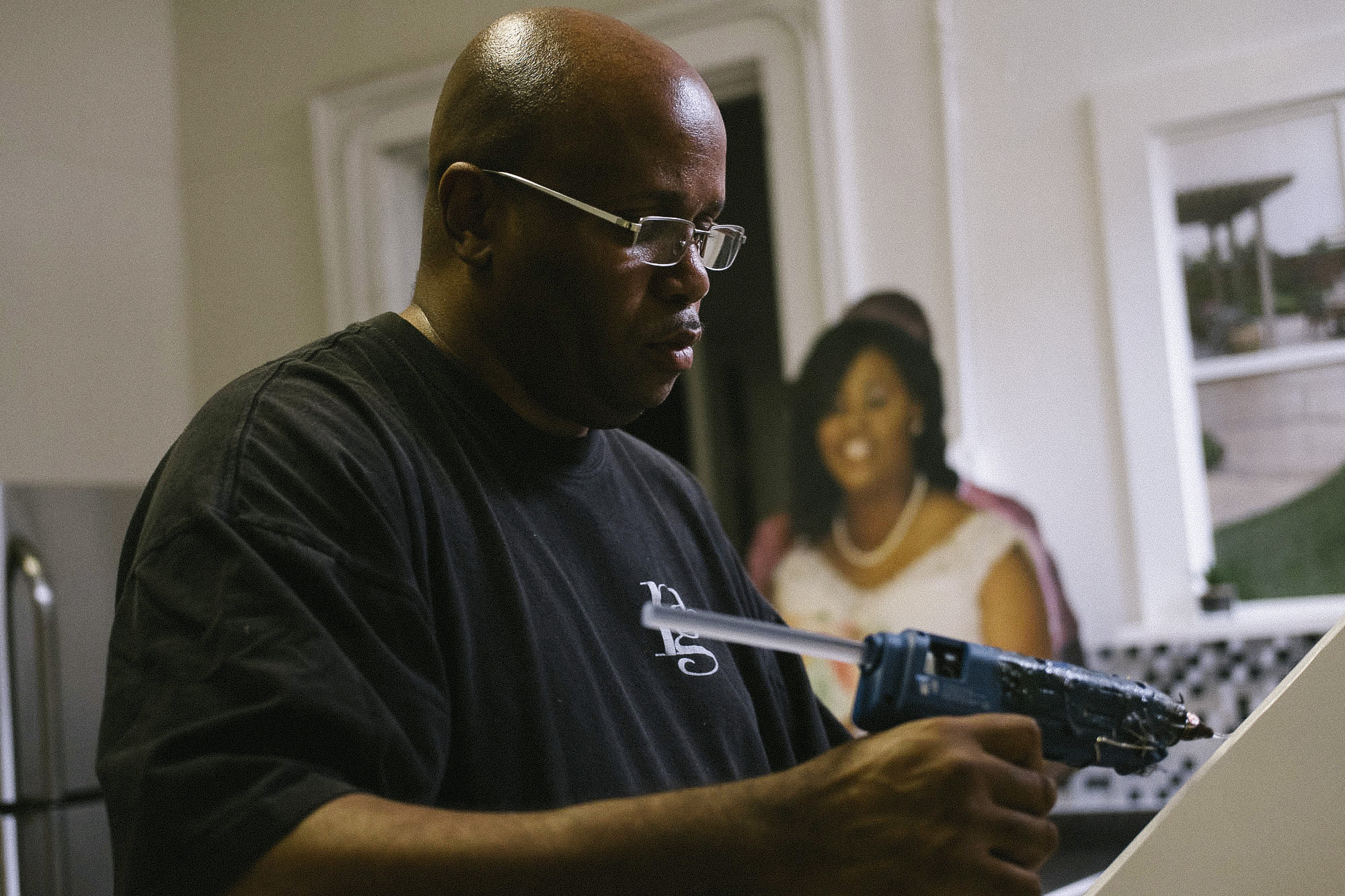
Bryan McMillian builds a “lifesize” cardboard cutout to memorialize someone who’s passed away. (Cassandra Giraldo/VICE News)

Owners Bryan and Trenice McMillian have made a name for their business with the large cardboard cutouts, called “lifesizes.” They got the idea from the movie-star standees they’d seen in a Blockbuster Video store, and thought it would be fun for average people. The first one they did was for a Sweet 16 party, but now about 85-90 percent of the lifesizes they do are for memorials. “That’s where the demand is,” says Bryan.

1552661532592-04_Lifesize_Final

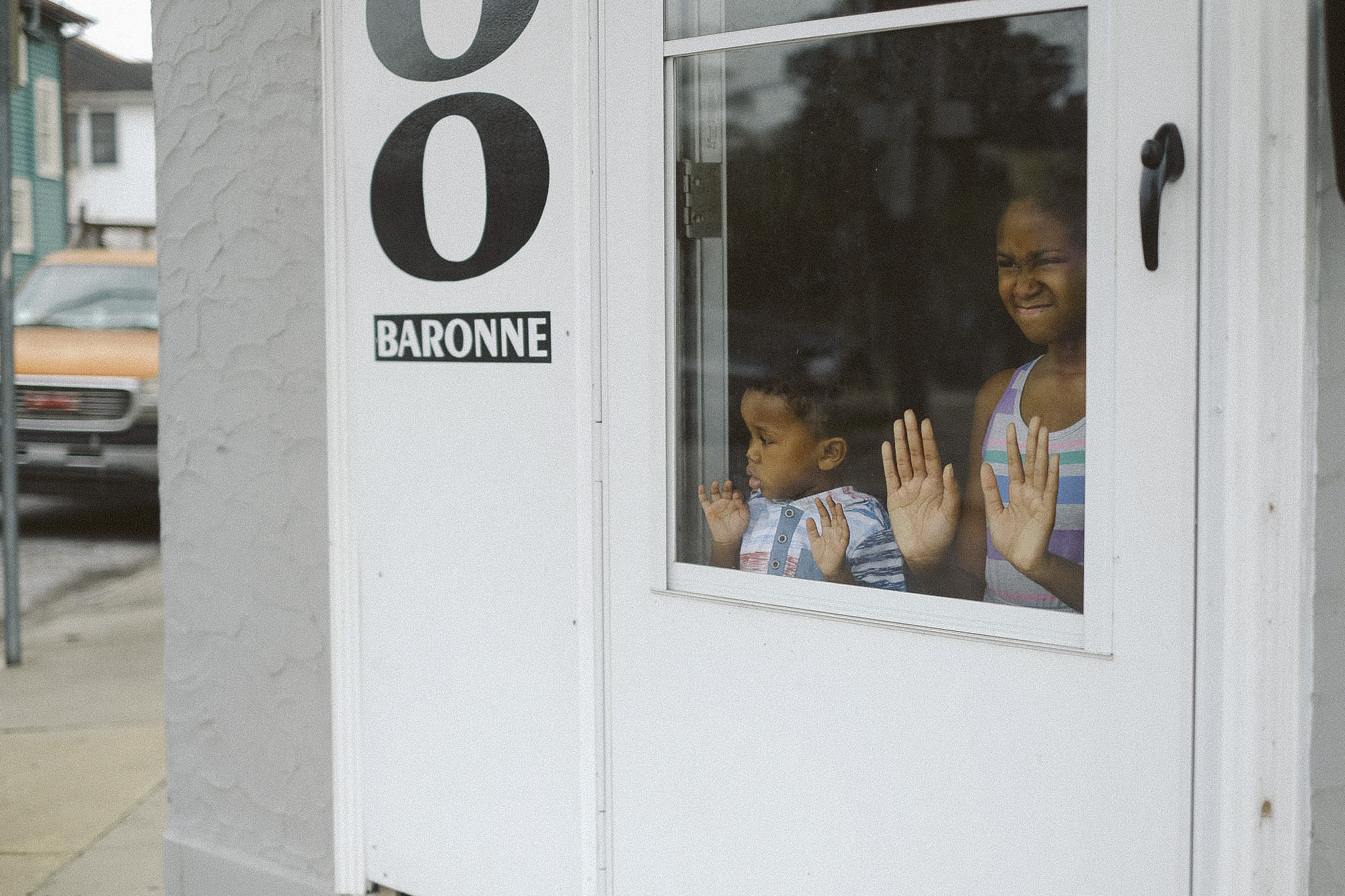
Bryce, 1, and Brean, 11, look out the window of their parents’ printing shop in the Uptown neighborhood of New Orleans. (Madeleine Peters/VICE News)

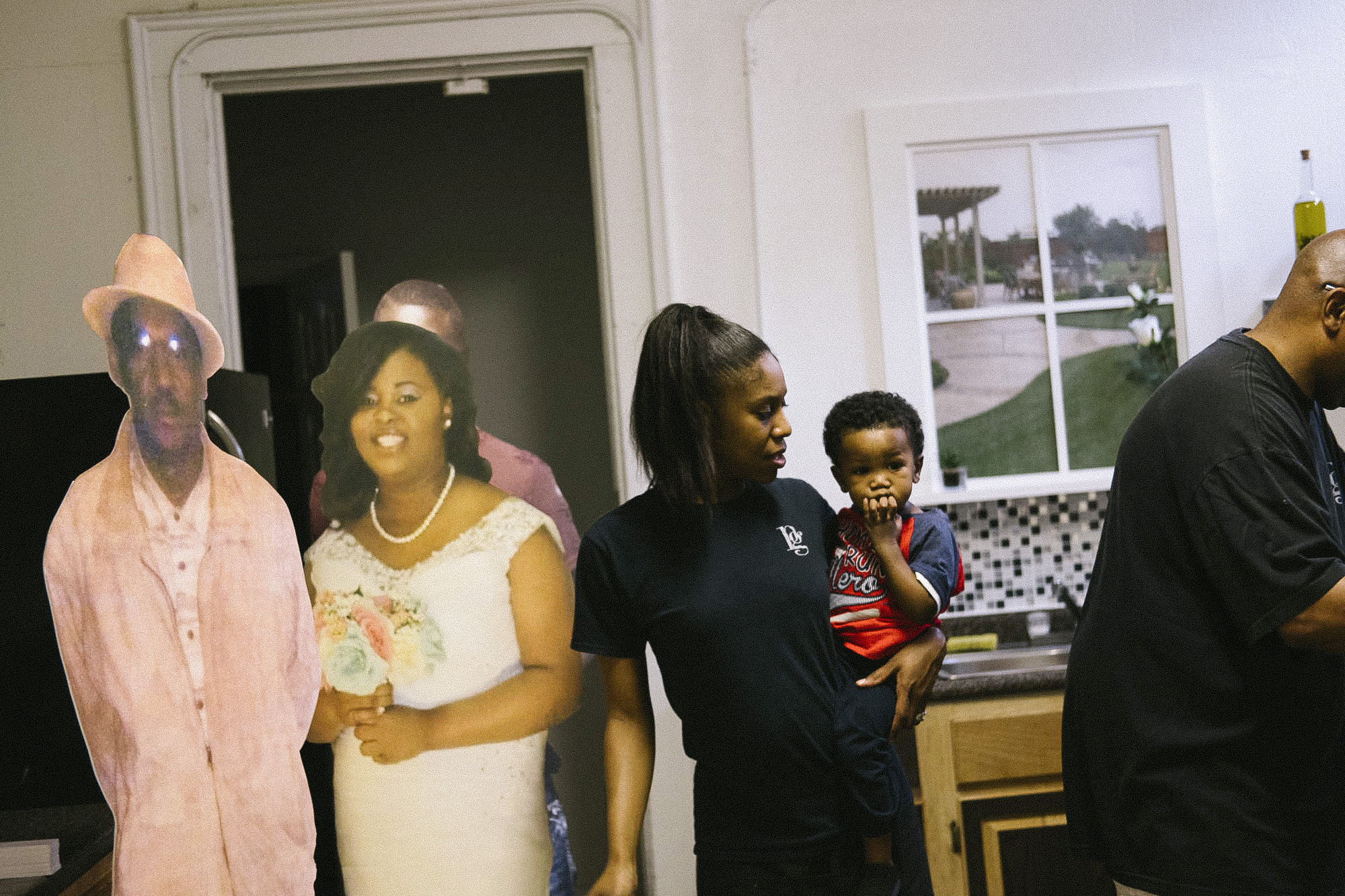
It’s like having the person there to enjoy the celebration, he explains. People stand them in their living rooms for memorial gatherings, parade them in the streets for second lines, dance with them, and take selfies with them.

1552661645728-02_Lifesize_Final

Trenice McMillian, co-owner of Platinum Graphics, with her son Bryce while her husband Bryan works in their kitchen to build the lifesize cutouts. Bryan and Trenice’s shop Platinum Graphics is also their home, where they homeschool their three children. (Cassandra Giraldo/VICE News)

Following her husband’s death, Amber Oatis-Mitchell’s family ordered a lifesize of Clarence to have at the private gathering and the second line to honor his memory. Amber other family members led the jazz band as Clarence’s lifesize was paraded on the streets of NOLA’s Uptown neighborhood during his very own jazz funeral.

“With the lifesize, I got emotional,” Amber told VICE News. “I didn’t want to get upset in front of everybody, but it’s almost like he’s there staring at you, and it’s something you want so bad, but you know that, it will never happen again.”

1552661788440-20_Lifesize_Final

Amber Oatis-Mitchell lost her husband Clarence Mitchell on February 17, 2019 after he was shot by a stray bullet at a second line parade. Here Amber leads her husband’s own second line parade, a traditional jazz funeral meant to celebrate loved ones who have passed. (Madeleine Peters/VICE News)

Cover: Family and friends of Clarence Mitchell gather for a second line parade following his repass. Mitchell was killed on February 17, 2019 after a stray bullet hit him at a second line parade. (Cassandra Giraldo/VICE News)

This segment originally aired on March 5, 2019, on VICE News Tonight on HBO.

Home Ethos About Contact
Terms Policy GDPR RichTVX
© Saeculum XXI U.S. Intelligence News